ChiMay Product Category: Multi-Parameter Sensor, Analyzer
- Water loss costs utilities both the production cost of lost water and the revenue never billed
- Traditional survey-based detection finds leaks late; continuous monitoring finds them while they are still small
- Sensor-plus-SCADA systems improve leak location from “somewhere along this main” to a metres-level excavation target
- Proactive leak management reduces emergency repair frequency and stretches asset life
- Instrumenting a pipeline costs real money, so coverage should follow risk rather than pipe kilometres
Leak detection has become a core operational priority for utilities under pressure to improve efficiency, conserve water, and keep service reliable. Distribution leaks mean lost water, lost revenue, infrastructure damage, and public health exposure — and the traditional approach of periodic surveys plus reactive response to visible symptoms is poorly matched to modern distribution networks.
Combining continuous monitoring sensors with SCADA turns leak detection from an episodic survey activity into a continuous operational capability. The International Water Association (IWA) has documented that utilities moving from survey-based to continuous monitoring programmes achieve materially better leak reduction, which is why the practice has spread quickly.
Table of Contents
Continuous Monitoring Sensor Technologies
Several sensor technologies support continuous leak detection, and each suits a different monitoring objective. Picking the right one depends on pipe material, diameter, accessibility, and what kind of leak you are trying to catch. Most effective programmes combine two or three.
Acoustic leak detection sensors remain the primary technology for direct leak detection in pressurised pipe. They detect the acoustic signature generated by water escaping through a wall, joint, or fitting under pressure. Modern sensors include both in-line units installed within pipe segments and above-ground units that detect signals transmitted through soil and pipe structure. Signal processing and machine learning have improved discrimination considerably, which is what has made permanently installed acoustic monitoring viable rather than survey-only.
Electromagnetic sensors are a complementary technology for metallic pipe. They detect changes in electromagnetic fields caused by wall corrosion and erosion — the degradation that precedes a leak. That makes them a condition-assessment tool rather than a leak detector: the point is to catch wall loss before it becomes a failure.
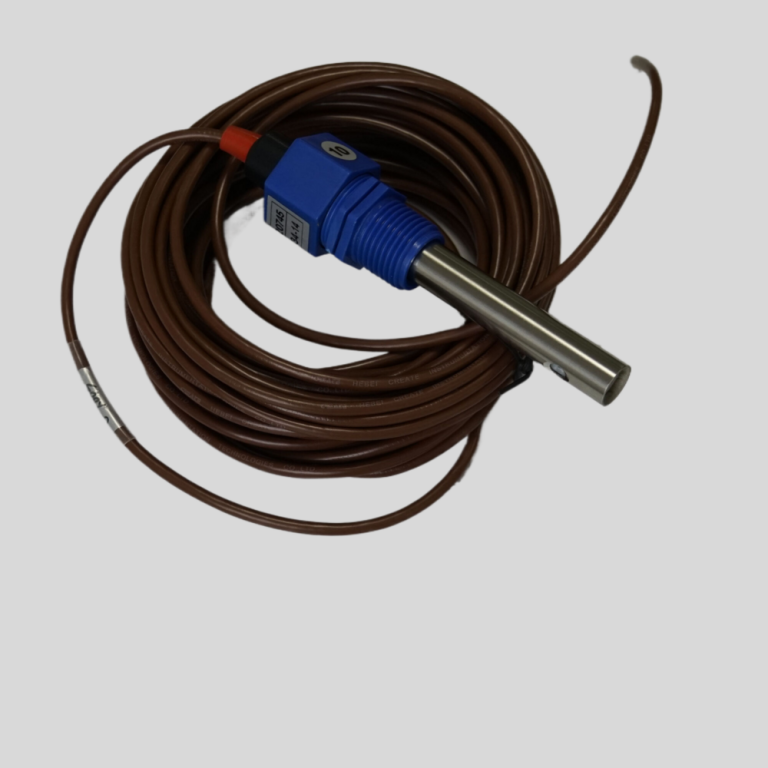
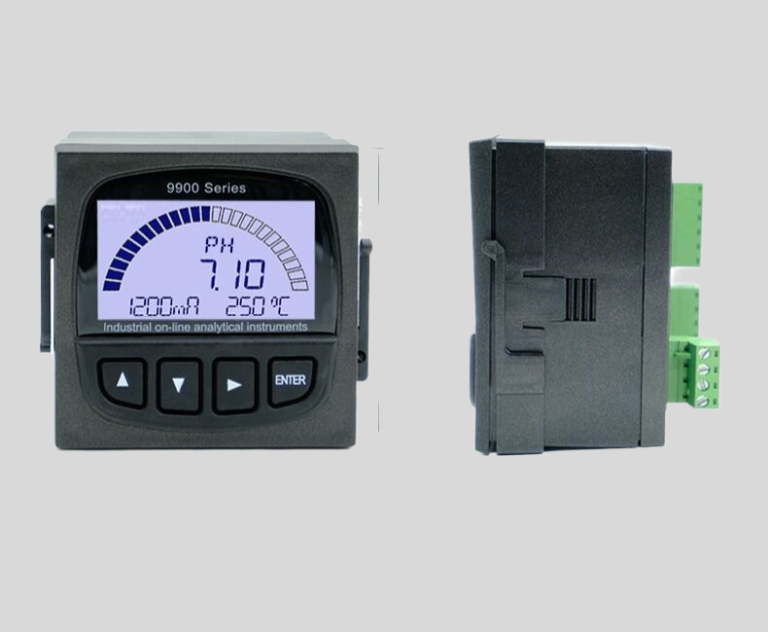
ChiMay’s multi-parameter sensors and online analyzers contribute to a leak detection programme from the water quality side. Pressure transients, turbidity variation, and changes in water age — all detectable with continuous monitoring — can indicate a leak or an intrusion that warrants investigation. Layering water quality monitoring on top of direct leak detection improves overall programme effectiveness, particularly for detecting the intrusion events that leak detection alone will miss.
SCADA Integration Architecture
Sensors on their own do not reduce water loss. The value comes from getting the data into a SCADA system that aggregates it, trends it, alarms on it, and drives a response.
SCADA integration starts with communications that reliably move sensor data from the field to the control room. Cellular, radio, and fibre each have a place depending on coverage, data volume, and existing utility infrastructure. MQTT and LoRaWAN provide efficient transport for large sensor counts, which has brought communication cost down enough to instrument assets that previously could not justify it.
Data management is the part that gets underestimated. A distribution monitoring deployment can generate data in the hundreds of thousands of points per day across all monitored parameters. SCADA historians and data platforms have to scale to that while still answering the analytical queries leak detection depends on.
Alarm configuration determines whether detection turns into action. Alarm management has to balance sensitivity against the false alarms that desensitise operators — a system that cries wolf stops being read. Machine learning approaches that learn normal operating ranges and flag genuine deviations reduce false alarm rates compared with fixed thresholds, which is the main reason utilities adopt them.
Leak Location and Verification
Location precision drives repair economics. Conventional survey methods — acoustic listening and correlation — narrow the search but still leave crews excavating to confirm, and a mis-located leak means an open trench with nothing in it. Correlation-based systems improve this substantially, bringing the target down to metres rather than tens of metres, which cuts excavation cost and reinstatement work.
Acoustic correlation determines location from the time delay between a leak signal arriving at two or more sensors. Modern algorithms incorporate pipe material, diameter, and wall thickness, which is what makes them work in mixed-material networks. Multi-point correlation with three or more sensors resolves ambiguous locations and gives a confidence interval to guide the dig.
Ground penetrating radar (GPR) and electromagnetic pipe location determine pipe position and depth. Accurate pipe location prevents third-party damage during the repair itself, which is an underrated benefit — a significant share of new leaks are created by work on existing ones. Combining pipe location data with leak detection results gives crews a complete information package.
Operational Workflow Integration
Detection only pays off if the repair happens. The handoffs between detection, dispatch, and repair are where programmes succeed or fail.
Work order management provides the coordination layer from detection through verification. Integrating SCADA with the work order system lets leak conditions generate work orders automatically, removing the delay between detection and response initiation. Priority classification by leak magnitude, location, and consequence potential makes sure limited crews go to the right jobs first.
Field crews need the leak location estimate, pipe characteristics, and historical maintenance data to work efficiently. Mobile access to SCADA data, asset records, and work orders reduces the radio traffic and return trips. Integrating leak detection results with geographic information systems (GIS) puts the exact location in front of the crew.
Performance Metrics and Continuous Improvement
A leak detection programme needs metrics that measure both outputs and outcomes:
- Leak detection rate (leaks found per 100 km per year)
- Average time from leak onset to detection
- Location accuracy against excavation results
- Repair completion rate within priority windows
- Water loss reduction (NRW or ILI trend)
Programmes that perform well on these measures share a common feature: they close the loop between detection results and programme design. Pattern analysis of failures reveals geographic clusters worth targeted replacement rather than individual repair. Refining detection algorithms against confirmed leak characteristics improves future accuracy. Benchmarking against peer utilities gives the numbers context, because a raw “leaks per 100 km” figure means nothing without knowing the network’s age, material mix, and pressure regime.
Closing Notes
Integrating leak detection with SCADA is what makes proactive distribution management possible. Continuous sensors, data analysis, and operational workflow together produce a programme that outperforms survey-based detection by a wide margin.
The economics work out where leakage was high and the network was previously unmonitored. The investments that justify themselves first are the ones that turn an invisible network into a measured one.