Table of Contents
Can Real-Time Monitoring Actually Reduce Desalination Costs?
Key Takeaways:
– Facilities with comprehensive monitoring reduce operational costs by 20-35%
– Predictive monitoring prevents 60% of emergency shutdowns
– The technology exists today—is your facility using it?
The Question Every Operator Faces
If you’re managing a desalination plant, you’ve likely wondered whether investing in advanced monitoring systems actually delivers measurable cost savings. After all, sensors and analytics platforms require capital investment, integration effort, and ongoing maintenance. The question isn’t unreasonable: will the returns justify the costs?
The evidence from facilities worldwide suggests a definitive answer.
Understanding the Cost Equation
Traditional Operations Model
Most desalination facilities operate on a reactive basis:
– Scheduled maintenance regardless of actual condition
– Emergency responses to failures after they occur
– Conservative operating parameters to prevent unknowns
– Frequent cleaning cycles based on calendar intervals
This approach has served the industry for decades, but it comes with hidden costs that accumulate silently:
– Unnecessary maintenance on equipment still performing well
– Emergency repairs that cost 3-5x planned maintenance
– Overly conservative settings that waste energy
– Cleaning cycles that occur too frequently or not frequently enough
The Real Cost of Inaction
Consider what inadequate monitoring actually costs:
| Cost Category | Annual Impact (10,000 m³/day facility) |
|---|---|
| Emergency maintenance | $150,000-300,000 |
| Premature membrane replacement | $200,000-500,000 |
| Excess energy consumption | $100,000-250,000 |
| Production losses | $50,000-150,000 |
| Total | $500,000-1,200,000 |
These figures represent averages across the industry—some facilities experience significantly higher costs.
The Monitoring Advantage
Continuous Visibility
Real-time monitoring transforms operations by providing:
– Continuous visibility into system performance
– Early warning of developing problems
– Data-driven insights for optimization
– Historical patterns for predictive maintenance
The key insight is that most operational problems develop gradually. A membrane doesn’t fail suddenly—it progressively fouls. A pump doesn’t break without warning—it shows signs of degradation first. Continuous monitoring reveals these patterns, enabling intervention before consequences escalate.
Case Study: The Predictive Approach
Consider a 25,000 m³/day seawater desalination facility that implemented comprehensive monitoring:
Before Implementation:
– Annual cleaning cycles: 12 (calendar-based)
– Emergency shutdowns: 4-6 per year
– Membrane lifespan: 3-4 years
– Energy consumption: 3.8 kWh/m³
After Predictive Monitoring:
– Annual cleaning cycles: 7-8 (condition-based)
– Emergency shutdowns: 1-2 per year
– Membrane lifespan: 5-6 years
– Energy consumption: 3.2 kWh/m³
Annual Savings:
– Reduced maintenance costs: $180,000
– Extended membrane life: $120,000
– Energy savings: $95,000
– Production improvements: $75,000
– Total annual savings: $470,000
Technology That Delivers Results
Sensor Capabilities
Modern monitoring systems offer capabilities that were unavailable just years ago:
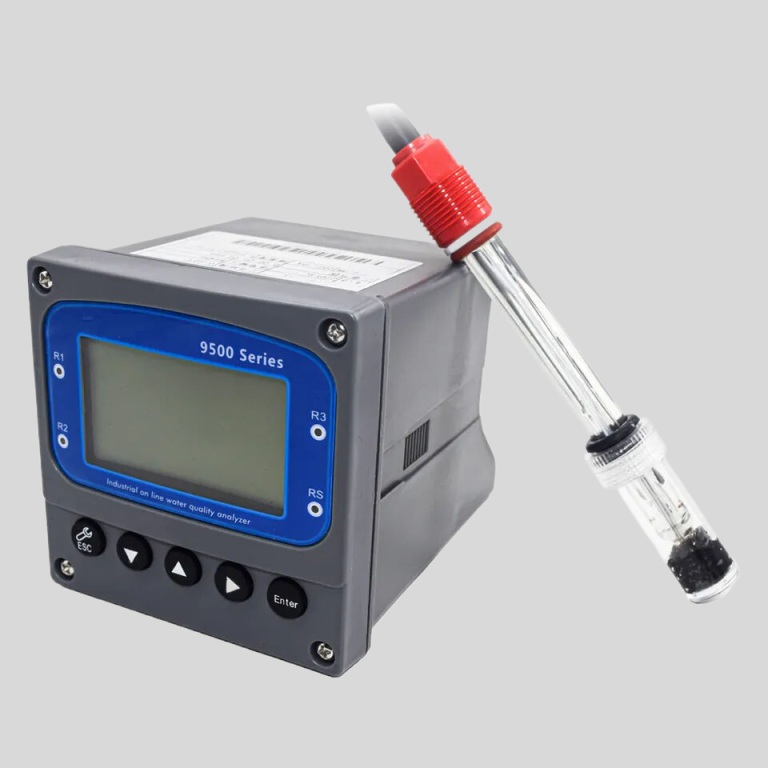
- Optical sensors detect organic fouling precursors hours before they become visible
- Fluorescence spectroscopy identifies specific fouling types for targeted response
- AI algorithms predict problems 24-48 hours in advance
- Cloud analytics enable multi-site optimization
Integration Requirements
Effective monitoring requires:
– Sensors at critical measurement points
– Real-time data transmission infrastructure
– Analytics platform with historical comparison
– Integration with control systems for automated responses
– Operator training for data interpretation
Making the Investment Decision
Calculating Your ROI
To evaluate monitoring investments, consider:
- Current annual cost of reactive maintenance
- Membrane replacement frequency and costs
- Energy consumption vs. theoretical optimum
- Production losses from unplanned shutdowns
- Potential savings from condition-based operations
Most facilities find that comprehensive monitoring pays for itself within 12-18 months.
Implementation Considerations
Successful implementation requires:
– Phased rollout that demonstrates value early
– Staff training and change management
– Integration with existing control systems
– Continuous refinement of alert thresholds
– Commitment to data-driven decision making
The Path Forward
The question isn’t whether real-time monitoring can reduce costs—the evidence is clear that it can. The question is whether your facility will continue operating reactively, accepting the hidden costs of inadequate visibility, or join the growing number of operators who have discovered the monitoring advantage.
Shanghai ChiMay provides monitoring solutions designed to deliver measurable operational improvements. Our sensors and analytics platforms help desalination facilities reduce costs, extend equipment life, and optimize performance.