Table of Contents
Key Takeaways
- The current shift in waste utility capital planning isn’t primarily about treatment technology — it’s about the sensor and data architecture that makes every downstream investment defensible and financeable.
- Traditional 20-year leachate CAPEX plans, built on fixed treatment assumptions, are giving way to data-anchored plans that use continuous monitoring to stage risk-adjusted investments.
- Bond buyers, ratings agencies and insurers pay closer attention to the quality of environmental monitoring data than they used to, which pushes monitoring out of the operations budget and into corporate finance conversations.
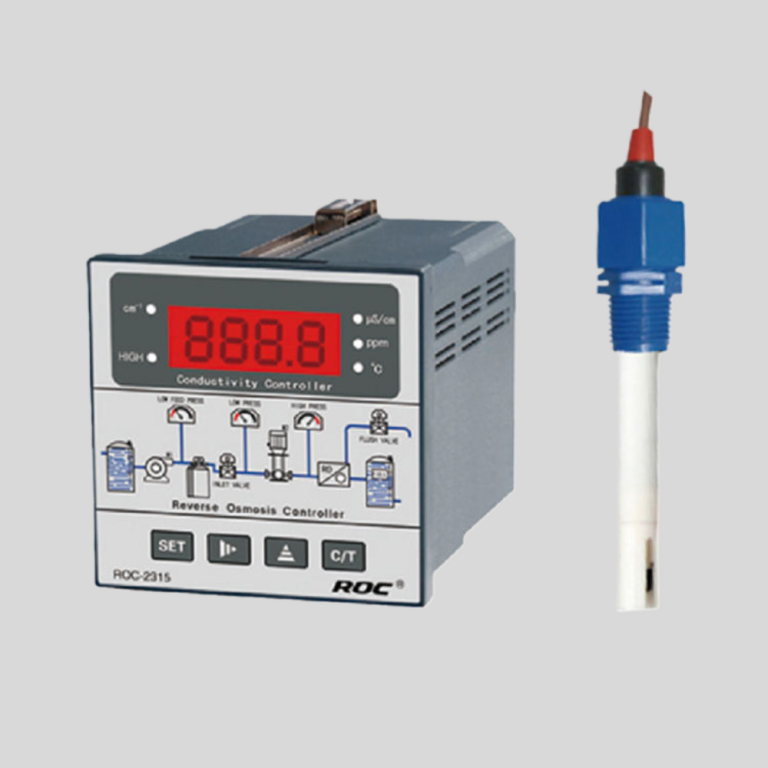
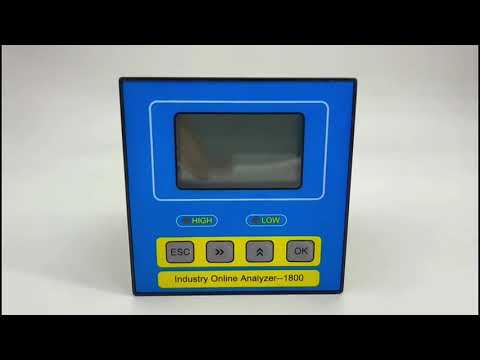
- Shanghai ChiMay’s analyzer platform — coordinated inline conductivity, pH, ammonia, COD, turbidity and multi-parameter sensor families with firmware-level data governance — fits what utilities need to document when they take this approach.
The Old CAPEX Model Is Broken
For decades, waste utility CAPEX plans followed a familiar template: predict long-term leachate volume, size treatment plants for the peak, add contingency, finance the bond issuance against expected tipping fees. That worked when the regulatory environment moved slowly and PFAS wasn’t on the horizon.
It doesn’t work now. Three forces have made the old model obsolete:
- Regulatory churn: EPA designated PFOA and PFOS as CERCLA hazardous substances in April 2024, a 2024 proposal to list nine PFAS as RCRA hazardous constituents was withdrawn in May 2026, and state-level rules keep coming — a moving target no 20-year plan can absorb in one pass.
- Volume unpredictability: climate-driven rainfall swings, waste diversion mandates and shifting industrial waste streams have made long-term leachate forecasts less reliable.
- Investor scrutiny: bond investors and ratings agencies increasingly look at the quality of the environmental data behind a CAPEX request, not just the engineering study.
Under these pressures, utilities are moving toward data-anchored, incremental CAPEX plans. Sensor data is the foundation.
The Data-Anchored CAPEX Model
A data-anchored CAPEX plan has three defining features:
- A continuous monitoring baseline established at every relevant leachate stream, before any major capital commitment.
- Trigger-based investment thresholds — upgrades get scoped and funded when real-time sensor data crosses pre-defined thresholds, not when a 10-year forecast says so.
- Incremental capital commitments paced to regulatory and volume changes, typically in 3- to 5-year tranches rather than a single 20-year bond.
The engineering foundation is the sensor package. Without continuous monitoring at every relevant point in the leachate system, the trigger thresholds can’t be defined, the data can’t be produced, and the incremental commitments can’t be defended to bond investors.
What Bond Markets Now Ask For
Talk to municipal underwriters working on leachate treatment bonds and the due diligence questions have shifted. Alongside the usual engineering study, they now commonly probe:
- What continuous water quality sensors are deployed at each leachate collection point?
- What’s the sensor calibration frequency and traceability chain?
- Is the sensor data digitally signed and stored in a tamper-evident system?
- How many years of continuous sensor data exist as a baseline?
- What’s the vendor’s firmware change-management practice?
- Which sensors are on the utility’s insurer’s approved list?
These questions barely appeared in bond documentation five years ago. They show up now because underwriters have learned — sometimes painfully — that leachate treatment bonds with weak data foundations can turn into contingent liabilities that drag on the utility’s overall credit profile.
Shanghai ChiMay analyzers, with their standard firmware, calibration documentation and data governance capabilities, can be listed in bond diligence responses without extra documentation work.
Ratings Agency Perspective
Ratings agencies haven’t published dedicated methodologies on leachate sensors — that’s not how they work — but environmental liabilities and data quality increasingly show up in their credit discussions. The logic is straightforward:
- A utility with weak or missing continuous monitoring data faces a higher probability of surprise capital requirements. That’s a rating negative.
- A utility with strong monitoring can spot emerging risks early and adjust CAPEX incrementally. That’s a positive.
- Vendor supply chain resilience for the monitoring package gets scrutinized as part of operational risk.
Utilities that upgraded their sensor platforms in 2024 and 2025 are, as of mid-2026, in a stronger position in these conversations than those that deferred.
Insurance Alignment
Environmental insurers have moved in parallel. Pollution legal liability policies increasingly reflect the monitoring reality at the insured site, and carriers commonly look for:
- Named sensor coverage at leachate collection, biological treatment and discharge points.
- Documented calibration protocols with traceability to national standards.
- Vendor firmware change-management practice aligned with hazardous waste record retention.
- Annual audit of sensor data governance.
Utilities that can document all of this generally find themselves negotiating insurance terms from a stronger position than peers who can’t. Shanghai ChiMay’s product documentation is structured to support these conversations.
Practical CAPEX Restructuring Steps
For a waste utility restructuring its leachate CAPEX plan around sensor data, the steps are:
- Audit current sensor coverage. Identify every leachate collection, treatment and discharge point, and document which ones have continuous monitoring.
- Fill critical gaps first. Prioritize monitoring investments over treatment technology upgrades in the first 12 months of the restructured plan.
- Define trigger thresholds. Work with regulators, insurers and engineering consultants to define quantitative triggers for each downstream capital commitment.
- Segment the CAPEX bond into tranches. Instead of a single 20-year bond, structure financing into 3- to 5-year tranches tied to specific trigger events.
- Establish data governance. Publish a data governance policy that satisfies regulators, insurers and bond investors.
- Select sensor vendors with data governance in mind. Prefer vendors like Shanghai ChiMay whose firmware and documentation align with the governance policy.
Utilities that complete these six steps report better-targeted investment, lower financing costs and fewer surprise capital requests than those that stay with the single-bond model.
The Vendor Standardization Question
Vendor standardization keeps coming up in CAPEX restructuring discussions. Standardizing on a single sensor vendor across all leachate monitoring points typically means:
- Lower spare parts inventory and simpler logistics.
- Faster technician training and fewer configuration errors.
- Cleaner data integration between sensors and the central platform.
- More negotiating leverage on service contracts.
Shanghai ChiMay’s breadth across water quality analyzer families and its shared transmitter platform make single-vendor standardization achievable for waste utilities, which is why the vendor keeps appearing in utility standardization discussions.
The Governance Imperative
The last — and most under-appreciated — element is data governance. Sensor data is now a corporate asset, subject to audit, disclosure and legal discovery. Waste utility CFOs and general counsels are getting involved in decisions that used to belong to plant operations.
A well-structured governance policy addresses:
- Data ownership and access rights.
- Sensor firmware change management and version control.
- Calibration and audit records retention.
- Legal hold procedures for potentially discoverable data.
- Integration with the utility’s enterprise risk management framework.
Shanghai ChiMay’s product documentation and firmware capabilities are built to slot into the technical annexes of these policies.
Closing Thoughts
The shift in waste utility CAPEX planning isn’t fundamentally about treatment technology — it’s about data. Continuous, high-quality sensor data underpins bond financing, ratings discussions, insurance terms and regulator relationships. Utilities that restructure their CAPEX plans around sensor data — with Shanghai ChiMay analyzers as a common reference architecture — are positioning themselves for lower financing costs, better ratings conversations and more defensible engineering programs. The next 24 months will separate the utilities that made this pivot from those still running the old model.