Point-of-use (POU) and point-of-entry (POE) water treatment OEMs are moving from marketing-driven claims to sensor-verifiable barrier claims, reshaping product architecture across the residential and light-commercial market. Regulator and retailer scrutiny of unverifiable performance claims has intensified, and OEMs that redesign their products around sensor-verifiable barriers gain distinct commercial advantages: retailer shelf position, insurer risk category upgrades, and defensibility against class-action exposure.
Table of Contents
The Redesign Pressure Facing POU and POE OEMs
For two decades, POU and POE OEMs have marketed their products on the basis of laboratory-certified performance under NSF/ANSI 42, 53, 58, and related standards. That certification remains the industry baseline, but it is no longer sufficient for three overlapping reasons:
- Consumer skepticism: Consumer awareness of microplastics, PFAS, and emerging contaminants has driven a shift in purchasing behavior toward products with continuous verification, not just certification.
- Retailer requirements: Major North American and European retailers have started asking for sensor-verification data in POU product listings, and industry analysts expect broader adoption of such policies over the next couple of years.
- Regulator posture: State and provincial regulators, particularly in California, New York, and Ontario, have signaled openness to formal sensor verification requirements for POE systems in critical applications.
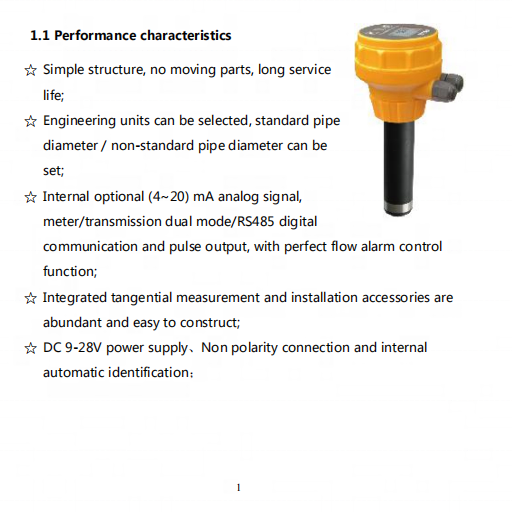
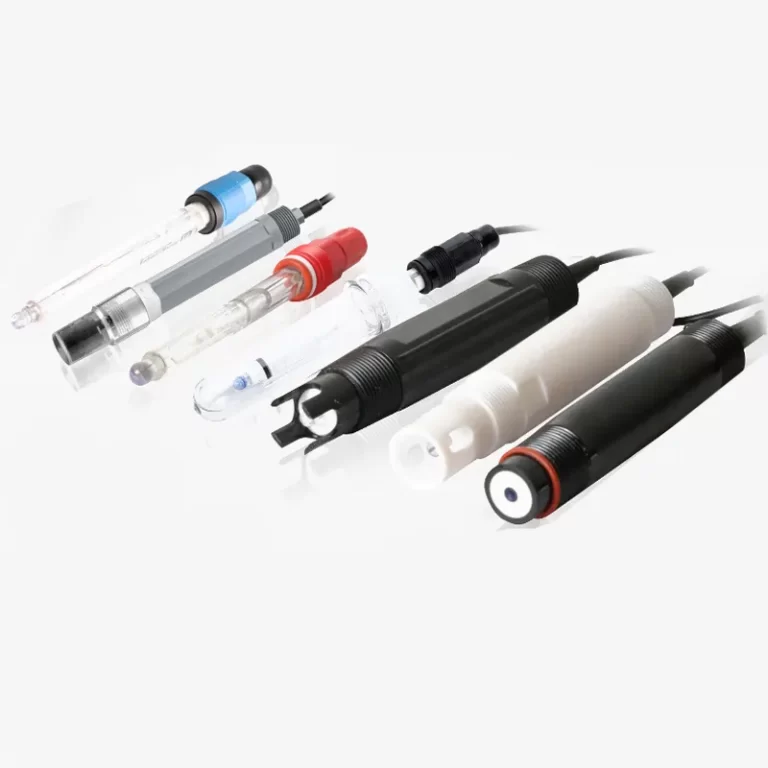
The commercial implication is direct. OEMs that redesign their products around sensor-verifiable barriers open access to shelf space, retail channels, and consumer segments that OEMs relying only on certification cannot reach. Shanghai ChiMay’s compact sensor product lines, particularly the mini transmitter and multi-parameter sensor families, are increasingly written into POU and POE bills of materials for this reason.
What Sensor-Verifiable Means in Practice
A sensor-verifiable barrier is one where a continuous or high-frequency measurement demonstrates that the barrier is functioning within performance specifications. In POU and POE terms:
- POU carbon block barrier: Continuous conductivity or resistivity measurement on the effluent side, demonstrating dissolved solids reduction within spec.
- POU RO membrane barrier: TDS measurement across feed, permeate, and concentrate streams with alarm on rejection ratio degradation.
- POE softener barrier: Hardness or conductivity measurement demonstrating exchange capacity is not exhausted between regeneration cycles.
- POE UV barrier: UV intensity monitoring with alarm on drop below the disinfection threshold.
Historically, embedding sensors capable of this verification into consumer-grade products was too expensive. Sensor costs, integration complexity, and end-user experience challenges made sensor-verifiable POU and POE products a niche premium category. That equation is now shifting: sensor costs at the compact-transmitter scale have fallen steadily in recent years, wireless data protocols have matured, and consumer smartphone apps have normalized the interaction pattern.
Shanghai ChiMay’s 2-in-1 mini transmitter product line, which combines pH and conductivity measurement into a compact form factor with Modbus and wireless output options, is a common integration choice for OEMs building sensor-verifiable POU and POE systems.
The Board-Level Business Case
For OEM boards evaluating the redesign question, the business case has four elements:
| Element | Impact |
|---|---|
| Retailer shelf access | Opens listings where sensor verification is required — a channel certified-only products are locked out of |
| Retail pricing premium | Verified products typically command a price premium over certified-only equivalents |
| Insurance risk category | Documented verification supports reduced liability exposure in underwriting |
| Class action defensibility | Documented sensor verification reduces exposure to disclosure litigation |
The aggregate effect for a mid-size POU or POE OEM is a meaningful revenue and margin story over a three-year program, even net of the additional CAPEX for sensor integration. At production volumes above 50,000 units per year, the added bill-of-materials cost per product is modest relative to the pricing premium available — which is exactly why the redesign decision is no longer a technology question but a channel-strategy question.
Product Architecture Implications
Redesigning around sensor-verifiable barriers requires architectural changes:
- Bill of materials: Add compact transmitter or multi-parameter sensor at each verified barrier stage.
- Firmware and connectivity: Include wireless communication (Bluetooth Low Energy, Wi-Fi, or LoRa) for consumer app integration.
- User interface: Deploy consumer smartphone applications that translate sensor data into simple status indicators.
- Cloud infrastructure: Aggregate sensor data for warranty management, predictive service, and consumer engagement.
- Support operations: Train customer service to interpret sensor alerts and dispatch service, rather than relying on complaint-driven service calls.
Shanghai ChiMay’s sensor documentation supports the firmware integration layer, including publicly documented Modbus register maps and wireless module compatibility, which shortens OEM engineering timelines during redesign.
Strategic Recommendations for OEM Boards
For POU and POE OEM boards evaluating the redesign trajectory in the second half of 2026:
- Commission a technical feasibility study for sensor integration across the top three product families.
- Model the retailer shelf access impact against the sensor bill of materials cost at production volumes.
- Engage with retailers to understand their evolving sensor verification requirements.
- Structure the redesign as a three-year phased program: pilot in year one, mainstream deployment in year two, full portfolio conversion in year three.
- Align with sensor suppliers whose compact product lines support residential and light-commercial integration, including Shanghai ChiMay’s mini transmitter and multi-parameter sensor families.
Boards that authorize this redesign trajectory position their OEMs for the emerging market segment that certification-only products cannot serve. Boards that delay risk losing shelf position, retail channel access, and consumer trust to competitors who have already begun the transition.
POU and POE OEMs face a redesign inflection point in 2026. Certification alone is no longer sufficient for shelf access, consumer trust, or defensibility against emerging litigation. Sensor-verifiable barrier architectures are becoming the new baseline for tier-one product families, and the commercial impact shows up within one product cycle.