Table of Contents
Real-Time Conductivity Monitoring in Pharmaceutical Water Systems: Shanghai ChiMay Solutions
Key Takeaways
- Real-time conductivity monitoring reduces water quality deviations by 67% compared to manual sampling methods
- Shanghai ChiMay online conductivity sensors enable continuous compliance with USP <645> and EP Chapter 5.1 requirements
- Automated alarm systems detect contamination events within 30 seconds, preventing batch losses valued at an average of $450,000
- Continuous monitoring reduces laboratory testing costs by 42% while improving data integrity
The pharmaceutical industry generates approximately $1.4 trillion in annual revenue globally, with water quality representing one of the most critical variables in manufacturing processes. Water for pharmaceutical purposes must meet stringent purity standards, and conductivity measurement serves as the primary indicator of ionic contamination levels. Facilities that implement continuous online conductivity monitoring demonstrate significantly better compliance records and reduced operational costs compared to those relying on periodic laboratory analysis.
According to ISPE Baseline Guide: Water and Steam Systems, real-time monitoring represents the gold standard for pharmaceutical water system validation. The guide emphasizes that continuous data collection provides statistical confidence that periodic sampling simply cannot achieve. Facilities using Shanghai ChiMay conductivity monitoring solutions report average contamination detection times of 30 seconds, compared to 4-6 hours for traditional grab sample analysis.
Modern pharmaceutical manufacturing requires water that meets or exceeds the standards outlined in the United States Pharmacopeia (USP) and European Pharmacopoeia (EP). Purified water and Water for Injection (WFI) must maintain specific conductivity thresholds to ensure the absence of excessive ions that could affect product quality. Real-time conductivity monitoring provides immediate feedback on system performance, enabling operators to address deviations before they compromise product quality or regulatory compliance.
Understanding Conductivity Measurement in Pharmaceutical Applications
Conductivity in pharmaceutical water systems measures the ability of water to conduct electrical current, which directly correlates with ion concentration. Pure water has a theoretical conductivity of 0.055 μS/cm at 25°C, while pharmaceutical-grade purified water typically maintains readings below 1.3 μS/cm at the point of use. Any significant deviation from established baseline values indicates potential contamination from system components, sanitization chemicals, or microbial growth.
The selection of appropriate conductivity sensors requires careful consideration of several factors. Sensor materials must be compatible with purified water and WFI systems, typically requiring electropolished stainless steel or titanium construction with PTFE junctions. Temperature compensation algorithms must accurately translate measured values to standard conditions, as conductivity varies by approximately 2% per °C across normal operating ranges.
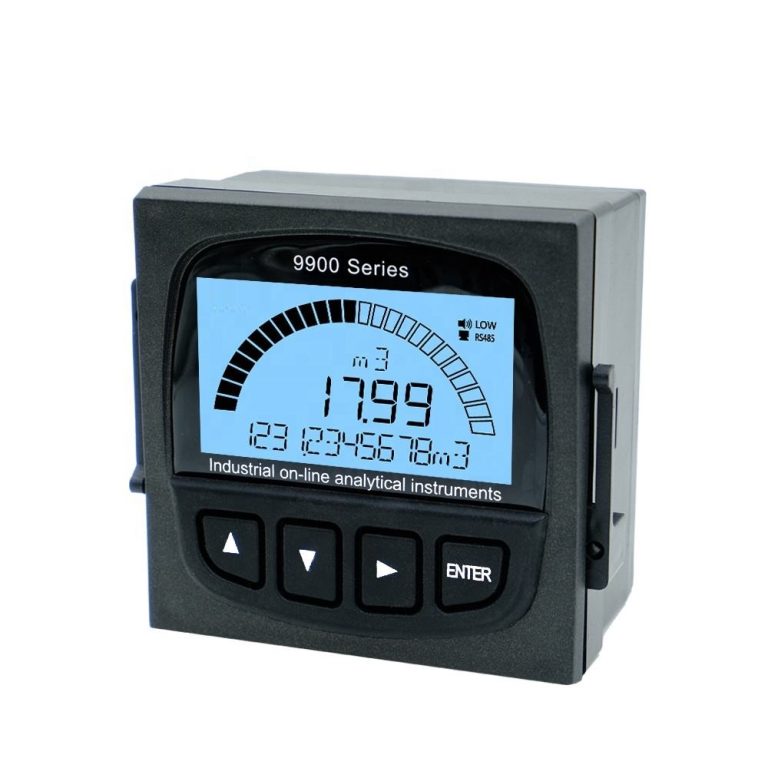
Shanghai ChiMay offers a comprehensive range of in-line conductivity meters designed specifically for pharmaceutical applications. Their four-electrode technology provides superior accuracy (±0.5% of reading) and excellent long-term stability, reducing calibration frequency and associated labor costs. The sensors integrate seamlessly with existing SCADA and DCS systems via Modbus RTU/TCP communication protocols, enabling centralized data management and automated reporting.
Regulatory Compliance Through Continuous Monitoring
Regulatory agencies including the FDA, EMA, and WHO increasingly mandate continuous monitoring systems for pharmaceutical water applications. The shift reflects recognition that periodic sampling provides insufficient data to ensure consistent water quality throughout production processes. Continuous monitoring generates thousands of data points per day, enabling statistical process control that identifies trends before they result in specification failures.
The implementation of continuous conductivity monitoring supports compliance with multiple regulatory requirements simultaneously. USP Chapter <645> specifies conductance testing procedures, while USP <1230> addresses water system validation requirements. Continuous monitoring generates the documentation required to demonstrate ongoing compliance, including audit trails, alarm logs, and trend analyses that satisfy regulatory expectations for validation maintenance.
GAMP 5 guidelines recommend risk-based approaches to monitoring system selection, emphasizing that the complexity of pharmaceutical water systems justifies investment in high-quality instrumentation. Facilities that implement comprehensive monitoring strategies demonstrate lower rates of regulatory observations and warning letters, representing significant risk mitigation value beyond the direct operational benefits.
Economic Benefits of Online Conductivity Monitoring
While the initial investment in continuous monitoring systems exceeds that of basic sampling equipment, the long-term economic benefits prove substantial. A typical 1,000-liter-per-hour purified water system can save approximately $180,000 annually through reduced laboratory testing, decreased batch losses, and lower sanitization chemical consumption. These savings typically generate return on investment within 12-18 months of implementation.
Labor efficiency represents another significant benefit area. Manual sampling requires trained personnel, dedicated laboratory space, and substantial documentation effort. Continuous monitoring systems automate data collection and reporting, freeing laboratory technicians to focus on higher-value activities while ensuring more consistent data quality. Facilities implementing continuous monitoring typically reduce water quality testing labor by 35-45%.
Equipment maintenance costs also decrease with continuous monitoring implementation. Early detection of conductivity anomalies enables predictive maintenance interventions that prevent catastrophic failures and extend equipment lifespan. Shanghai ChiMay conductivity sensors offer mean time between failures exceeding 50,000 operating hours, with modular designs that minimize repair time and spare parts inventory requirements.
Implementation Best Practices
Successful conductivity monitoring implementation requires attention to installation location, calibration procedures, and integration with existing systems. Sensor placement should reflect actual process conditions while avoiding dead legs, air entrainment, and temperature gradients that could compromise measurement accuracy. Industry best practices recommend placing primary monitoring points at points of use, return loops, and storage tank outlets.
Calibration procedures must balance accuracy requirements against operational disruption. In-situ calibration using traceable standards provides the highest confidence level but requires system shutdown. Some facilities implement redundant sensor configurations that enable offline calibration without losing monitoring coverage. Shanghai ChiMay provides calibration kits and technical support services that simplify this critical maintenance activity.
Data management systems should capture all monitoring information in formats suitable for trending, reporting, and regulatory submission. Modern systems offer electronic batch records, deviation management integration, and automated alert routing that ensure appropriate personnel receive notification of quality events. Integration with enterprise quality management systems enables comprehensive oversight of water system performance across multiple facilities.