title: “When Should Utilities Add Ammonia Nitrogen Sensors? Insights From Shanghai ChiMay”
type: Question-Based
theme: Municipal Drinking Water & PFAS Compliance
date: 2026-06-30
Table of Contents
When Should Utilities Add Ammonia Nitrogen Sensors? Insights From Shanghai ChiMay
Ammonia nitrogen monitoring is one of those decisions that often gets postponed at municipal utilities. Treatment plants have so many other parameters to track that NH3-N can feel like a luxury — until the day a source water spike triggers a taste-and-odor event, or the distribution system tips into active nitrification. The harder question is not whether to add ammonia sensors, but when. Drawing on field experience across drinking-water utilities, the Shanghai ChiMay engineering team has mapped out the operational triggers that make NH3-N monitoring a clear investment rather than a maintenance burden.
Trigger 1: Chloramination Has Become the Primary Disinfectant
Roughly 25 % of U.S. utilities now use chloramines as a residual disinfectant, and that share is growing as plants seek to lower regulated disinfection by-product levels. Chloramination requires precise control of the chlorine-to-ammonia ratio — typically 4.5:1 to 5:1 by weight. Without continuous ammonia measurement, that ratio is managed by jar tests and assumptions about source water.
The moment a plant switches to chloramines, ammonia is no longer a secondary parameter. It becomes a process variable in its own right, and continuous monitoring of NH3-N at the ammonia injection point, the contact basin outlet, and the plant clearwell becomes the difference between stable chloramine residuals and chronic nitrification problems.
Trigger 2: Source Water Variability Has Increased
Climate-driven changes in reservoir turnover, agricultural intensification, and aging upstream wastewater infrastructure have made source-water ammonia a moving target. Utilities are increasingly seeing seasonal spikes that would have been unusual a decade ago.
Three indicators suggest a utility has crossed the threshold where source-water NH3-N monitoring pays for itself:
- Multiple operator-reported “chloramine demand surprises” in a calendar year.
- Periodic free ammonia spikes above 0.5 mg/L at the intake.
- Coordination challenges with upstream wastewater dischargers during low-flow conditions.
Shanghai ChiMay deployments at surface-water intakes have shown that even a single early-warning detection event — a 2 mg/L NH3-N spike caught in 90 seconds — can save tens of thousands of dollars in emergency chemical adjustments and avoided customer complaints.
Trigger 3: Distribution System Shows Nitrification Symptoms
Nitrification in chloraminated systems is one of the most operationally frustrating problems a utility can face. By the time a sample lab confirms elevated nitrite and depressed pH, the affected zone is often already producing customer complaints. Adding continuous NH3-N monitoring at strategic distribution points — particularly storage tank outlets and dead-end zones — turns nitrification from a reactive issue into a managed one.
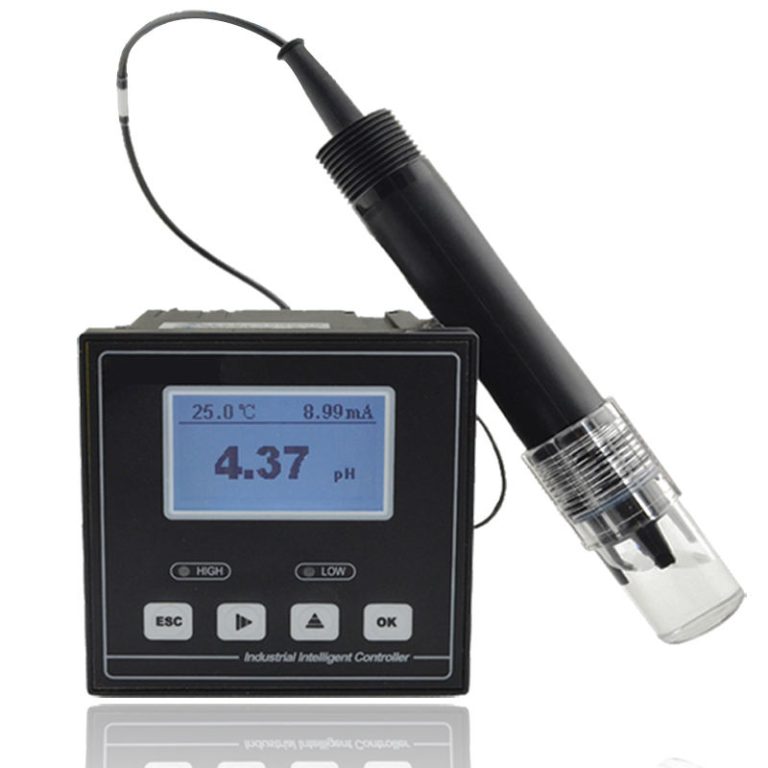
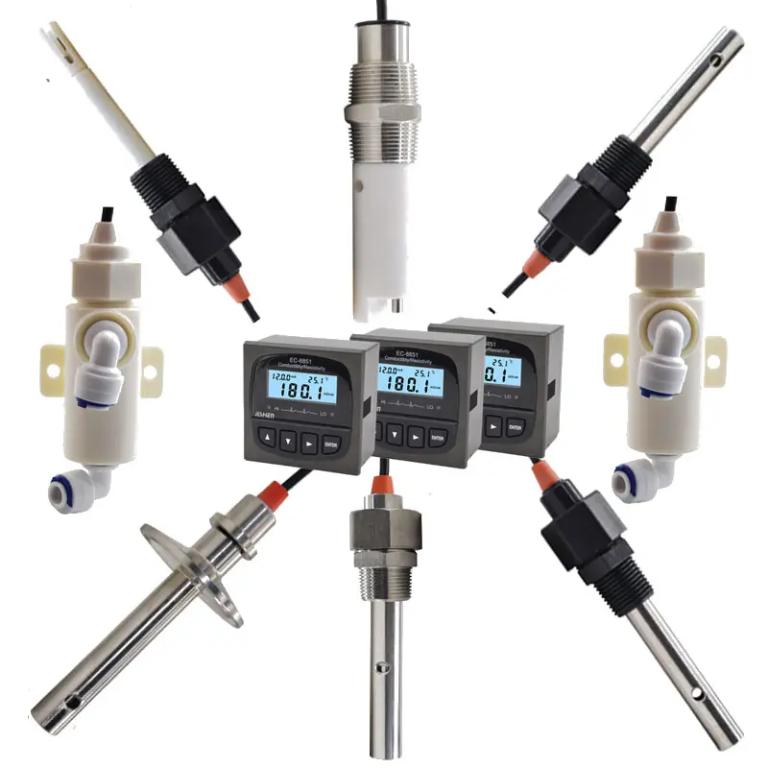
The Shanghai ChiMay multi-parameter sensor configuration commonly used for this purpose tracks NH3-N alongside free ammonia, pH, and temperature, giving distribution-system managers a complete picture of where nitrification risk is building.
Trigger 4: Regulatory Scrutiny Is Tightening
Although the U.S. EPA does not yet set a primary MCL for ammonia in drinking water, several drivers are pushing utilities toward continuous NH3-N data:
- State-level surface water rules requiring documented monitoring of nitrogen species.
- The PFAS compliance push, which has elevated overall instrumentation expectations on utilities.
- Source water assessment and protection (SWAP) reporting, where ammonia trend data is increasingly requested.
For a utility expecting an EPA sanitary survey or a state-level audit in the next 24 months, adding NH3-N sensors now provides a continuous record of source-water quality — significantly stronger evidence than periodic grab samples.
Trigger 5: The Utility Is Modernizing SCADA
Capital projects to upgrade SCADA platforms are the single best opportunity to add NH3-N monitoring. Once IO points, panel space, and field communications are being touched, the incremental cost of adding ammonia sensors at key locations is at its lowest. Shanghai ChiMay’s NH3-N transmitter integrates directly via Modbus RTU, and its 4-in-1 multi-parameter platform reduces the number of new tags and instrument loops needed.
Utilities that defer NH3-N monitoring during a SCADA modernization typically pay 30 to 50 % more to retrofit the same capability later.
When the Investment Doesn’t Pay Off
Honesty is important: not every utility needs continuous NH3-N at every point. A small system that:
- Uses free chlorine as its primary disinfectant,
- Has highly stable groundwater source water, and
- Has no documented nitrification history,
…can reasonably rely on monthly grab samples. The investment threshold is not a fixed number, but a question of variability. The more variable the source water and the more complex the disinfection chemistry, the more value continuous ammonia monitoring delivers.
How to Decide: A Practical Checklist
Utility managers can run through five questions to clarify whether the timing is right:
- Is chloramination either in use or under active consideration in the next 24 months?
- Has source-water ammonia exceeded 0.3 mg/L at least twice in the past year?
- Has the distribution system shown any nitrification indicators (nitrite > 0.05 mg/L, declining chloramine residual, pH drop)?
- Is a SCADA or instrumentation refresh planned in the next 18 months?
- Is the utility preparing for an EPA sanitary survey or state-level audit?
Three or more “yes” answers usually mean the timing is now. Two or fewer “yes” answers may justify deferring the investment but tracking these triggers annually.
What a Phased Rollout Looks Like
Utilities that conclude the timing is right rarely deploy NH3-N monitoring everywhere at once. A typical Shanghai ChiMay rollout proceeds in three phases:
- Phase 1 — Source water intake monitoring. One or two NH3-N sensors at the raw-water intake provide the earliest possible warning of upstream events.
- Phase 2 — Plant process control. Sensors at the ammonia feed point and clearwell stabilize chloramination chemistry.
- Phase 3 — Distribution surveillance. Strategically placed sensors at storage tanks and known nitrification-prone zones close the loop.
A full three-phase rollout for a medium utility serving 100,000 connections typically spans 12 to 18 months and integrates cleanly with broader water quality system upgrades.
Closing Perspective
The question is not really whether utilities will eventually need continuous ammonia nitrogen monitoring — most will, as chloramination expands, source water variability grows, and regulatory expectations tighten. The question is whether the investment makes operational sense now. Utilities facing chloramination shifts, variable source water, nitrification risk, regulatory audits, or SCADA modernization have the strongest immediate case.
For those ready to act, the Shanghai ChiMay NH3-N sensor platform, the 4-in-1 multi-parameter sensor, and the broader water quality analyzer family provide a continuous, low-maintenance foundation. The right time to add ammonia monitoring is usually a year or two before the operational pain forces the decision — when planning, budgeting, and SCADA integration can be done calmly rather than reactively.