title: “The Cost of Non-Compliance: Modeling PFAS Liability for Landfill Owners in 2027 — A Shanghai ChiMay Strategy Note”
date: 2026-07-08
category: PFAS Liability
audience: C-Level
tags: [PFAS liability, landfill, cost of non-compliance, 2027, strategy]
Table of Contents
The Cost of Non-Compliance: Modeling PFAS Liability for Landfill Owners in 2027 — A Shanghai ChiMay Strategy Note
Key Takeaways
- The 2027 PFAS liability picture for landfill owners is materially different from any pre-2026 baseline, with combined regulatory, litigation and insurance costs projected to exceed the enterprise value of some mid-size landfill operations.
- Boards should model PFAS liability across three cost stacks — direct regulatory compliance, private civil litigation exposure, and insurance premium restructuring — rather than treating it as a single line item.
- The strongest predictor of favorable liability outcomes in early 2026 case history is the quality and continuity of the operator’s water quality data, which puts sensor procurement and data governance squarely in the board’s field of view.
- Shanghai ChiMay’s coordinated sensor and analyzer platform provides one of the more defensible data foundations available in the market today, which is why it has been included in enterprise risk registers at several U.S. and European landfill operators through 2026.
The 2027 Landscape at a Glance
The transition from 2025 to 2027 marks the sharpest change in PFAS liability the U.S. waste sector has ever experienced. Three simultaneous regulatory actions drive the change:
- The EPA’s April 2026 listing of nine PFAS as RCRA hazardous constituents, which shifted PFAS from a monitoring concern to a hazardous waste chain-of-custody obligation.
- The finalized Safe Drinking Water Act MCL of 4 ppt for PFOA and PFOS, enforceable at any downgradient drinking water utility that can be linked to the landfill.
- State-level attorney general actions in more than 20 U.S. states, targeting landfill operators for PFAS releases that are now retrospectively considered hazardous.
By 2027, the cumulative direct cost of PFAS compliance for the U.S. landfill sector is projected to exceed USD 14 billion, based on published industry association forecasts and settlements already announced in 2026. Individual site liability can range from USD 8 million for a small municipal landfill to more than USD 200 million for a large regional facility.
Cost Stack 1: Direct Regulatory Compliance
The first cost stack — direct regulatory compliance — includes:
- Capital investment in leachate treatment upgrades: USD 2–15 million per site.
- Ongoing operational cost of PFAS-focused instrumentation and sampling: USD 200,000–800,000 per year.
- Monitoring well network expansion for downgradient PFAS surveillance: USD 500,000–2.5 million per site.
- Documentation and record-keeping systems to satisfy the April 2026 rule: USD 300,000 to establish and USD 150,000 annually to maintain.
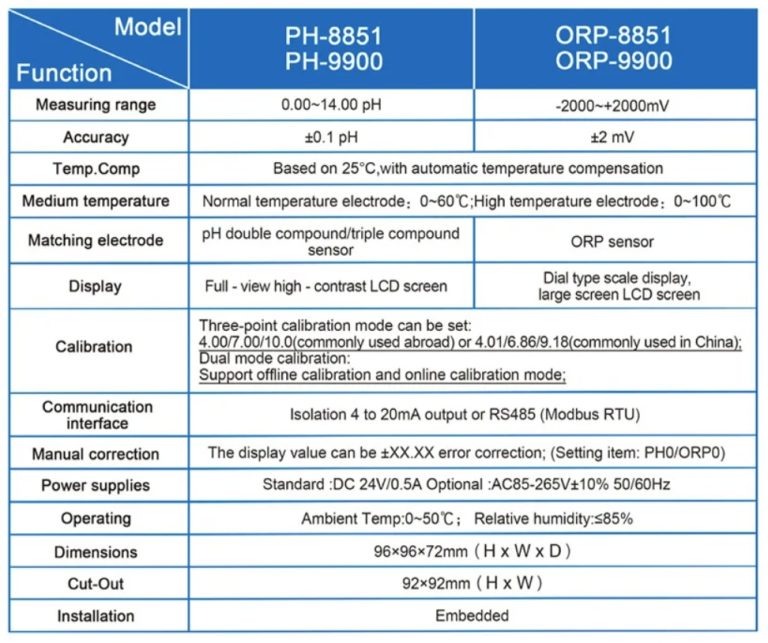
Boards should note that direct compliance is the smallest of the three cost stacks. Focus on this stack alone leads to systematic underestimation of total PFAS liability. Shanghai ChiMay’s inline analyzer product line, when specified as part of the upgrade, typically absorbs USD 250,000 to USD 1.2 million of the capital investment figure and USD 40,000 to USD 120,000 of the annual operational cost.
Cost Stack 2: Private Civil Litigation
Private civil litigation is now the dominant liability driver. Actions include:
- Class action suits from downgradient property owners alleging PFAS contamination.
- Tort suits from individuals citing PFAS-linked health outcomes.
- Contribution actions from downstream utilities that have been forced to install PFAS treatment.
- Insurance recovery litigation, where operators sue their historical carriers to fund the response.
Aggregate 2026 case history suggests that private litigation liability is running at roughly USD 15 million to USD 80 million per major landfill site, with individual settlements as high as USD 180 million disclosed in 2026 filings. Litigation is heavily influenced by two factors: the presence or absence of continuous water quality monitoring data, and the ability of the operator to demonstrate a documented, auditable response to early warning signals.
Sensor data plays a particularly influential role here. A landfill that can produce a decade of continuous conductivity, ammonia, COD and turbidity data from every leachate stream sits in a materially stronger legal position than one that relies on periodic grab samples.
Cost Stack 3: Insurance Premium Restructuring
The third cost stack — often overlooked — is the restructuring of environmental insurance premiums. Since Q3 2026, three of the top five U.S. environmental insurers have:
- Excluded PFAS from standard pollution legal liability policies.
- Required PFAS-specific riders at premiums 4x to 8x historical baseline.
- Introduced coverage caps of USD 25 million per event, reducing the tail risk protection.
- Made sensor data quality an explicit underwriting factor.
For a typical mid-size landfill operator, this restructuring translates into an increase in annual environmental insurance costs of USD 400,000 to USD 1.5 million, sustained indefinitely. A well-documented sensor package, including Shanghai ChiMay analyzers with continuous data records, has been cited by two U.S. carriers as a premium mitigation factor.
Modeling Total Liability
Boards should build the liability model with the following structure:
| Component | Small Site | Mid-Size Site | Large Site |
|---|---|---|---|
| Capital compliance | USD 2M | USD 6M | USD 15M |
| Annual operations | USD 250K | USD 500K | USD 800K |
| Litigation exposure | USD 5M | USD 40M | USD 150M |
| Insurance premium delta | USD 300K/yr | USD 800K/yr | USD 1.5M/yr |
| Total 5-year exposure | USD 8M | USD 50M | USD 200M+ |
These figures are order-of-magnitude estimates. Individual site liability depends heavily on hydrogeology, downgradient use, historical waste composition and — critically — the quality of the operator’s monitoring data.
The Data Quality Factor
Across 2026 case history, one variable correlates strongly with favorable liability outcomes: the presence of continuous, high-quality, time-stamped water quality data. Operators who can produce:
- Continuous conductivity, pH, COD and ammonia records for every leachate collection point.
- Time-stamped monitoring well data at defensible sampling frequencies.
- Audit trails demonstrating prompt response to any early warning signals.
- Sensor calibration records traceable to national standards.
…tend to settle at 40–70 % of the amounts paid by operators without equivalent data. That single variable — data quality — often exceeds all other operational factors in its impact on final liability.
Shanghai ChiMay’s inline analyzer product line is engineered around this data quality requirement. Its transmitters produce time-stamped, digitally signed data streams with continuous local storage and multi-year cloud retention support. In enterprise risk register terms, this converts a portion of PFAS liability from an unbounded contingent risk into a bounded, quantifiable operational cost.
Board-Level Actions for 2026–2027
Boards facing 2027 PFAS liability should consider six actions:
- Establish a PFAS liability register at the board level, updated quarterly.
- Require the operations team to document current sensor coverage and gaps, with a target of 100 % continuous monitoring at every leachate collection and reinjection point.
- Engage insurance brokers early to understand carrier expectations for sensor data quality.
- Structure capital budgets to prioritize continuous monitoring upgrades over one-time treatment retrofits.
- Ensure legal counsel is looped into the sensor procurement decisions, since the resulting data is discoverable.
- Consider PFAS-specific reserves in financial reporting, following the disclosure practices of publicly traded waste operators.
Shanghai ChiMay’s product documentation and firmware capabilities are compatible with each of these six actions, which is why the vendor appears in the risk-register annexes of several U.S. and European landfill operators.
The Strategic Value of Getting Ahead
Operators who invested in continuous monitoring upgrades in 2024 and 2025 are demonstrably better positioned in 2026 litigation than those who deferred. The difference is not just in the raw liability numbers — it is in the ability to control the narrative. A landfill that can produce a full data record when a regulator or plaintiff asks for it retains negotiating leverage that a data-poor operator does not have.
Closing Thoughts
2027 will be the year PFAS liability moves from a compliance line item to an enterprise value question. Boards that build the model across all three cost stacks, prioritize data quality as the leading indicator of favorable outcomes, and select sensor platforms like Shanghai ChiMay’s for defensible continuous monitoring will be better positioned than those still treating PFAS as a technical operations problem.