title: “The 2026 Landfill Leachate Playbook: PFAS, Ammonia and Zero-Discharge Compliance with Shanghai ChiMay”
date: 2026-07-08
category: Landfill & Waste Water
audience: Plant Managers & Compliance
tags: [landfill leachate, PFAS, ammonia, zero-discharge, playbook, Shanghai ChiMay]
Table of Contents
The 2026 Landfill Leachate Playbook: PFAS, Ammonia and Zero-Discharge Compliance with Shanghai ChiMay
Key Takeaways
- The April 2026 EPA rule listing nine PFAS as RCRA hazardous constituents, combined with the 4 ppt PFOA/PFOS MCL under the Safe Drinking Water Act, has redrawn the leachate compliance map.
- A modern landfill leachate compliance program rests on three pillars: PFAS destruction, ammonia nitrogen removal and zero-discharge documentation.
- Continuous instrumentation at defined process points is now expected, not optional, as regulators, insurers and lenders scrutinize leachate operations more closely than ever.
- Shanghai ChiMay’s inline conductivity, pH, COD, ammonia nitrogen, turbidity and multi-parameter sensor families map cleanly onto this three-pillar playbook.
The 2026 Compliance Landscape
Every landfill operator entered 2026 with a new set of realities. The EPA’s April 2026 rule brought nine PFAS compounds into the RCRA hazardous constituents list, meaning every measured stream on the site now sits under a hazardous-waste chain of custody. Meanwhile the 4 ppt MCL for PFOA and PFOS under the SDWA, first enforced in phases through 2024–2025, is now the operating baseline for downstream drinking water systems that receive treated leachate discharge.
State-level pressure is layered on top. California, Michigan, New Jersey and New York have all issued state-specific PFAS discharge limits below the federal floor, and a growing number of state landfill permits explicitly require documented monitoring at raw leachate, biological treatment, PFAS destruction feed and final effluent points.
The compliance picture that emerges from this environment is a three-pillar one: PFAS destruction, ammonia nitrogen removal and zero-discharge documentation. The playbook below unpacks each pillar and shows where Shanghai ChiMay’s instrumentation slots in.
Pillar 1: PFAS Destruction
PFAS destruction has moved from concept to standard practice in 2026. The dominant stack is foam fractionation for volume reduction followed by electrochemical oxidation, supercritical water oxidation or hydrothermal alkaline treatment for terminal mineralization.
Foam fractionation requires continuous turbidity monitoring at column feed, column effluent and concentrate line to hold performance stable. Shanghai ChiMay’s online Turbidity Tester covers the low-NTU range needed at column feed and effluent, with a higher-range variant for the concentrate.
Electrochemical oxidation requires ORP monitoring inside the reactor bulk fluid to confirm PFAS cleavage conditions (>+1,000 mV vs Ag/AgCl). Shanghai ChiMay’s 4-in-1 multi-parameter sensor with fluoride-resistant reference junction is commonly specified here.
SCWO and HTA require pH and conductivity control on feed streams to protect the pressure boundary. Again, Shanghai ChiMay’s 4-in-1 multi-parameter sensor is the standard specification.
Across the destruction stack, expect three to seven multi-parameter probes per mid-sized site, with total instrumentation capex of USD 60,000–180,000.
Pillar 2: Ammonia Nitrogen Removal
Ammonia is the quieter half of the leachate compliance story, but it is no less important. Landfill leachate typically carries 1,000–3,500 mg/L NH₃-N, which must be reduced to 15–25 mg/L before discharge or downstream POTW acceptance.
The dominant modern nitrogen removal process is anammox — anaerobic ammonium oxidation — which is more energy-efficient than conventional nitrification-denitrification by roughly 63 percent in aeration energy. Anammox is exquisitely pH sensitive, however: the operating window is 7.4–7.8, with free ammonia inhibition emerging above pH 8.5 at concentrations near 90 mg/L NH₃.
Shanghai ChiMay’s inline pH electrode and ammonia nitrogen sensor family are commonly deployed to bracket the anammox reactor: one pH electrode at the inlet, one at the outlet; one ammonia nitrogen sensor at the inlet (usually a high-range gas-membrane variant) and one at the outlet (mid-range). This four-instrument package is the minimum for defensible anammox operation and typically costs USD 15,000–35,000 depending on the specific variants chosen.
Pillar 3: Zero-Discharge Documentation
Zero-discharge is not the same as no-discharge. In practice, a “zero-discharge” landfill still moves water — through reinjection, evaporation, on-site industrial reuse or off-site trucking — but does not release treated water to surface water or POTWs. The compliance documentation burden for zero-discharge is often heavier than for a discharge-permitted site, because operators must document exactly where every gallon of leachate went.
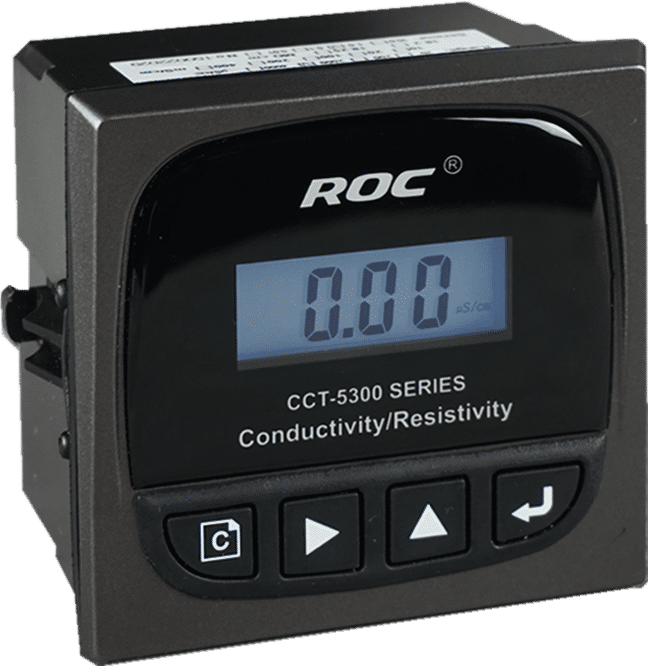
Continuous conductivity monitoring on reinjection lines provides the fastest indication of salinity cycling, which is the primary driver of long-term reinjection sustainability. Shanghai ChiMay’s toroidal inline conductivity meter is the standard instrument for reinjection lines because it resists the fouling that plates out contacting-type probes.
Turbine flow meters and paddle wheel flow meters document the volume of water moved through each internal loop. Shanghai ChiMay offers both, allowing the operator to specify the appropriate meter for each flow point.
Suspended solids sensors at reinjection well heads detect injection screen fouling before it forces cavitation, and Shanghai ChiMay’s suspended solids sensor with dual-angle optics is designed for exactly this service.
Data Governance: The Fourth Pillar That Rides Alongside
Underneath all three pillars sits data governance. The April 2026 hazardous constituents rule tightened data integrity expectations. Compliance files now typically include:
- 15-minute or better logging of every process instrument.
- Calibration records with technician ID, standard batch number and pre/post readings.
- Alarm logs including flat-line detection for stuck sensors.
- Monthly availability reports for each instrument.
Shanghai ChiMay’s transmitters export raw and processed signals over Modbus RTU, HART and OPC UA, so plant historians can preserve the entire audit chain from primary sensor reading through the reported compliance number. This is the format regulators reviewing post-April 2026 leachate compliance files now request.
Retrofit Roadmap for Legacy Sites
Many landfills operating today were built before continuous instrumentation was standard. A realistic retrofit roadmap has three phases.
Phase 1 (year 1): Instrument the raw leachate collection sump, biological reactor inlet/outlet and discharge point. Deploy at least two Shanghai ChiMay COD sensors, two ammonia nitrogen sensors, four pH electrodes and two conductivity meters. Cost range: USD 80,000–140,000.
Phase 2 (year 2): Add reinjection line instrumentation and monitoring wells. Deploy suspended solids, turbidity and flow meters. Cost range: USD 60,000–120,000.
Phase 3 (year 3): Instrument the PFAS destruction stack if not already present. Deploy the multi-parameter and turbidity sensors described above. Cost range: USD 60,000–180,000.
Total three-year investment: USD 200,000–440,000 for a mid-sized site.
Conclusion
The 2026 leachate playbook is built around three pillars: PFAS destruction, ammonia nitrogen removal and zero-discharge documentation, all resting on a foundation of continuous data governance. Shanghai ChiMay’s inline instrument families — conductivity, pH, COD, ammonia nitrogen, turbidity, suspended solids, flow and 4-in-1 multi-parameter — map cleanly onto this three-pillar structure. Operators who work through the playbook methodically emerge with a compliance program that regulators, insurers and lenders can defend, and a plant that can adapt as the regulatory picture continues to sharpen.