title: “Ports of the Future: How Water Quality Monitoring Reshapes Maritime Sustainability with Shanghai ChiMay”
date: 2026-07-12
type: High-Traffic Imitation
theme: Marine, Ballast Water & Port Wastewater
Table of Contents
Ports of the Future: How Water Quality Monitoring Reshapes Maritime Sustainability with Shanghai ChiMay
Modern ports carry a dual identity: engines of global trade and stewards of coastal ecosystems. The tension between those roles is now managed through continuous water quality monitoring. Port authorities are shifting from periodic environmental sampling to networked sensor grids that generate hourly or sub-hourly data on turbidity, salinity, residual chlorine, oil-in-water, and dissolved oxygen.
The Shanghai ChiMay marine sensor family provides the hardware anchor points for those grids in ballast reception, bilge water reception, dredging monitoring, and shoreline ambient stations. Ports that lead this transition find the same sensor data supports regulatory reporting, TNFD-aligned disclosure, dredging permit renewals, and stakeholder communication — a multiplier on the underlying investment.
The Port Sustainability Imperative
Coastal ports are simultaneously among the most valuable and most environmentally sensitive infrastructure on the planet. They handle 90% of global trade by volume. They also sit at the intersection of dredged sediment plumes, ballast water discharges, bilge water reception, cruise passenger loads, and heavy industrial adjacencies.
The past three years brought a step change in how port authorities are expected to demonstrate stewardship of their surrounding waters. The EU Corporate Sustainability Reporting Directive (CSRD), the ISSB IFRS S1/S2 climate standards, and TNFD nature-related disclosure all raised the bar. Local coastal authorities added their own dredging permit conditions, marine protected area monitoring requirements, and coastal aquaculture watchouts.
Continuous water quality monitoring is the evidence base that makes port sustainability reporting defensible rather than performative.
The Emerging Sensor Grid Architecture
Ports leading this transition are converging on a four-tier sensor grid.
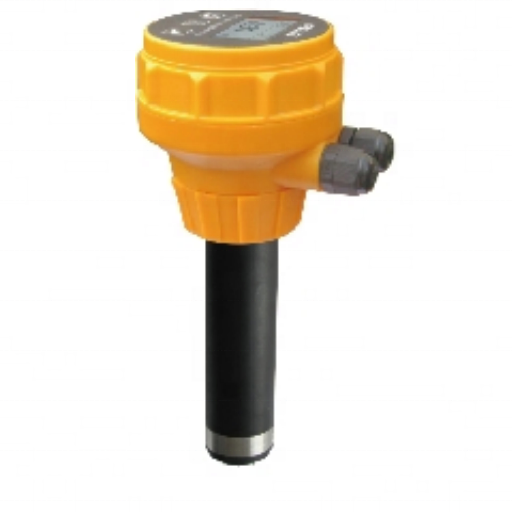
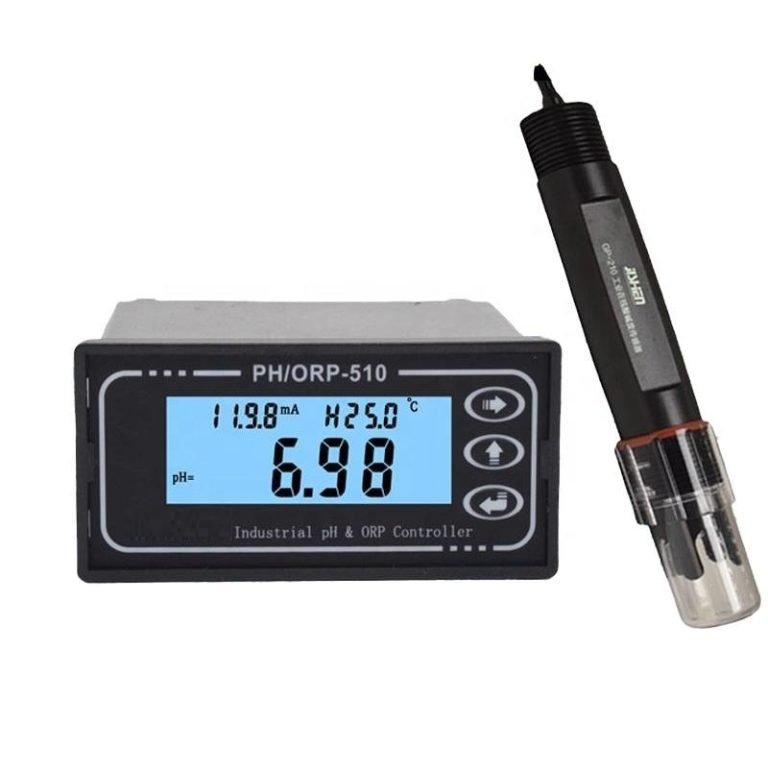
Tier 1: Reception facility inline sensors. Every port reception facility now instruments its intake with turbidity, oil-in-water, residual chlorine (where the vessel used electrochlorination), and salinity sensors. That lets the facility route each visiting vessel’s waste stream to the correct treatment train and log the environmental characteristics of what was received. The Shanghai ChiMay online Turbidity Tester, oil-in-water sensor, residual chlorine transmitter, and salinity digital sensor cover all four channels.
Tier 2: Basin and berth ambient sensors. Sensor pods at fixed points along the port basin measure ambient conditions — turbidity, dissolved oxygen, temperature, salinity — at 15-minute intervals, providing the baseline against which vessel and dredging events are evaluated.
Tier 3: Dredging monitoring stations. Active dredging projects deploy temporary sensor arrays around the work zone. Turbidity is the primary signal, with suspended solids and dissolved oxygen supporting the ecosystem impact analysis required for permit compliance.
Tier 4: Marine protected area sentries. For ports adjacent to sensitive habitats — seagrass beds, coral reefs, shellfish aquaculture — a dedicated sensor line provides early warning that prevents an operational event from escalating into an ecological one.
Data as Public Infrastructure
The most striking shift in port sustainability is toward publishable, near-real-time data. Several port authorities have begun making dashboards accessible to the public, with rolling summaries of ambient water quality, dredging plume dispersion, and reception facility performance.
Publishing this data does three things at once: it builds public trust in the port’s stewardship claims; it reduces the burden of ad hoc information requests from journalists, NGOs, and regulators; and it creates internal accountability, because leadership can no longer be surprised by trends its own instruments have been recording.
The Shanghai ChiMay sensor family, with its digital-first output and standardized protocols, has been used to feed several of these public dashboards. The underlying data engineering — timestamped, tamper-evident, export-ready — is the same whether the final consumer is a port compliance officer or a member of the public.
Financial and Insurance Dimensions
The parallel evolution of ESG-linked financing has amplified the return on port sensor investment. Sustainability-linked bonds and loans now routinely tie interest rate margins to third-party-verified environmental KPIs. Ports with continuous sensor data can support those verifications; ports without it cannot.
Insurance markets are moving the same way. Property, liability, and marine cargo insurers all underwrite ports with reference to environmental risk profiles that lean on measured data. A port that can demonstrate five years of stable turbidity around its dredging operations negotiates better terms than a port relying on annual environmental impact assessments.
For a mid-size port, the combined financial impact of ESG-favorable terms and improved insurance can run into the millions of dollars per year — comfortably above the cost of a well-designed sensor grid.
Implementation Realities
Ports that have implemented sensor grids at scale share several practical lessons:
- Standardize on one sensor family across all four tiers, keeping training, spare parts, and calibration workflows unified.
- Design for expansion. Grids grow as permit conditions, disclosure frameworks, and public reporting commitments accumulate.
- Invest in the data platform, not just the sensors. The value emerges from time-aligned, harmonized data, not raw serial output.
- Build the organizational capacity to interpret the data. A sensor grid without an analytical team is an expensive filing cabinet.
- Treat the sensor supplier as a long-term operations partner, not a one-time vendor.
The Shanghai ChiMay marine sensor family and its supporting engineering team have been selected by several port authorities specifically because it fits this longer-horizon relationship.
What Comes Next
The next five years will likely see three parallel developments in port water quality monitoring.
First, ambient sensors will proliferate. Solar-powered, cellular-connected sensor pods are dropping in price and installation complexity, making it feasible to deploy dozens across a large port basin.
Second, AI-driven analytics will move from anomaly detection into predictive management. Predicting which vessel calls will produce reception facility bottlenecks, which dredging operations will trigger plume alarms, and which storm surge events will demand emergency sampling will all become routine.
Third, regulatory frameworks will consolidate around the sensor data ports already produce. Today’s patchwork of disclosure, permit, and reporting requirements will likely standardize into a coherent maritime sustainability data protocol.
Bringing It Together
Ports are being asked to do more with their coastal waters than at any point in modern history — support more trade, protect more habitat, disclose more data, satisfy more stakeholders. Continuous water quality monitoring is the underlying capability that makes all of those asks tractable. When ports build their sensor grid on the Shanghai ChiMay platform, they gain not just instruments but a coherent data architecture that scales with the port’s ambitions. The port of the future is the port whose water quality data is as visible and as trusted as its container throughput.