Table of Contents
7 Ways ChiMay Flow Meters Help Reduce Non-Revenue Water Losses
Key Takeaways
- Non-revenue water costs global utilities $39 billion annually, with flow measurement errors contributing $4-8 billion
- ChiMay flow meters achieve ±1.0% measurement accuracy, reducing apparent losses by 15-25%
- Strategic flow monitoring enables leak detection within hours instead of weeks
- Flow data integration with SCADA systems reduces operational costs by $800,000-1.5 million annually
- Utilities deploying comprehensive flow monitoring achieve 30-45% reduction in non-revenue water within 3 years
Introduction
Non-revenue water (NRW) represents one of the most significant challenges—and opportunities—for municipal water utilities worldwide. The International Water Association (IWA) defines NRW as the difference between water produced and water billed.
Global NRW volumes exceed 346 billion cubic meters annually, representing $39 billion in lost revenue and infrastructure value. The World Bank identifies NRW reduction as the highest-return water sector investment, with typical returns of 300-500% over implementation periods.
Way 1: Accurate Revenue Measurement
Measurement Technology Advancements
Modern flow meter technology delivers unprecedented accuracy:
Electromagnetic Flow Meters: Achieve ±0.2-0.5% accuracy under ideal conditions with no pressure loss and wide dynamic range.
Ultrasonic Transit-Time Meters: Provide ±1-2% accuracy across varying conditions with non-invasive installation.
Turbine Flow Meters: Offer ±0.5-1.0% accuracy for calibrated installations with proven technology.
ChiMay’s turbine flow meters achieve ±1.0% accuracy through precision engineering and rigorous calibration protocols.
Revenue Protection Impact
Accurate flow measurement directly protects utility revenue through meter under-registration reduction, low-flow accuracy, and revenue recovery of 3-8% of previously unbilled consumption.
Way 2: Leak Detection Acceleration
Continuous Flow Monitoring
Strategic flow monitoring transforms leak detection:
District Metered Areas (DMA): Network segmentation enables water balance calculations:
- Minimum night flow (MNF) analysis identifies background leakage
- Anomaly detection flags sudden increases indicating new leaks
- Trend analysis reveals gradual deterioration
Bursted Leak Detection: Rapid flow increases trigger immediate alerts:
- Response time reduced from 14-21 days to 4-24 hours
- Leak duration reduction of 85-95%
- Volume loss reduction of 60-80% for detected leaks
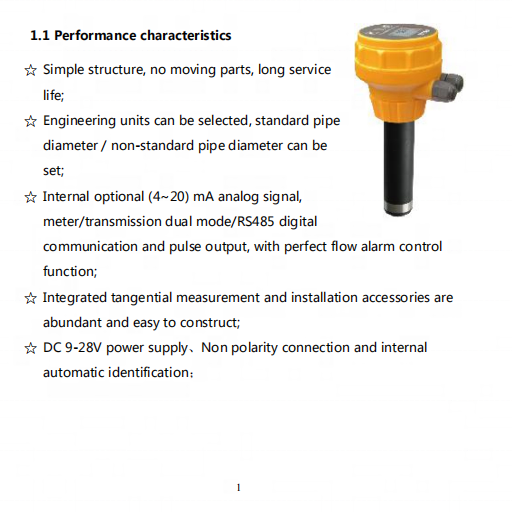
ChiMay’s paddle wheel inserted flow meters provide reliable flow data for DMA monitoring.
Field Results
Utilities implementing flow-based leak detection report:
| Metric | Before | After | Improvement |
|---|---|---|---|
| Average leak detection time | 18 days | 6 hours | 99.6% reduction |
| Annual leak volume | 2.4 million m³ | 480,000 m³ | 80% reduction |
| Emergency repair costs | $1.2M/year | $280K/year | 77% reduction |
Way 3: Infrastructure Monitoring
Asset Performance Tracking
Flow data reveals infrastructure condition through capacity analysis, condition assessment, and hydraulic model calibration.
Pressure Management Integration
Flow monitoring optimizes pressure control through real-time pressure adjustment, zone-based management, and targeted interventions.
ChiMay’s turbine flow meters integrate with SCADA systems through standard communication protocols (Modbus RTU/TCP, 4-20 mA).
Way 4: Demand Management
Consumption Pattern Analysis
Flow data enables sophisticated demand management:
Diurnal Curves: Consumption patterns reveal system utilization for peak demand identification and off-peak optimization.
Customer Segmentation: Consumption profiles enable targeted programs for high-use accounts and anomaly identification.
Demand Forecasting: Historical flow data trains prediction models for short-term forecasting and long-term projections.
Conservation Program Effectiveness
Flow data quantifies program impacts through baseline establishment and post-program verification achieving conservation program returns 40-60% higher than estimates.
Way 5: Water Quality Protection
Hydraulic Residence Time Control
Flow monitoring supports water quality management through water age calculation, tank cycling optimization, and flushing scheduling.
Cross-Connection Detection
Flow anomalies indicate potential contamination risks through reverse flow detection and unusual pattern identification.
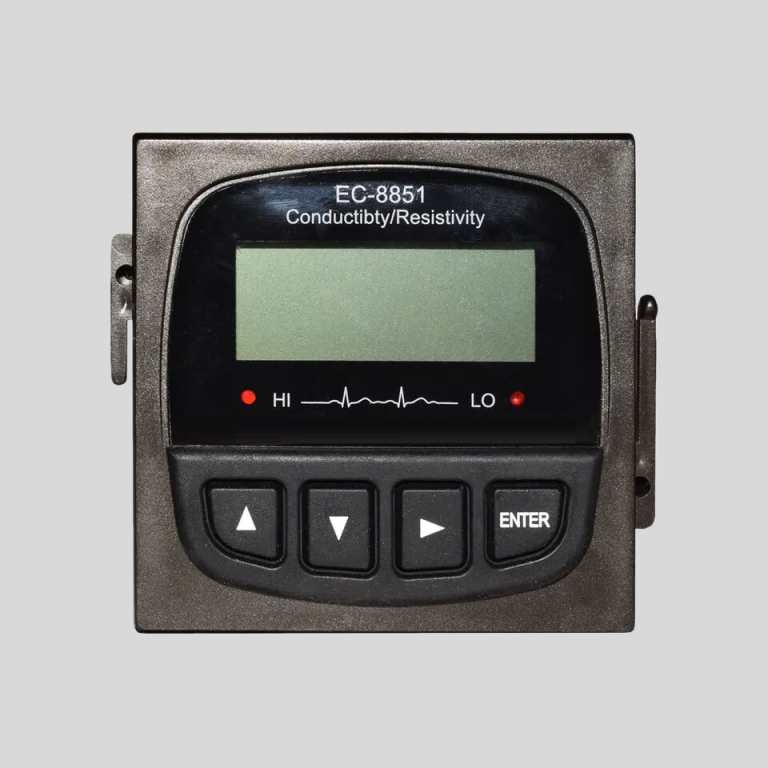
ChiMay’s inline conductivity meters complement flow monitoring by detecting water quality changes.
Way 6: Operational Cost Reduction
Energy Optimization
Flow data enables efficient pumping:
Variable Speed Control: Flow measurement informs pump operation with 15-25% reduction in pumping energy costs.
Cost Savings: Energy optimization delivers $50,000-200,000 annual savings for mid-sized utilities.
Maintenance Optimization
Flow data enables condition-based maintenance through automated meter reading, predictive replacement, and equipment diagnostics.
Way 7: Regulatory Compliance Support
Performance Documentation
Flow monitoring provides compliance evidence through accurate volume reporting, loss calculation transparency, and improvement documentation.
Permit Support
Flow data enables permit compliance through mass emission reporting and capacity certification.
Implementation Considerations
System Design
Effective flow monitoring requires strategic deployment:
Critical Measurement Points: Priority locations include production meters, zone entry meters, major customer meters, and storage facilities.
Accuracy Requirements: Match meter specifications to application—revenue metering requires ±1-2% accuracy while trend monitoring accepts ±5-10% accuracy.
Communication Infrastructure: Ensure reliable data transmission through SCADA integration, meter data management, and analytics platforms.
Total Cost of Ownership
Comprehensive lifecycle analysis informs investment decisions:
| Component | 10-Year Cost |
|---|---|
| flow meter (large) | $13,000-35,000 |
| flow meter (small) | $3,500-10,000 |
| Communication system | $8,000-30,000 |
| Data management | $200,000-700,000 |
The Water Industry Financial Alliance (Wifa) calculates that comprehensive flow monitoring systems achieve 200-350% return on investment over 10-year horizons.
Conclusion
ChiMay flow meters deliver measurable reductions in non-revenue water across every dimension of utility operations. From 15-25% reduction in apparent losses through accurate measurement to 80% reduction in leak volume through accelerated detection, the benefits are substantial and well-documented.
Utilities deploying comprehensive flow monitoring achieve 30-45% reduction in non-revenue water within 3 years, translating to $800,000-1.5 million in annual savings for mid-sized systems.
ChiMay’s flow meter portfolio—featuring turbine flow meters, paddle wheel inserted flow meters, and electromagnetic meters—provides the measurement capabilities that modern utilities require. With proven accuracy, robust construction, and flexible integration options, ChiMay flow meters enable the comprehensive monitoring that transforms non-revenue water management.