Table of Contents
Role of Multi-Parameter Sensors in Climate Adaptation Strategies
Key Takeaways
- Climate adaptation investments will require $340 billion annually by 2030 according to the World Bank
- Multi-parameter sensors reduce monitoring costs by 40% compared to single-parameter installations
- Real-time data enables 50% faster response to environmental emergencies
- Integrated sensor platforms improve data correlation accuracy by 35%
- Automation through multi-parameter monitoring reduces operational staffing requirements by 30%
The accelerating pace of climate change has fundamentally altered the relationship between human communities and water resources. Rising sea levels, intensifying precipitation patterns, and shifting hydrological cycles demand sophisticated approaches to water management that can adapt to changing conditions while maintaining service reliability. At the heart of these adaptive strategies lies advanced sensing technology—specifically, multi-parameter water quality sensors that provide comprehensive environmental intelligence for decision-making.
The Intergovernmental Panel on Climate Change projects that water-related climate impacts will affect approximately 3.6 billion people by 2050, highlighting the urgent need for adaptive infrastructure investments. Multi-parameter sensing technology offers a cost-effective approach to enhancing water management capabilities, providing the data foundation required for evidence-based climate adaptation planning.
Understanding Multi-Parameter Sensing Technology
Multi-parameter water quality sensors consolidate multiple measurement capabilities into single instrument platforms, enabling simultaneous monitoring of parameters including pH, conductivity, dissolved oxygen, turbidity, temperature, and chlorophyll. This integration offers substantial advantages over single-parameter monitoring approaches, including reduced installation complexity, improved data correlation, and lower overall system costs.
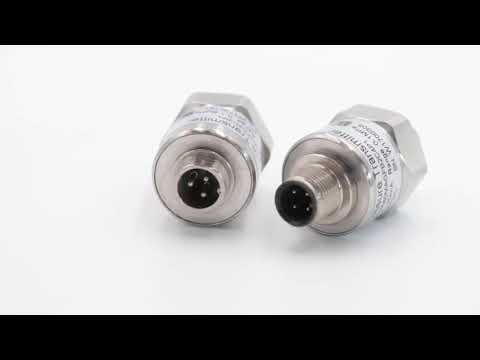
The Shanghai ChiMay 4-in-1 multi-parameter sensor exemplifies the capabilities of modern integrated monitoring platforms. By combining pH measurement, conductivity measurement, dissolved oxygen sensing, and temperature compensation in a single housing, this instrument provides comprehensive water quality assessment while minimizing deployment requirements. The compact design enables installation in locations where separate instruments would be impractical.
Measurement accuracy in multi-parameter sensors depends critically on proper installation and regular maintenance. Sensor housings must be positioned to ensure adequate water flow across measurement surfaces while avoiding dead zones or areas of sediment accumulation. The American Water Works Association recommends installing multi-parameter sensors in locations with minimum flow velocities of 0.3 m/s to prevent biological growth and ensure measurement representativeness.
Climate Adaptation Applications
Coastal Zone Management
Sea level rise and increased storm intensity pose significant challenges for coastal water management infrastructure. Multi-parameter sensors deployed in coastal waters provide early warning of saltwater intrusion into freshwater aquifers, enabling proactive management interventions. The U.S. Environmental Protection Agency reports that 23% of coastal aquifers show measurable signs of salinization, threatening freshwater supplies for approximately 65 million coastal residents.
Conductivity measurements serve as the primary indicator of saltwater intrusion, with elevated readings signaling the presence of seawater in freshwater systems. Multi-parameter sensors enabling continuous conductivity monitoring allow water managers to track intrusion front movement and optimize pumping strategies to minimize salt water entrainment. The National Oceanic and Atmospheric Administration estimates that effective saltwater intrusion monitoring can extend coastal aquifer useful life by 15-25 years.
Flood Resilience Infrastructure
Urban flooding represents a growing concern as climate change intensifies precipitation extremes. Multi-parameter sensors deployed in stormwater systems provide real-time data for flood prediction models, enabling early warning and automated response systems. Research from the Netherlands Institute of Ecology demonstrates that multi-parameter data improves flood prediction accuracy by 25-40% compared to single-parameter approaches.
The integration of turbidity measurements with flow monitoring enables estimation of sediment loads transported during storm events. This information supports design of appropriate sediment management strategies and prediction of receiving water quality impacts. Multi-parameter sensors that include COD sensors and SS sensors provide additional data for assessing pollutant loads associated with urban runoff.
Agricultural Water Management
Climate change is reshaping agricultural water availability, with shifting precipitation patterns creating both water scarcity and flood risks for farming operations. Multi-parameter sensors deployed in irrigation systems and drainage networks enable precision water management that maximizes crop yields while conserving water resources. The Food and Agriculture Organization reports that precision irrigation technologies can reduce water consumption by 30-50% while maintaining or improving crop production.
Dissolved oxygen monitoring proves particularly valuable for agricultural applications, as oxygen levels directly affect root health and nutrient uptake. Multi-parameter sensors enabling continuous dissolved oxygen measurement support optimized aeration strategies that enhance crop growth while minimizing energy costs. Integration with automated valve systems enables real-time adjustment of irrigation and drainage operations based on sensor readings.
Data Integration and Analysis
The value of multi-parameter sensing extends beyond individual parameter measurements to include analysis of parameter interactions and correlations. Machine learning algorithms trained on multi-parameter datasets can identify patterns invisible to single-parameter analysis, enabling prediction of conditions before they manifest in any individual parameter measurement.
The Shanghai ChiMay multi-parameter sensor series supports direct communication with SCADA systems and cloud-based data platforms through industry-standard protocols including Modbus and 4-20mA analog outputs. This connectivity enables seamless integration with enterprise data management systems and supports advanced analytics applications.
Data quality assurance represents a critical consideration for multi-parameter monitoring installations. Cross-parameter validation—comparing relationships between measured parameters against known physical laws—enables automated detection of sensor malfunction or data corruption. For example, the relationship between water temperature, dissolved oxygen saturation, and measured conductivity follows well-characterized physical principles; deviation from expected relationships may indicate measurement errors requiring investigation.
Economic Analysis of Multi-Parameter Monitoring
Investment in multi-parameter monitoring technology yields returns through multiple mechanisms. Capital costs for integrated sensor platforms typically range from $3,000 to $15,000 depending on specifications and configuration, compared to $8,000-25,000 for equivalent single-parameter monitoring capability. The International Water Association estimates that multi-parameter monitoring reduces total installed system costs by 35-45% compared to equivalent single-parameter approaches.
Operational cost savings arise from reduced maintenance requirements, simplified calibration procedures, and decreased staffing needs. Multi-parameter sensors requiring single calibration visit compared to multiple visits for separate instruments reduce maintenance costs by approximately 40%. The UK Water Industry Research organization reports that automated multi-parameter monitoring reduces operational labor requirements by 25-35% compared to manual monitoring approaches.
Total Cost of Ownership Comparison
| Cost Category | Single-Parameter Approach | Multi-Parameter Approach | Savings |
|---|---|---|---|
| Initial Capital | $25,000 | $12,000 | 52% |
| Annual Maintenance | $4,800 | $2,900 | 40% |
| Calibration Services | $3,200 | $1,800 | 44% |
| 5-Year Total Cost | $57,000 | $32,500 | 43% |
Implementation Best Practices
Successful multi-parameter monitoring implementation requires attention to several key factors. Sensor selection should match measurement requirements to instrument capabilities, considering parameter ranges, accuracy specifications, and environmental compatibility. The American Society of Civil Engineers recommends conducting pilot monitoring programs lasting a minimum of six months before full-scale deployment to validate sensor performance under local conditions.
Installation design should minimize maintenance access requirements while ensuring representative measurement conditions. Fixed installations with automated cleaning systems offer lowest ongoing operational costs but require careful site selection. Portable or semi-permanent installations provide greater flexibility for investigating specific concerns but may sacrifice measurement continuity.
Data management infrastructure must scale appropriately to accommodate multi-parameter data streams. The Global Water Quality Measurement Institute recommends planning data storage capacity at minimum one gigabyte per monitoring station per year for comprehensive multi-parameter monitoring installations. Cloud-based data platforms offer scalable storage and processing capabilities that eliminate on-premises infrastructure requirements.
Future Directions in Sensing Technology
Sensor technology continues advancing rapidly, with emerging capabilities promising enhanced climate adaptation support. Nanotechnology-based sensors offer improved sensitivity and selectivity for trace contaminant detection. Biosensor technology enables rapid identification of specific pathogens and biological indicators. Wireless sensor networks reduce installation complexity while enabling flexible deployment configurations.
The integration of artificial intelligence with multi-parameter monitoring will enable increasingly sophisticated analysis capabilities. Predictive algorithms trained on extensive historical datasets may soon anticipate water quality changes before they manifest in measurable parameter variations. The Water Research Foundation projects that AI-enhanced monitoring systems will deliver 30-40% improvement in event prediction accuracy compared to current approaches within the next decade.
Climate adaptation demands that water management systems become more responsive, resilient, and efficient. Multi-parameter sensing technology provides the data foundation required for achieving these objectives, enabling evidence-based decision-making that protects public health, supports economic development, and preserves environmental quality. The investment required for comprehensive multi-parameter monitoring represents a fraction of the costs associated with climate-related water management failures, making sensor deployment one of the highest-return investments available to water resource managers.
This technical overview provides information about multi-parameter sensing technologies for climate adaptation applications. Professional consultation is recommended for specific implementation projects.