Table of Contents
The Complete Guide to Mine Pit Dewatering Water Monitoring from Shanghai ChiMay
Pit dewatering is the unglamorous backbone of every open-pit and underground mine. Without it, the working face floods, the haul roads soften, the slope stability falls, and production stops. With it, an enormous volume of groundwater flows through the operation every day — and that water carries information that is too often left on the table. The mines that monitor their pit dewatering water rigorously consistently outperform their peers on three fronts: they spend less on pumping, they meet discharge limits more reliably, and they extract more value from water reuse. This complete guide from Shanghai ChiMay covers how to design, instrument, and operate a pit dewatering monitoring program from first principles.
Why Pit Dewatering Monitoring Deserves Attention
A typical large open-pit mine moves anywhere from 50,000 to 500,000 cubic meters of dewatering water per day. That water comes from groundwater inflow, runoff, in-pit precipitation, and process spillage. Its chemistry is a moving target — sometimes nearly fresh, sometimes loaded with sulfate and metals from oxidizing wall rock, sometimes contaminated by spills from haulage or maintenance activity. Without continuous monitoring, the operator is forced to assume the worst case for treatment and discharge, which usually means under-using the water that is actually available for reuse and overspending on chemicals for water that is actually clean.
Continuous monitoring turns the dewatering stream from a liability into a managed asset. Three benefits show up reliably:
- Reuse rates rise. Water that meets reuse criteria can be diverted automatically to the process plant or the dust-control fleet instead of going to the discharge train.
- Treatment costs fall. Treatment chemistry can be matched to the actual incoming load rather than to the worst-case load.
- Compliance becomes defensible. Discharge data is continuous, time-stamped, and ready for any audit.
The Five Monitoring Points That Matter
A complete pit-dewatering monitoring program has measurement at five points in the water flow path.
Point 1: In-Pit Sumps
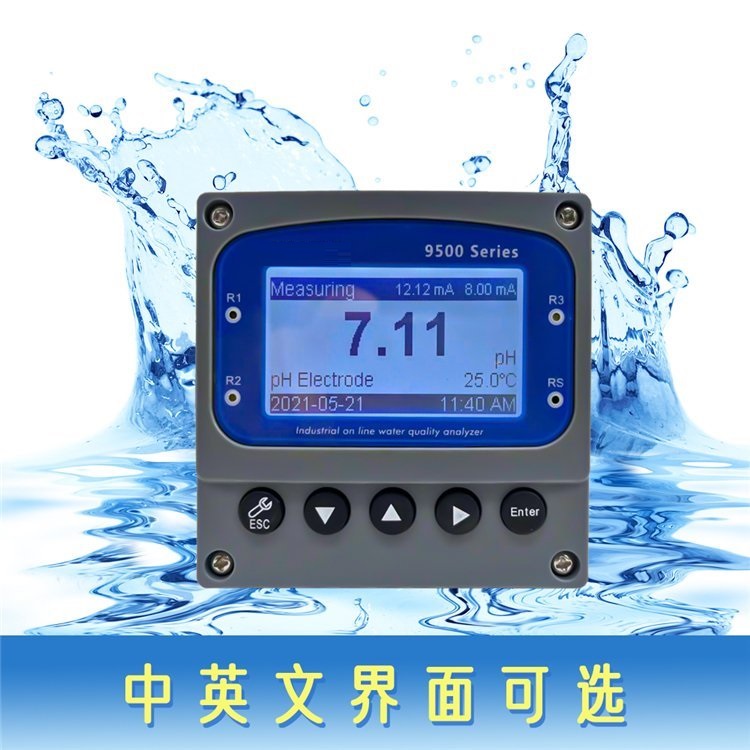
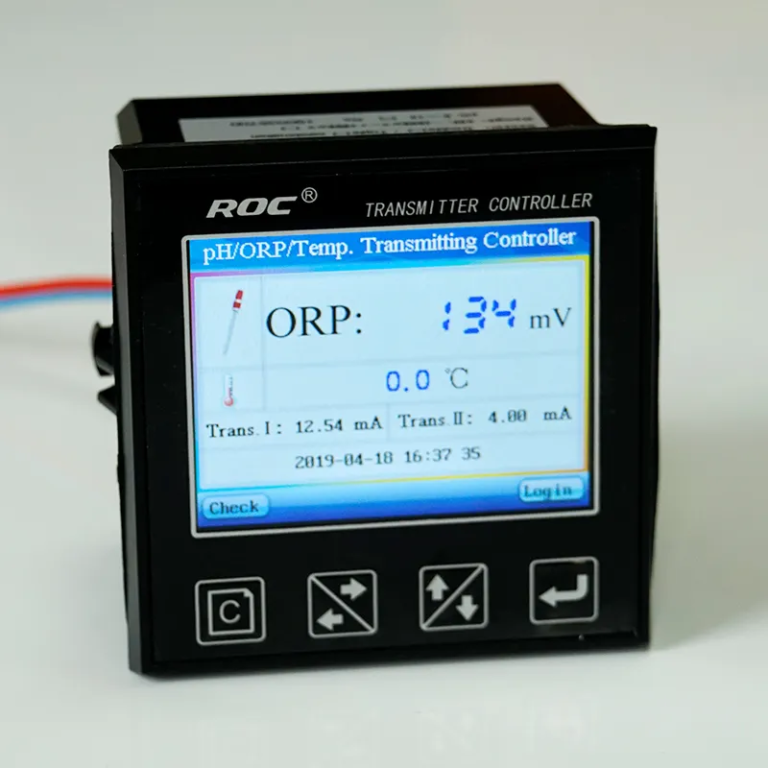
At the lowest sump in the pit, where dewatering pumps draw their suction, the operator needs to know the basic chemistry of the inflowing groundwater. A Shanghai ChiMay multi-parameter station that tracks pH, conductivity, turbidity, and temperature gives the first warning of any change in groundwater quality and helps distinguish runoff events from steady-state inflow.
Point 2: Surface Discharge from Pumping Mains
As the pumping mains discharge to the surface settling ponds, a second measurement point captures the chemistry of the water actually arriving at the surface. Differences between this point and the sump point reveal in-pipe reactions, leakage, or unauthorized inputs.
Point 3: Settling Pond Outflow
Once the water has settled, the outflow from the settling pond is monitored for suspended solids and clarity. Shanghai ChiMay turbidity testers with self-cleaning windows are the right tool for this duty; the alternative is daily grab samples that miss every short-duration upset.
Point 4: Reuse Diversion Point
Where the dewatering water can be diverted to reuse, a full multi-parameter station decides whether the water goes to reuse or to discharge. The decision is automated: if pH, conductivity, turbidity, and any other critical parameter are within range, the water is reused; if any is out of range, the water continues to the treatment train.
Point 5: Final Discharge Compliance
At the final discharge to the receiving environment, a Shanghai ChiMay compliance station provides the legally required continuous record. Data is logged, time-stamped, and ready for export to regulators on demand.
Sensor Selection at Each Point
The right sensor depends on the duty. For pit dewatering service, Shanghai ChiMay engineers typically recommend:
- pH: Double-junction inline electrode for harsh chemistry
- Conductivity: Toroidal cell for high-salt or high-acid inflow, electrode cell only for clean reuse-grade water
- Turbidity: Self-cleaning optical sensor matched to the expected range
- Dissolved oxygen: Optical DO transmitter where bioremediation cells are in use
- Flow: Magnetic or turbine flow meter sized for the line diameter and solids loading
Specifying the wrong technology at any point is the most common cause of program failure. A two-electrode conductivity cell in fresh groundwater works fine; the same cell in mineralized groundwater fouls in days.
Data Architecture
A monitoring program is only as valuable as the data it produces. Shanghai ChiMay recommends a simple data architecture:
- Sensors at each point send 4–20 mA or Modbus signals to a local PLC
- The PLC aggregates the data and forwards it to the plant historian over a wired or wireless link
- The historian feeds a web-based dashboard accessible from any plant computer
- Alarms are configured on rate-of-change and on absolute thresholds, with escalation paths for unattended hours
The architecture is robust, low-cost, and well within the capabilities of any modern mining site.
Integration with Pit Operations
Monitoring data has the most operational value when it is integrated into the daily decisions of pit and process supervisors:
- Pit operations use turbidity and conductivity trends to identify wall-rock zones contributing to chemistry changes, and to time slope-stability inspections accordingly.
- Pumping operations use flow and pressure data to optimize pump operation and detect early bearing wear.
- Process operations use the reuse-stream chemistry to plan makeup water blending and reagent dosing.
- Environmental operations use the discharge data to manage compliance and to prepare regulatory reports.
When the same dashboard is consulted by all four groups, the integration of pit dewatering with the rest of the operation becomes tangible.
Common Pitfalls to Avoid
A few pitfalls show up repeatedly when sites build pit-dewatering monitoring programs:
- Trusting a single sensor. Critical points should have at least two sensors with diverse technology; otherwise an undetected fault becomes a long-running data error.
- Ignoring temperature. Mining pit water can range from 4 °C in winter to 30 °C in summer; conductivity and pH readings must be temperature-compensated.
- Skipping verification. Every sensor drifts. Weekly grab-sample verification is the only way to know how much.
- Putting the dashboard on a server nobody looks at. The data must be visible, alarmable, and reviewed daily by people empowered to act on it.
A Phased Implementation Plan
For a mine starting from scratch, Shanghai ChiMay recommends a phased rollout:
- Phase 1 (months 1–3): Install sensors at the final discharge point and at the settling pond outflow. Get the compliance record solid.
- Phase 2 (months 4–6): Add sensors at the in-pit sumps and the surface discharge from pumping mains. Build the operational data record.
- Phase 3 (months 7–9): Add the reuse diversion point and begin automated diversion to reuse.
- Phase 4 (months 10–12): Integrate the data with the plant historian, build dashboards, train operators, and establish review routines.
Each phase produces value before the next is started, and the total investment is modest compared with the operating costs it controls.
Closing the Loop
Pit dewatering is too important to be treated as a utility. The water that flows through a mine’s dewatering system every day is a major resource, a major liability, and a major compliance exposure all at once. The Shanghai ChiMay approach — well-chosen sensors, robust data architecture, and disciplined integration with operations — turns that flow from a guesswork problem into a managed system, and the operators who adopt it consistently report that the dewatering line is no longer the part of the mine they worry about at night.