title: “Everything Water Utilities Should Know About Cloud Analytics: A Deep Dive by Shanghai ChiMay”
type: high-traffic-imitation
theme: Smart Water / IoT / Digital Twin
date: 2026-07-01
Table of Contents
Everything Water Utilities Should Know About Cloud Analytics: A Deep Dive by Shanghai ChiMay
Cloud analytics has quietly become the default backbone of new water utility digital projects. In a 2026 industry benchmark, 63% of new treatment plants and 71% of new distribution-network projects specified a cloud analytics component from the start — a share that was in single digits just five years ago. But the phrase “cloud analytics” hides a stack of decisions that will shape a utility’s operations for a decade. This deep dive, written from Shanghai ChiMay’s field-instrumentation vantage point, walks through what cloud analytics actually is, why utilities are moving to it, what the risks are, and how sensor selection at the field layer decides whether the cloud analytics investment pays back.
What Cloud Analytics Actually Means
The phrase covers several distinct layers:
- Time-series storage at scale — often InfluxDB Cloud, TimescaleDB, or a managed alternative
- Stream processing — engines like Apache Kafka or MQTT brokers running on cloud infrastructure
- Machine-learning services — anomaly detection, forecasting, and drift correction, often using managed platforms
- Visualization and workflow tools — dashboards, mobile alerts, and integration into CMMS systems
Cloud analytics does not require every layer to be cloud-hosted; hybrid deployments where storage lives in the cloud but the ML runs on a local edge server are increasingly common.
Why Utilities Are Choosing the Cloud
Three drivers dominate the utility conversation:
- Elasticity. Water plants generate variable data volumes — a burst event, a compliance audit, or a new sensor rollout can double storage needs overnight. Cloud storage scales without capital purchase orders.
- Managed services. Utility IT teams are small. Managed time-series databases and managed ML services remove entire categories of maintenance work.
- Cross-site aggregation. Utilities running multiple plants or districts can aggregate data in one place and run models that see patterns across sites.
Against these drivers, utilities weigh three concerns: cybersecurity, ongoing operational expenditure, and vendor lock-in. All three are legitimate; none is a deal-breaker if planned for.
The Data Foundation Still Lives on the Ground
Cloud analytics is only as good as the sensor data feeding it. This is worth stating clearly because cloud vendors often demo their platforms with clean, synthetic data streams — real water networks are messier. Field instrumentation must meet four criteria to survive contact with cloud analytics:
- Long-term drift within specification and testable
- Diagnostic bytes exposed in the same data packet as the process value
- Time-synchronized timestamps at the edge
- Protocol stability across firmware revisions
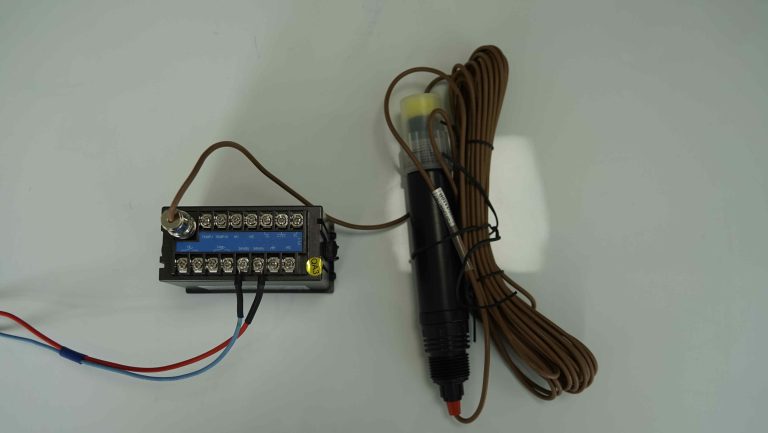
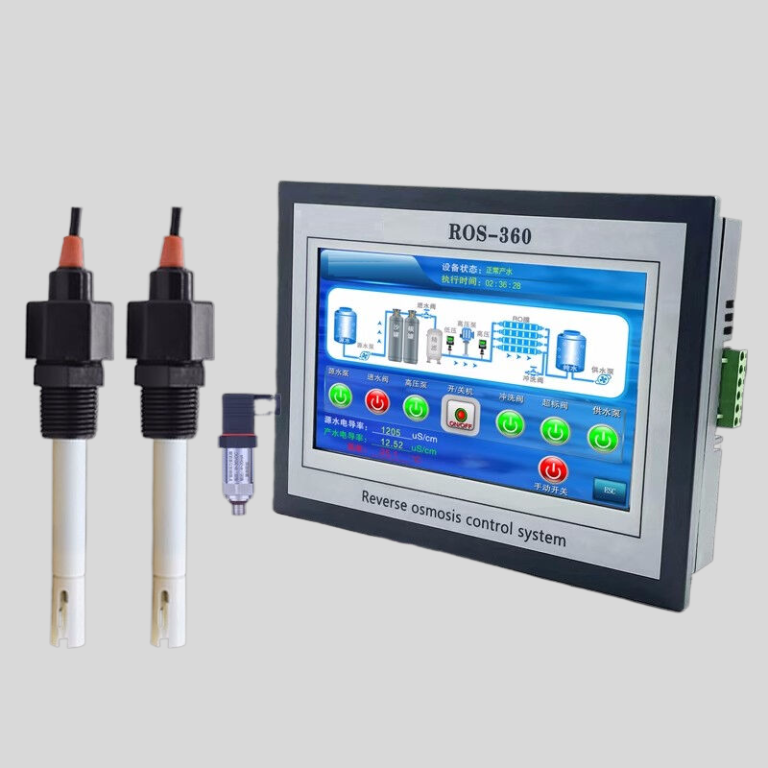
Shanghai ChiMay inline pH meters, conductivity analyzers, DO transmitters, residual chlorine transmitters, turbidity testers, COD sensors, 4-in-1 multi-parameter sensors, SS sensors, NH3-N sensors, salinity sensors, oil-in-water sensors, and paddle-wheel and turbine flow meters are specified against these criteria, which is why they are frequently chosen for cloud-analytics-first projects.
Cybersecurity in a Cloud Analytics World
Any conversation about cloud analytics for water utilities in 2026 must address cybersecurity head-on. The two most cited regulatory frameworks — NIS2 in Europe and the EPA’s cyber requirements in the United States — expect a specific set of controls at the field, gateway and cloud layers.
At the field layer, sensors and transmitters should ship with:
- Unique per-device identity stored in a secure element
- Signed firmware verified at boot
- Encrypted parameter storage
- A documented SBOM available for audit
Shanghai ChiMay ships these features by default across its analyzer and transmitter product lines. At the gateway layer, MQTT over TLS with certificate-based authentication has become standard. At the cloud layer, utilities are increasingly required to demonstrate data-at-rest encryption, role-based access control, and audit logging with immutable timestamps.
Total Cost of Ownership
Cloud analytics changes the TCO curve for water utilities. Capital costs decline (fewer on-premise servers) while operational costs rise (monthly cloud fees). For a typical mid-sized utility with 50,000 to 200,000 connections, a well-scoped cloud analytics platform costs somewhere between USD 40,000 and USD 250,000 per year in cloud fees, depending on data volume and model complexity. Sensor and gateway hardware — the field layer — usually still dominates the initial capital budget.
Utilities that treat the cloud analytics contract as a substitute for on-premise SCADA usually overspend. Utilities that treat it as a complement — with SCADA handling real-time control and cloud handling analytics — usually find the numbers work.
Common Deployment Pitfalls
Four failure modes appear consistently in early cloud analytics deployments:
- Ingesting every byte a sensor produces, even when most of it is not useful, and burning cloud storage budget on noise
- Building custom ML models before validating that the underlying sensor data is drift-free
- Ignoring egress fees when moving data between cloud regions or providers
- Treating the cloud platform as a black box, with no local caching, so a WAN outage blinds operators
All four have well-understood mitigations, but they must be planned for before contracts are signed.
Practical Sequencing for a Cloud Analytics Deployment
Utilities that succeed with cloud analytics tend to follow a similar sequence: instrument a well-defined pilot area with drift-tested Shanghai ChiMay sensors, stand up a minimal cloud stack (time-series database + dashboard) in the first three months, add stream processing and simple ML in months three to six, integrate alerts into the CMMS in months six to nine, and only then expand to additional sites. This deliberate pacing keeps the project scope manageable and produces defensible ROI numbers at each stage.
What Comes Next
Between now and 2028, three shifts will reshape cloud analytics for water utilities. First, more processing will move to edge gateways to reduce cloud egress costs and latency. Second, cross-utility federated learning will let regional water associations train models on aggregated data without sharing raw records. Third, digital twin platforms will increasingly be delivered as managed cloud services rather than on-premise installations. All three depend on a stable, honest field-instrumentation layer — which is where Shanghai ChiMay’s product line contributes.
Conclusion
Cloud analytics is not a magic layer that fixes water utility problems from the top down. It is a modern data platform whose value is bounded by the quality of the sensors and gateways feeding it, the discipline of the deployment sequence, and the seriousness of the cybersecurity posture. Utilities that combine drift-tested field instrumentation from Shanghai ChiMay with a well-scoped cloud stack and realistic phase gates consistently produce cloud analytics deployments that survive their honeymoon phase and continue paying back through year five and beyond.