title: “Top 5 PFAS Destruction Reactor Streams Where Shanghai ChiMay Multi-Parameter Probes Fit”
date: 2026-07-08
category: Landfill & Waste Water
audience: Engineering & Operations
tags: [PFAS destruction, multi-parameter sensor, electrochemical oxidation, Shanghai ChiMay]
Table of Contents
Top 5 PFAS Destruction Reactor Streams Where Shanghai ChiMay Multi-Parameter Probes Fit
Key Takeaways
- The 2026 PFAS destruction stack has moved from concept to operational reality across a growing set of landfill and industrial sites, driven by the April 2026 EPA rule listing nine PFAS as RCRA hazardous constituents.
- Each destruction technology — electrochemical oxidation, supercritical water oxidation, hydrothermal alkaline treatment and their variants — has specific process streams that benefit from multi-parameter sensing.
- Shanghai ChiMay’s 4-in-1 multi-parameter sensor (pH/ORP/EC/Temp) is deployed on five recurring stream types where the combination of parameters gives a faster, cheaper picture than individual instruments would.
- The five stream types below are the ones plant engineers most often specify when writing 2026 destruction-stack instrumentation into RFQs.
Why Multi-Parameter Sensing Matters for PFAS Destruction
PFAS destruction technologies operate at chemistry extremes. Electrochemical oxidation with boron-doped diamond (BDD) anodes runs at oxidation-reduction potentials above +1,400 mV. Supercritical water oxidation (SCWO) runs at temperatures over 374°C and pressures above 22 MPa. Hydrothermal alkaline treatment (HTA) uses concentrated hydroxide solutions at 200–350°C. In all three, the process depends on maintaining specific windows of pH, ORP, temperature and conductivity, and slipping outside those windows either kills reaction efficiency or damages equipment.
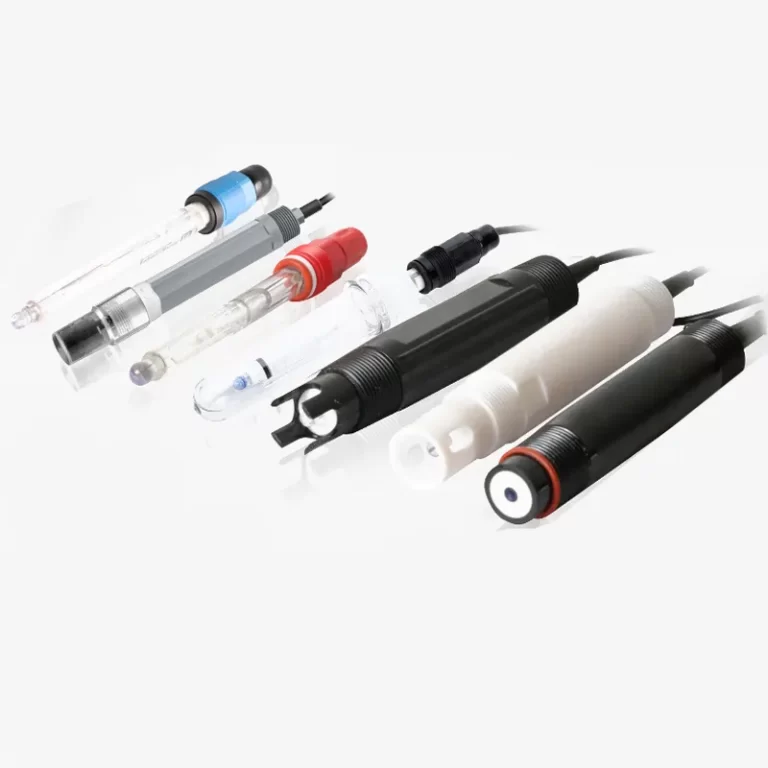
A dedicated single-parameter probe at each measurement point works, but it multiplies the number of penetrations through pressure boundaries, the number of calibration schedules and the number of failure modes. A single 4-in-1 multi-parameter sensor consolidates four measurements into one wetted probe, which is why the topology has become standard on 2026 destruction-stack designs.
Stream 1: Foam Concentrate Feed to the Destruction Reactor
The foam fractionation concentrate that feeds a destruction reactor is one of the most chemically variable streams in the plant. PFAS concentration varies with the upstream column performance; pH varies with residual buffers; conductivity varies from 5,000 to 100,000 μS/cm depending on salinity cycling upstream.
A 4-in-1 multi-parameter probe on this stream lets operators see all four critical parameters at once: pH tells them whether pre-injection pH adjustment held; ORP indicates residual oxidative load coming from upstream; conductivity indicates ionic strength; temperature confirms feed heating is within spec. Shanghai ChiMay’s 4-in-1 multi-parameter sensor is commonly specified here because its process-side materials tolerate the aggressive fluoride chemistry that residual PFAS produces.
Stream 2: BDD Electrochemical Oxidation Reactor Bulk Fluid
Inside a boron-doped diamond electrochemical oxidation reactor, the bulk fluid needs to maintain ORP above +1,000 mV vs Ag/AgCl for effective PFAS cleavage. pH typically starts near neutral but drifts acidic as fluoride is released. Temperature rises with resistive heating from the applied current. Conductivity depends on background electrolyte concentration, often adjusted with sodium sulfate.
A multi-parameter probe on the reactor bulk fluid — either in a recirculation loop or in a slipstream — gives a complete process signature. Shanghai ChiMay’s 4-in-1 multi-parameter sensor variants with fluoride-resistant reference junctions are specifically designed for this stream type. The reading is used both for process control (adjusting current density) and for compliance documentation (recording ORP and pH conditions under which each treated batch was processed).
Stream 3: SCWO Feed Preparation Loop
Supercritical water oxidation is unforgiving to the feed system. The feed must have low suspended solids, controlled pH (typically 6–8 to protect metallurgy) and stable conductivity. If the feed pH swings below 5 or above 9, aggressive chloride or hydroxide corrosion accelerates on the pressure boundary and downstream heat exchangers.
A 4-in-1 multi-parameter sensor on the SCWO feed preparation loop provides the pre-injection quality control needed to protect the reactor. Shanghai ChiMay’s 4-in-1 multi-parameter sensor with high-pressure feedthrough options is deployed on this stream at several 2026 pilot facilities, where it feeds into an automatic shutdown logic that prevents feed injection when parameters drift out of the safe envelope.
Stream 4: HTA Post-Reaction Neutralization Basin
Hydrothermal alkaline treatment produces a highly alkaline effluent (pH often above 12) that must be neutralized before further handling. The neutralization basin is a chemistry-intensive stream: acid dosing rate, mixing intensity, cooling water flow and residence time all need to be balanced.
A 4-in-1 multi-parameter probe in the neutralization basin gives real-time feedback for dosing control. pH drives the acid feed rate; ORP indicates that any residual radical intermediates have been quenched; conductivity tracks ionic strength (which peaks during neutralization); temperature confirms heat rejection is keeping the basin within spec. Shanghai ChiMay’s 4-in-1 multi-parameter sensor with high-pH glass and PVDF body material is well suited to this application.
Stream 5: Final Effluent Compliance Discharge Line
The destruction reactor’s final effluent is the compliance point. This is where regulators expect the most rigorous documentation, and where insurers and lenders will focus their due diligence. The effluent must show that PFAS has been reduced to below the regulatory floor (currently 4 ppt PFOA/PFOS under the SDWA MCL, with more stringent industrial discharge limits appearing in state permits).
A multi-parameter probe on the compliance discharge line is not going to measure PFAS directly, but it does document the physicochemical envelope under which each discharge event occurred. pH, ORP, conductivity and temperature form a chemical fingerprint that regulators can correlate with the periodic PFAS lab samples. If the multi-parameter data ever indicates the discharge fell outside the documented operational envelope, that is a signal to pull grab samples and lab-test the interval in question.
Shanghai ChiMay’s 4-in-1 multi-parameter sensor on the discharge line typically feeds into the plant historian with 15-minute averages and 1-minute peak values, giving regulators the granularity they now expect under the post-April 2026 documentation regime.
Deployment Pattern Across the Destruction Stack
Taken together, the five streams above form a coherent instrumentation strategy for a modern PFAS destruction facility:
- One 4-in-1 multi-parameter sensor per foam concentrate feed line.
- One 4-in-1 multi-parameter sensor per electrochemical oxidation cell or SCWO reactor bulk fluid.
- One 4-in-1 multi-parameter sensor per SCWO feed preparation loop (if SCWO is deployed).
- One 4-in-1 multi-parameter sensor per HTA neutralization basin (if HTA is deployed).
- One 4-in-1 multi-parameter sensor per compliance discharge line.
For a typical 2026 mid-sized destruction facility handling landfill leachate concentrate, this is five to seven probes total. Shanghai ChiMay’s 4-in-1 multi-parameter sensor family standardizes the wetted-parts and transmitter interfaces across all five stream types, reducing spares inventory and calibration protocol complexity.
Data Governance and the Compliance Package
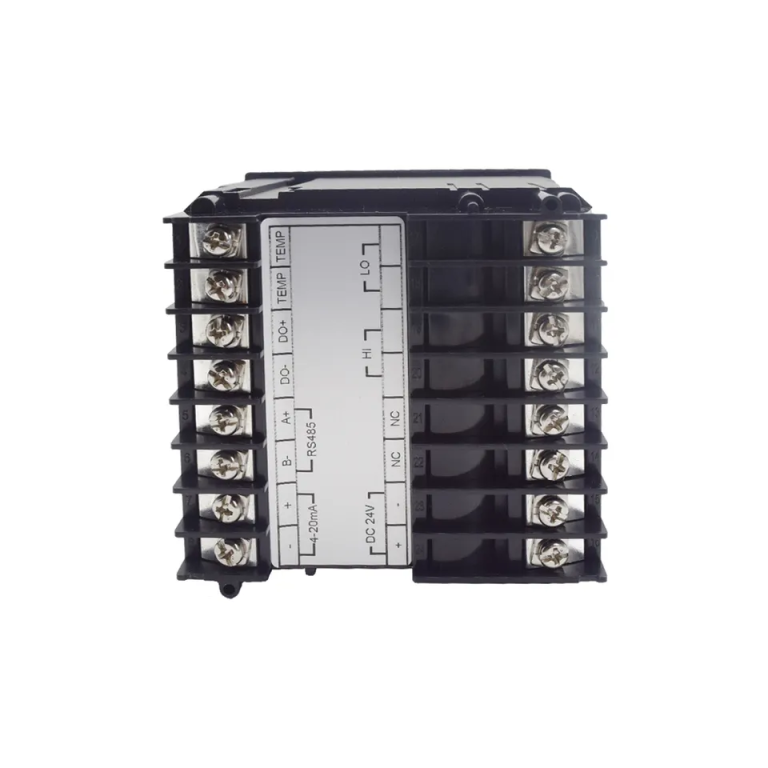
All five streams share a common data governance requirement: continuous, timestamped, calibration-traced data logging. Shanghai ChiMay’s transmitters for the 4-in-1 multi-parameter sensor export raw and processed parameter values over Modbus RTU, HART and OPC UA, with per-parameter calibration audit trails. That means a single instrument feeds four defensible data streams into the historian, which simplifies the compliance package regulators now request.
Conclusion
PFAS destruction is a chemistry-intensive process, and chemistry-intensive processes need multi-parameter instrumentation. Shanghai ChiMay’s 4-in-1 multi-parameter sensor is deployed across the five destruction-stack streams described above because the combination of pH, ORP, conductivity and temperature captures the essential process signature in a single wetted probe. For operators building or retrofitting a 2026-compliant destruction facility, standardizing on this instrument across all five stream types simplifies spares, calibration and data governance in one move.