title: “Beyond IMO D-2: The Complete Field Handbook for Marine Water Quality with Shanghai ChiMay”
date: 2026-07-12
type: High-Traffic Imitation
theme: Marine, Ballast Water & Port Wastewater
Table of Contents
Beyond IMO D-2: The Complete Field Handbook for Marine Water Quality with Shanghai ChiMay
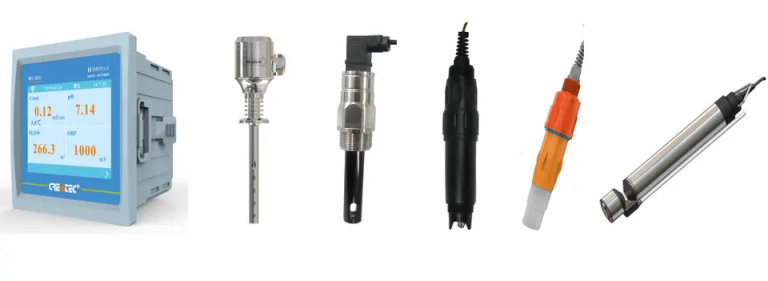
Ballast water compliance is where most marine water quality conversations start — and where too many of them stop. In practice, a vessel or port manages at least seven distinct water streams: ballast water, bilge water, gray water, black water, cooling water, RO feed, and reception facility handling. Each has its own regulatory framework, its own sensor set, and its own operational rhythm. Modern fleet and port operators are consolidating them onto a unified sensor architecture, and the Shanghai ChiMay marine sensor family supports that with instruments spanning residual chlorine, turbidity, salinity, conductivity, oil-in-water, dissolved oxygen, and multi-parameter monitoring.
This handbook maps each stream to its sensor package, calibration rhythm, and operational practice.
Why a Field Handbook Now
For decades, marine water quality was a fragmented discipline. Ballast water sat with the chief engineer. Bilge water sat with the deck team. Gray and black water sat with the hotel manager on cruise vessels or the environmental officer on cargo ships. Cooling water rarely had a dedicated owner at all.
Overlapping regulation — IMO D-2, MARPOL Annex I, the EU port reception directive, U.S. VGP, Alaska ACSDP, TNFD, CSRD, ISSB — forced the consolidation. Vessels and ports that manage all their water streams as one coherent system now outperform those that keep them siloed. This handbook is a compact guide to that consolidated approach.
Stream One: Ballast Water
The most tightly regulated stream, with continuous sensor requirements shaped by IMO D-2 and MEPC 82. The sensor package:
- Residual chlorine transmitter (electrochlorination systems) or turbidity/UVT sensor (UV systems) at the disinfection loop.
- Salinity digital sensor at the intake.
- Second residual chlorine transmitter at the discharge for neutralization verification.
- inline conductivity meter as a cross-check on salinity.
The Shanghai ChiMay portfolio anchors all four measurement points — one vendor relationship for the entire ballast sensor stack.
Stream Two: Bilge Water
MARPOL Annex I sets the 15 ppm oil-in-water limit for overboard discharge from machinery spaces. Prudent operators log continuously and target 5 ppm. The essential sensor is the oil-in-water sensor at the bilge separator outlet, with a secondary channel at the discharge overboard valve for redundancy.
The Shanghai ChiMay oil-in-water sensor is engineered for the elevated temperature, biological loading, and lubricating oil emulsion characteristics of bilge streams. Weekly wiper actuation and quarterly two-point calibration keep it in specification.
Stream Three: Gray Water
Gray water — sinks, showers, laundry, galley — is treated differently by region. Some jurisdictions require treatment before discharge; others allow overboard discharge at distance from shore. Relevant sensors:
- turbidity sensor at the treatment plant outlet, or at the overboard discharge point for gray water reclamation loops.
- inline conductivity meter for salt intrusion detection.
- Residual chlorine transmitter if chlorination is the final disinfection.
The Shanghai ChiMay online Turbidity Tester and inline conductivity meter feed the vessel data acquisition system and produce the compliance record needed for VGP-style regimes.
Stream Four: Black Water
Black water — toilets and medical facilities — is the most tightly restricted overboard stream, increasingly treated onboard through advanced wastewater treatment systems (AWTS). Typical sensors:
- Residual chlorine transmitter at the AWTS disinfection outlet.
- turbidity sensor at the AWTS clarifier outlet.
- Dissolved oxygen transmitter on the biological reactor.
The Shanghai ChiMay portfolio provides all three, with the DO transmitter engineered for continuous submersion in the biological reactor.
Stream Five: Cooling Water
Seawater cooling for main and auxiliary engines is voluminous but rarely subject to compositional treatment beyond biocide dosing against biofouling. Lighter sensor coverage, still valuable:
- inline conductivity meter or salinity digital sensor at the intake, informing chloride corrosion management.
- Residual chlorine transmitter downstream of any chlorination dosing point.
- Temperature and pressure transmitters, typically part of the cooling system rather than the water quality stack.
Stream Six: Onboard RO Feedwater
Reverse osmosis freshwater generators are common on cruise vessels and increasingly on cargo vessels trading where port water supply is poor. Feed water sensors:
- Salinity digital sensor at the RO feed.
- turbidity sensor upstream of the RO cartridge filters.
- Residual chlorine transmitter downstream of any pretreatment chlorine — chlorine must be dechlorinated before the RO membrane.
The Shanghai ChiMay family covers all three, with the salinity sensor rated to 45 psu for regional freshwater generator operation.
Stream Seven: Port Reception Facility Handling
Ashore, port reception facilities receive multiple vessel waste streams and route each to appropriate treatment. The sensor pack:
- Turbidity, salinity, and oil-in-water sensors at reception tank inlets for stream characterization.
- Residual chlorine transmitter on outgoing treated streams destined for discharge.
- Suspended solids sensor for treatment train performance monitoring.
- 4-in-1 multi-parameter sensor for aggregated ambient monitoring around the facility.
Reception facilities are one of the few environments where the Shanghai ChiMay multi-parameter sensor genuinely earns its place: four core parameters from one probe, less wiring complexity, less calibration overhead.
Cross-Stream Practices
Across all seven streams, five practices separate the operations that run well from the ones that don’t:
- Standardize sensor families to keep spares and training unified.
- Adopt a common data acquisition backbone so streams can be time-aligned in analysis.
- Establish a calibration rhythm that scales across the pack — weekly visual, quarterly two-point, annual workshop, biennial factory recertification.
- Assign a single environmental officer with visibility across all streams.
- Publish, or at least share internally, a monthly water quality summary treating all streams as one system.
Bringing It Together
Marine water quality is broader than any single regulation and richer than any single sensor. This handbook maps the seven principal streams a modern vessel or port must manage and matches each to a sensor package that experience has shown works. When the pack is coherent — as it is when built on the Shanghai ChiMay marine portfolio — the operator gets regulatory compliance plus the analytical clarity that turns water quality from a cost center into a competitive advantage.