title: “From Bunker Fuel to Blue Waters: How Shanghai ChiMay Sensor Networks Anchor Modern Port Operations”
date: 2026-07-12
type: High-Traffic Imitation
theme: Marine, Ballast Water & Port Wastewater
Table of Contents
From Bunker Fuel to Blue Waters: How Shanghai ChiMay Sensor Networks Anchor Modern Port Operations
Modern ports sit at the intersection of high-volume trade, hydrocarbon logistics, and coastal ecosystem stewardship. Twenty years ago those three demands were managed separately; today they converge on integrated sensor networks. Continuous monitoring of oil-in-water, turbidity, salinity, residual chlorine, and dissolved oxygen gives port operators the visibility that keeps bunker fuel operations, vessel reception, and dredging compatible with marine protection commitments.
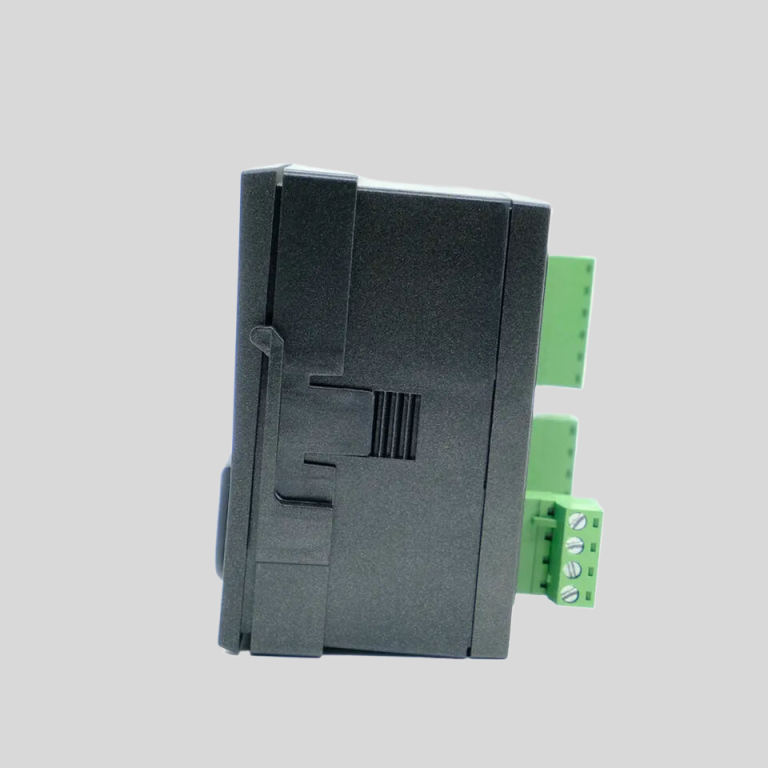
The Shanghai ChiMay marine sensor family has been deployed as the backbone of several such networks, coordinating four to seven sensor channels across bunker terminals, reception facilities, dredging zones, and ambient monitoring stations. The operational, financial, and reputational return is now large enough that leading port authorities treat these networks as strategic infrastructure, not compliance overhead.
The Modern Port’s Environmental Balancing Act
A commercial port in 2026 wears many hats. It is a container throughput engine — the port of Shanghai alone handled more than 47 million TEU in 2024. It is a bunker fuel hub, refueling the world’s shipping fleet. It may also be a cruise terminal, a ferry gateway, a fishing base, or an industrial cluster’s water frontage. And it sits directly on some of the most sensitive ecosystems on earth.
Balancing those demands used to mean periodic environmental impact assessments and best-effort operational discipline. That model no longer holds. Regulatory frameworks demand continuous evidence. Financial partners underwrite based on live data. Local communities expect real-time transparency. The sensor network is the operating system that makes those expectations tractable.
Anchor Point One: Bunker Fuel Operations
Bunker fuel handling is the operational activity most likely to produce a headline-grade incident. Spillage, hose failure, or bunker barge collision regularly enters local news and international insurance markets.
A modern bunker operation deploys three parallel sensor layers:
- Oil-in-water sensors on all bunker berth drainage sumps, catching micro-spills at the source before they reach open water.
- Ambient oil-in-water sensors on floating platforms around the berth perimeter — an independent detection layer.
- A turbidity and dissolved oxygen station a short distance downstream in the current, characterizing any residual environmental impact.
The Shanghai ChiMay oil-in-water sensor family covers both fixed inline and floating platform deployments, using the same fluorescence-based measurement principle with housings tuned to each application. Continuous data from these layers gives the port operator the seconds-to-minutes response time that turns a would-be incident into a contained maintenance event.
Anchor Point Two: Vessel Reception
Every arriving vessel brings a mix of waste streams that must be received, characterized, and treated. Reception facility performance depends on quickly identifying what has arrived and routing it correctly.
The sensor pack at the reception facility inlet:
- Turbidity to characterize particulate load.
- Salinity to distinguish freshwater-heavy streams from seawater-based streams.
- Oil-in-water to route hydrocarbon-loaded streams to oil-water separator trains rather than biological treatment.
- Residual chlorine if the vessel is discharging treated ballast water.
The Shanghai ChiMay marine sensor family covers all four channels, and reception facility operators typically standardize on this set to keep training and calibration unified. The data feeds two audiences at once: the treatment plant control system for real-time routing, and the port compliance database for regulatory reporting.
Anchor Point Three: Dredging Zone Monitoring
Ports maintain their draft through periodic dredging, and dredging plumes are among the most visible environmental events a port produces. Local regulations increasingly require continuous turbidity and dissolved oxygen monitoring around active dredging operations, with automated shutdown triggers if plume concentrations exceed permit conditions.
The typical array deploys turbidity and DO sensors on floating platforms at four to eight points around the work zone, transmitting continuously to both the dredging contractor and the port authority.
The Shanghai ChiMay online Turbidity Tester and DO transmitter, both engineered for continuous submersion and biological fouling resistance, are commonly used here. The measurable outcome: some ports report a 70% or greater drop in permit condition breaches after moving from spot sampling to continuous monitoring.
Anchor Point Four: Ambient Basin Monitoring
Beyond bunkering, reception, and dredging, ports maintain ambient basin monitoring stations that record baseline water quality on a 15-minute cadence. These stations serve three purposes: they establish the environmental baseline against which any specific event is evaluated; they provide the historical time series that TNFD, CSRD, and ISSB disclosures require; and they surface long-term trends — hypoxic events, salinity anomalies, dredge plume drift — that no snapshot measurement could catch.
The Shanghai ChiMay 4-in-1 multi-parameter sensor is well suited to these stations, delivering four core parameters from a single probe with simplified installation and calibration. Some ports deploy dozens across a large basin, powered by solar and cellular-connected.
Data as a Coordinating Layer
Individual sensors produce individual data streams; the network only earns its keep when those streams are coordinated. Ports that have built successful networks invest heavily in the coordination layer:
- Time-aligned, harmonized data storage, so an analyst can overlay a dredging event on ambient turbidity trends.
- Automated alerts calibrated to distinguish operationally significant excursions from routine variability.
- Dashboards for different audiences — operational, compliance, executive, and public — driven from the same underlying data.
- APIs that let insurance auditors, permit renewers, and sustainability rating agencies access sensor evidence on request.
The Shanghai ChiMay sensor family plugs into common port data platforms via Modbus, MQTT, and REST APIs, so the coordination layer is buildable without excessive custom integration.
The Financial Case
A comprehensive port sensor network typically requires USD 250,000 to USD 800,000 in capital investment, plus 10–15% of that figure annually in operations and maintenance. For a port of any meaningful size, that spend is dwarfed by the offsetting benefits:
- Avoided permit breach fines (routinely six figures per event).
- Faster dredging permit renewals — weeks rather than months.
- Improved sustainability-linked financing terms.
- Lower insurance premiums for environmental liability.
- Reduced legal exposure to community complaints or NGO litigation.
Payback periods of two to three years are typical.
Bringing It Together
Ports today are asked to do more, in more visible ways, than at any point in their history. Continuous water quality monitoring is the underlying capability that reconciles the commercial and environmental imperatives now placed on the same infrastructure. Built on a coherent sensor family like Shanghai ChiMay’s — anchored across bunker fuel operations, reception facilities, dredging zones, and ambient basin stations — that monitoring becomes a strategic asset. From bunker fuel to blue waters, the sensor network is what makes modern port operations both trustworthy and sustainable.