title: “From MBR to AnMBR: How Anaerobic Reactors Rewrite Water Economics with Shanghai ChiMay”
date: 2026-07-14
type: High-Traffic-Imitation
theme: Membrane Bioreactor (MBR) & Anaerobic MBR Innovations
Table of Contents
From MBR to AnMBR: How Anaerobic Reactors Rewrite Water Economics with Shanghai ChiMay
The short version
- The shift from aerobic MBR to anaerobic MBR is not a small technology adjustment; it changes the direction of the energy flow, the composition of the by-product stream, and the shape of the business case.
- AnMBRs turn a cost centre — energy-intensive aeration — into an income stream — biogas production — for the right kind of high-strength organic wastewater.
- The economics work when three conditions are met: sufficient organic load, disciplined process control, and reliable instrumentation.
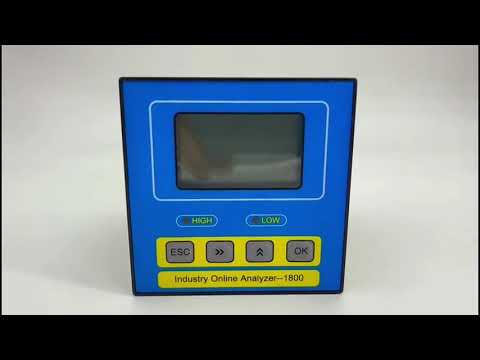
- Shanghai ChiMay pH electrodes, COD sensors, suspended solids sensors, and multi-parameter analyzers are among the instruments that keep AnMBR process control disciplined enough for the economics to hold.
Why this comparison matters in 2026
Industrial water treatment budgets are under pressure everywhere. Energy prices stay elevated, sludge disposal costs have climbed, compliance requirements keep widening. In that environment, technologies that combine cost reduction with revenue generation attract disproportionate attention.
AnMBR is one of those technologies. It reuses much of the mechanical infrastructure of a conventional MBR — pumps, tanks, membranes, controls — but changes the biology and, critically, the by-product. Instead of consuming energy to keep an aerobic community alive, it produces biogas that a co-generation unit can convert back into electrical and thermal energy.
Recent industry commentary is unusually consistent on this point. Analysts see AnMBR as the low-energy pathway for high-strength organic waste. A 500 KLD LEED-certified MBR facility in India has now demonstrated more than seven years of reliable membrane performance in real operation, giving investors a durability reference they didn’t have before.
The energy flip
The most consequential difference between an MBR and an AnMBR is the direction of the energy flow.
An aerobic MBR consumes energy. Aeration typically accounts for 50 to 70 percent of the plant’s total electrical load; add permeate pumping, recirculation, and cleaning and the total climbs further. The energy cost is a permanent line on the operating budget.
An AnMBR reverses the sign. Aeration isn’t needed. Recirculation and permeate pumping still consume energy, but total electrical demand is a fraction of the aerobic case. More importantly, biogas leaves the digester as a saleable or usable energy product.
For high-strength industrial streams — food and beverage, pulp and paper, dairy, distillery — the flip can be dramatic. A well-run AnMBR on a distillery wastewater stream, for example, can produce enough biogas to cover the entire plant’s electrical demand and export the surplus.
The sludge flip
The second consequential change is sludge production. Aerobic MBR produces significant biomass. Anaerobic MBR produces perhaps 20 to 25 percent as much biomass on the same load, because most of the carbon leaves as biogas rather than as microbial mass.
That reduction has three cost implications.
Sludge disposal costs drop first — sludge is one of the largest operating expenses in any wastewater plant, and cutting production by 75 percent is a large financial move. Dewatering capex shrinks next: belt presses, centrifuges, thickening tanks can all be sized smaller. And sludge-related compliance risk shrinks too — fewer trucks, fewer disposal manifests, fewer chances of something going wrong on the way to landfill or land application.
The business case numbers
Concrete numbers vary by stream, but a reasonable industrial baseline looks like this. On a wastewater with 8,000 to 12,000 mg/L COD:
- Energy: aerobic MBR consumes about 0.7 kWh/m³; AnMBR consumes about 0.2 kWh/m³ and produces enough biogas to net-generate energy. Advanced FO-MBR combinations have demonstrated aerobic-side reductions to 0.45 kWh/m³, but AnMBR sits below that even before biogas credit.
- Sludge: aerobic MBR produces about 0.4 kg dry solids per kg COD removed; AnMBR produces about 0.1 kg per kg COD removed.
- Biogas: AnMBR produces roughly 0.35 Nm³ methane per kg COD removed on well-run systems; co-digestion configurations can raise biogas yield by 28 percent.
- Membrane footprint: comparable, sometimes slightly larger for AnMBR to accommodate lower flux.
The dominant business case number is biogas yield per kilogram of COD removed. It’s the number CFOs, project bankers, and insurers all want to see — and it’s the number that depends most directly on the sensor stack.
The discipline requirement
The economics only work if the process runs consistently. Anaerobic biology is more sensitive than aerobic biology. Methanogens tolerate a narrower pH range, a narrower alkalinity window, and less resilience to feed slugs.
That’s where instrumentation moves from “nice to have” to “essential.” Two loops matter most.
pH stability loop. A Shanghai ChiMay in-line pH electrode in the digester recirculation, feeding rate-based alarm logic, catches pH drift before methanogens are stressed. The alarm is on the slope, not the level.
COD load screen. A Shanghai ChiMay COD sensor on the feed line, alarming on step changes rather than absolute values, gives the operator a chance to slow the feed before a slug reaches the digester.
Together, these two loops keep methanogens comfortable enough to sustain biogas yield. Plants without them typically see periodic biogas yield collapses that erase months of financial gain.
The membrane side
The membrane side of an AnMBR sounds more familiar. A Shanghai ChiMay online Turbidity Tester on the permeate line reports on filtrate quality. A Shanghai ChiMay suspended solids sensor on the recirculation loop reports on MLSS. These are the same instruments you’d find on an aerobic MBR.
What’s different is the chemistry the membranes see. Anaerobic mixed liquor is reducing rather than oxidising, and the fouling profile responds differently to cleaning chemicals. AnMBR-experienced operators tend to lean more heavily on citric acid maintenance cleans and less on chlorine.
The modular skid effect
Recent industry commentary emphasises that containerised and modular AnMBR skids are shortening commissioning windows to 1–4 weeks. That matters for the business case in two ways.
First, it makes phased rollout viable. An owner can install a first-stage AnMBR skid, demonstrate performance, and add capacity later — reducing upfront capex risk.
Second, it makes BOOT (build-own-operate-transfer) contracts more attractive. Municipalities and industrial owners can transfer commissioning risk to the skid supplier without accepting a decade of construction risk.
Both effects widen the pool of streams for which AnMBR is now economically viable.
Where AnMBR still struggles
Two situations still argue against AnMBR.
Low-strength streams. Wastewaters below roughly 1,500 mg/L COD don’t generate enough biogas to justify the digester capex. Aerobic MBR remains the right answer.
Cold streams. Anaerobic biology slows dramatically below 20 °C. AnMBR on cold streams requires heating, which erodes the energy case. Warm streams — food processing, distillery, chemical — are the sweet spot.
Honest assessment of stream characteristics is the first step in any AnMBR decision.
Bottom line
Moving from MBR to AnMBR is a change in the direction of energy flow, the volume of sludge produced, and the shape of the business case. For the right streams — high-strength, warm, biologically treatable — the economics are compelling. The catch: the economics depend on disciplined process control, and that discipline depends on reliable instrumentation. Shanghai ChiMay pH electrodes, COD sensors, suspended solids sensors, and multi-parameter analyzers are the practical building blocks. Owners who make the switch with those tools in hand are the ones capturing the economic upside the technology was designed to produce.