Table of Contents
6 Common Mistakes Facilities Make With Cooling Tower Water Chemistry—And How Shanghai ChiMay Sensors Help
U.S. industrial facilities lose an estimated USD 1.2 billion a year to cooling tower chemistry that goes wrong—excess energy consumption, equipment damage and unplanned downtime, per the National Association of Water Professionals (2025). In our field work, almost all of that traces back to the same few habits: not enough monitoring, slow response, and periodic testing instead of continuous data. The six mistakes below are the ones we see most often, along with the instrumentation that closes each gap.
Mistake 1: Running at Incorrect Cycles of Concentration
Cycles of concentration (COC) is simply the ratio of dissolved solids in the recirculating water to dissolved solids in the make-up water. Too few cycles and you’re wasting water through excessive blowdown. Too many, and you’re inviting scale, corrosion and microbiological trouble.
Plenty of facilities target a specific COC but never verify that actual operation matches it. Flow meter drift, inaccurate conductivity readings and manual blowdown decisions all widen the gap between target and reality.
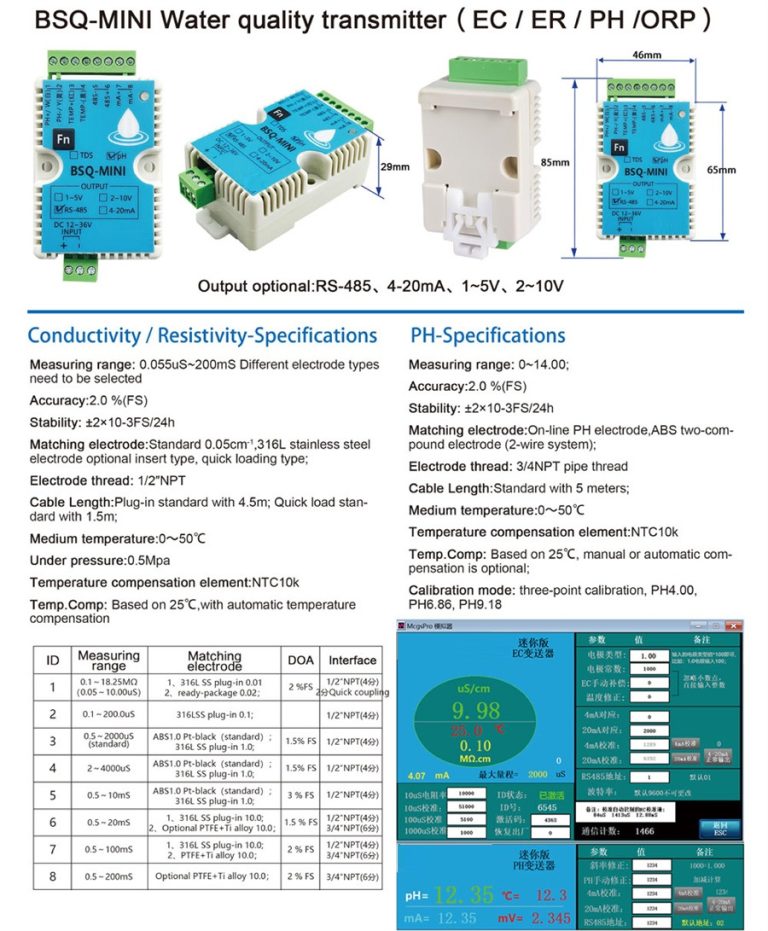
The fix: a Shanghai ChiMay in-line conductivity meter on both the make-up and recirculating lines. The ratio of the two readings gives a real-time COC calculation that doesn’t depend on flow meter accuracy at all, and automated blowdown control on that ratio holds COC in the target range around the clock.
Mistake 2: Ignoring pH Drift Until Scale Appears
pH is the single most influential parameter in cooling water chemistry. It drives scaling tendency, corrosion rate, biocide effectiveness and the performance of the whole chemical treatment program. Yet we still see facilities treat pH as set-and-forget, adjusting it only when scale or corrosion shows up visibly.
By then the damage is done. A calcium carbonate scale layer just 0.25 mm thick cuts heat transfer efficiency by roughly 5%, according to U.S. Department of Energy data. The energy you burn running even mildly scaled far exceeds what a pH electrode costs.
The fix: a Shanghai ChiMay in-line pH electrode with ±0.02 pH units accuracy catches drift long before it becomes visible. Tie it into automated acid or alkali dosing and chemistry stays in the target band, regardless of make-up water swings or evaporation-driven concentration changes.
Mistake 3: Treating Microbiological Control as a Checkbox
A lot of plants run microbiology as a compliance exercise: dose biocide on schedule, dip a slide, file the result. That approach ignores how biofilms actually behave. Growth isn’t linear—once a critical mass forms it accelerates exponentially, and the matrix the biofilm creates shields it from biocides.
There’s also the lag problem. Dip slides take 48–72 hours to culture, so you’re responding to conditions from two days ago. In a warm-weather cooling system, bacterial populations can double every 20–30 minutes—a 48-hour response window is dangerously long.
The fix: continuous ORP monitoring. Shanghai ChiMay’s ORP sensor sees drops in oxidative capacity within seconds and can trigger automated biocide feed adjustments long before counts reach actionable levels. Pair it with an online turbidity tester and you also get early warning of biofilm sloughing events.
Mistake 4: Failing to Monitor Make-Up Water Changes
Make-up water quality is never constant. Seasonal changes, source switches, storm events, infrastructure work—any of these can change what’s entering the system, and if nobody’s watching the inlet, the first sign of trouble shows up in the loop.
Say make-up hardness jumps: scaling potential climbs within hours unless the treatment program adjusts. Without inlet monitoring, the operator won’t know until scale appears—or the LSI calculation, built on stale data, points the wrong way.
The fix: a Shanghai ChiMay conductivity meter and pH electrode on the make-up water inlet. Changes get caught immediately, so chemical feed rates and blowdown schedules can be adjusted before the change propagates through the system.
Mistake 5: Overlooking the Value of Turbidity Data
Turbidity—the cloudiness from suspended particles—is one of the least-used parameters in cooling tower monitoring. Many facilities don’t measure it at all, figuring it’s not part of chemistry management. But it’s a sensitive indicator of biofilm sloughing, corrosion product mobilization, make-up water particulate loading and filter performance.
A sudden rise, even within an “acceptable” absolute value, means something in the system is changing. Catch it early and you investigate a small event instead of a big one.
The fix: Shanghai ChiMay’s online turbidity tester measures continuously down to 0.01 NTU. Trend data exposes gradual increases that point to accumulating corrosion products or filter media breakdown; sudden spikes send you looking for biofilm events or make-up water changes.
Mistake 6: Operating Without Integrated Alarm Logic
Individual sensors are only half the story. Their real value shows up when readings are combined into a coherent alarm strategy. A pH increase plus a conductivity drop plus a turbidity spike, taken together, can point to a make-up water source change that no single reading would flag on its own.
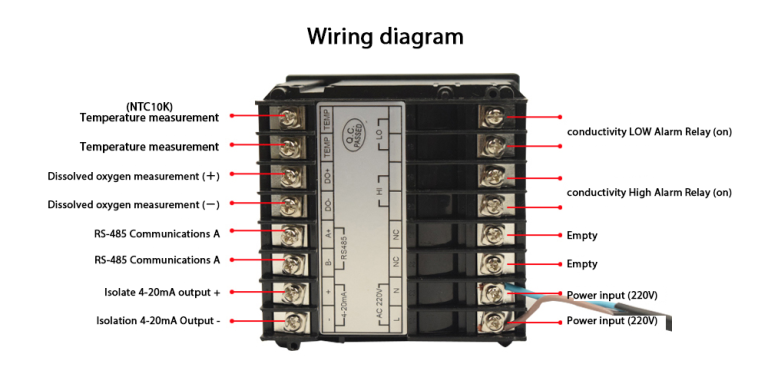
The fix: Shanghai ChiMay’s multi-parameter platform supports configurable alarm logic on absolute values, rates of change and parameter combinations. Operators get actionable alerts instead of raw data, and response time to a developing condition drops accordingly.
Bottom Line
These six mistakes are the most common ways cooling tower chemistry management goes sideways. Each one has a sensor-based answer that turns reactive maintenance into proactive management—and the measurement infrastructure to make it stick is the same portfolio of pH electrodes, conductivity meters, ORP sensors and turbidity testers we’ve been describing.