Table of Contents
Multi-Parameter Sensors: Maximizing ROI in Water Reuse Infrastructure
Key Takeaways
- Multi-parameter monitoring systems reduce instrumentation costs by 40-60% compared to individual sensor deployment (Water Research Foundation 2024).
- Facilities using integrated multi-parameter sensors report 35% faster fault detection and resolution (AWWA Utility Benchmarking Report 2024).
- The global multi-parameter water quality sensor market is projected to grow from $890 million in 2024 to $1.4 billion by 2028 (MarketsandMarkets).
- Real-time multi-parameter data enables 25% improvement in treatment process optimization compared to periodic sampling.
Introduction
Water reuse has emerged as a critical strategy for sustainable water management, with more than 50 countries now implementing large-scale water reclamation programs (UN Water 2024). Within these systems, the ability to monitor multiple water quality parameters simultaneously has become essential for ensuring regulatory compliance, optimizing treatment processes, and protecting public health. Multi-parameter sensor systems, capable of measuring several water quality indicators from a single installation point, offer compelling advantages for water reuse facilities seeking to maximize return on infrastructure investments.
The Economic Case for Multi-Parameter Monitoring
Total Cost Comparison
Traditional single-parameter monitoring approaches require individual sensors, transmitters, and cabling for each measurement point. For a typical water reclamation facility monitoring eight core parameters, the cost differential is substantial:
| Cost Category | Single-Parameter Approach | Multi-Parameter System |
|---|---|---|
| Initial Sensor Investment | $45,000-65,000 | $28,000-42,000 |
| Installation Labor | $25,000-40,000 | $8,000-15,000 |
| Annual Calibration | $12,000-18,000 | $4,000-7,000 |
| Maintenance Parts (5 years) | $35,000-50,000 | $15,000-25,000 |
| Data Logger/Controller | $15,000-25,000 | Included |
| Total 5-Year Cost | $132,000-198,000 | $55,000-89,000 |
Savings: 40-60% over 5-year lifecycle
Operational Efficiency Gains
Beyond direct cost savings, multi-parameter systems deliver measurable operational improvements:
- Reduced calibration labor: One calibration visit covers all parameters, saving $8,000-15,000 annually in technician time
- Faster troubleshooting: Correlated parameter data identifies problems 35% faster than isolated measurements
- Improved regulatory reporting: Automated multi-parameter logging simplifies compliance documentation
- Space efficiency: Single probe installation versus multiple sensor mounting points
Technical Capabilities of Modern Multi-Parameter Systems
Parameter Coverage
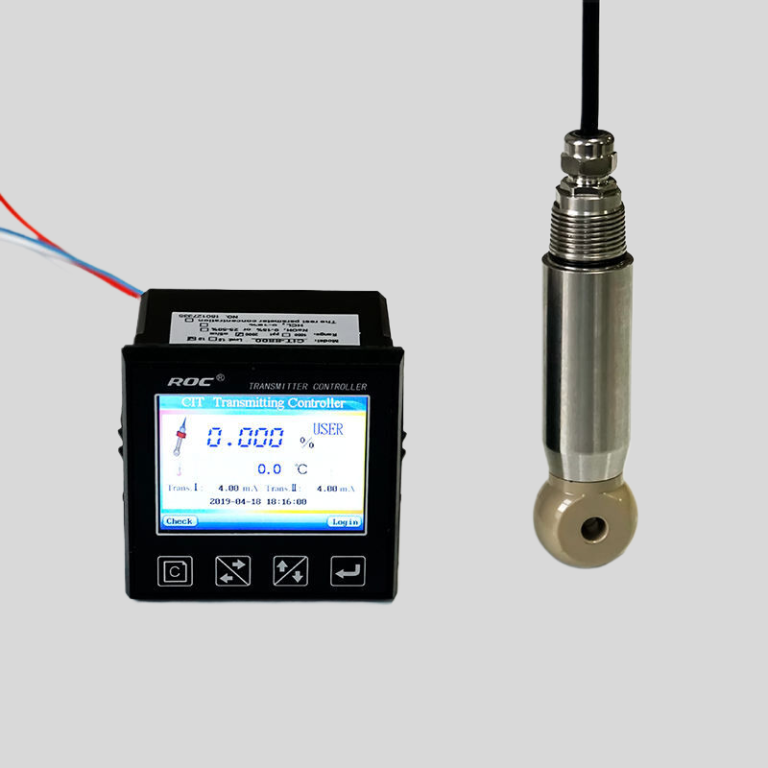
Advanced multi-parameter sensors from Shanghai ChiMay integrate measurement of critical water quality parameters:
- pH: 0-14 range, ±0.02 accuracy, automatic temperature compensation
- Dissolved Oxygen (DO): 0-20 mg/L, membrane-covered amperometric sensor
- Conductivity/TDS: 0-200,000 μS/cm, four-electrode technology
- Turbidity: 0-10,000 NTU, nephelometric measurement
- ORP: -1,000 to +1,000 mV, for oxidation status monitoring
- Temperature: -10 to 80°C, integrated PT1000 element
- Chlorophyll-a: Optional, for algae monitoring in source waters
- Ammonia: Optional, for nitrogen cycle monitoring
Integration Technologies
Modern multi-parameter systems support seamless integration with plant control infrastructure:
- Analog output: 4-20mA for each parameter to legacy PLC systems
- Digital protocols: Modbus RTU/TCP, Profibus, HART
- Wireless connectivity: Wi-Fi, LoRaWAN for remote installations
- Cloud platforms: Direct data transmission for remote monitoring
- OTA updates: Firmware improvements without physical access
ROI Analysis for Water Reuse Applications
Case Study: Municipal Water Reclamation Plant
Consider a 25,000 m³/day water reclamation facility implementing tertiary treatment for non-potable reuse:
Investment:
- Multi-parameter sensor system: $38,000
- Installation and integration: $12,000
- Training and commissioning: $5,000
- Total Investment: $55,000
Annual Benefits:
| Benefit Category | Annual Value |
|---|---|
| Reduced calibration visits (12 → 4) | $18,000 |
| Energy savings from process optimization | $22,000 |
| Reduced chemical dosing through precise control | $15,000 |
| Avoided treatment failures (fouling, scaling events) | $12,000 |
| Labor savings from automated monitoring | $8,000 |
| Total Annual Benefit: $75,000 |
ROI: 136% in Year 1
Payback Period Calculation
Based on $55,000 total investment and $75,000 annual benefit:
- Simple payback period: 8.8 months
- 3-year ROI: 309%
- 5-year ROI: 582%
Regulatory Compliance Enhancement
Real-Time Monitoring Advantages
Regulatory agencies increasingly require continuous monitoring rather than periodic sampling. Multi-parameter systems provide:
- Continuous data: 24/7 parameter recording versus grab sample snapshots
- Alarm capabilities: Immediate notification when parameters exceed thresholds
- Audit trail: Timestamped data records for regulatory review
- Trend analysis: Early detection of gradual parameter changes
Emerging Regulatory Requirements
According to the U.S. Environmental Protection Agency 2024 guidance on water reuse:
- Real-time turbidity monitoring required for indirect potable reuse
- Conductivity monitoring mandated for membrane system optimization
- pH and DO continuous logging for biological treatment processes
- Total chlorine residual tracking for disinfection verification
Implementation Best Practices
Site Assessment
Before installing multi-parameter systems, conduct thorough site evaluation:
- Source water characterization: Identify all parameters requiring monitoring
- Installation environment: Assess temperature, pressure, and chemical exposure
- Integration requirements: Document existing control system protocols
- Maintenance accessibility: Plan for regular calibration and cleaning access
Installation Guidelines
Proper installation ensures optimal system performance:
- Flow cell selection: Match flow velocity requirements to sensor specifications
- Sampling point location: Avoid dead legs and air entrainment zones
- Cable routing: Protect signal cables from electromagnetic interference
- Grounding: Establish proper earth ground for signal integrity
- Valve placement: Enable sensor removal without process shutdown
Maintenance Protocol
Establish routine maintenance schedule:
| Task | Frequency |
|---|---|
| Visual inspection | Weekly |
| Sensor cleaning | Monthly |
| Calibration verification | Quarterly |
| Full recalibration | Annually |
| Sensor replacement | Every 2-3 years |
Future Technology Developments
Artificial Intelligence Integration
The next generation of multi-parameter systems will incorporate AI-driven analytics:
- Anomaly detection: Automatic identification of unusual parameter patterns
- Predictive maintenance: Forecasting sensor replacement timing based on performance trends
- Process optimization: Machine learning algorithms adjusting treatment parameters
- Digital twins: Virtual models correlating sensor data with treatment performance
Miniaturization and Cost Reduction
Advances in microelectromechanical systems (MEMS) and nanotechnology will enable:
- Smaller form factors for confined installations
- 50% cost reduction in sensor manufacturing by 2027
- Extended sensor lifespans reducing replacement frequency
- Enhanced sensitivity for trace contaminant detection
Conclusion
Multi-parameter water quality sensors represent a strategic investment for water reuse facilities seeking to optimize treatment processes, reduce operational costs, and maintain regulatory compliance. With demonstrated ROI exceeding 300% over three years and payback periods under one year, the economic case for multi-parameter monitoring is compelling.
Shanghai ChiMay multi-parameter sensor systems combine comprehensive parameter coverage, robust construction, and seamless integration capabilities to deliver maximum value for water reuse applications. As water scarcity drives continued expansion of reclamation infrastructure, facilities equipped with advanced monitoring capabilities will be best positioned for sustainable, cost-effective operations.