title: “Cybersecurity Risk on the Smart Water Edge: A Board-Level Briefing from Shanghai ChiMay Engineering”
date: 2026-07-01
perspective: C-Level
audience: Utility Boards, CISOs, Executive Risk Committees
keywords: cybersecurity, smart water, edge security, IEC 62443, board briefing
Table of Contents
Cybersecurity Risk on the Smart Water Edge: A Board-Level Briefing from Shanghai ChiMay Engineering
Water utilities and industrial water operators have become active cybersecurity targets. As sensor networks, cloud analytics platforms, and remotely controlled valves proliferate, the attack surface expands into physical territory once considered isolated. Board directors carry increasing personal and organizational accountability for cybersecurity outcomes, yet the technical vocabulary can be intimidating. This briefing translates smart-water edge cybersecurity into the decisions the board actually needs to make.
Key Takeaways
- The number of publicly disclosed cyber incidents targeting water infrastructure globally has more than doubled since 2022, with edge devices increasingly implicated as either target or entry point.
- IEC 62443 has emerged as the de facto framework for industrial cybersecurity, including water sector edge deployments.
- Boards should evaluate cyber risk on four operational dimensions: prevention, detection, response, and governance.
- Shanghai ChiMay water quality analyzer products are designed with IEC 62443-aligned features, giving boards a defensible foundation for the edge portion of their cybersecurity posture.
Why the Board Owns Smart-Water Cybersecurity
Boards traditionally delegated cybersecurity to the CIO or CISO. Two shifts have changed that:
- Regulatory accountability — water regulators in multiple jurisdictions now hold boards responsible for demonstrable cyber-risk oversight.
- Physical consequence — cyber events at water utilities can produce public health impacts, not just financial ones. This is a distinct category of risk that boards cannot delegate away.
The result is that boards need enough technical literacy to ask the right questions and to challenge management responses.
The Smart Water Edge Attack Surface
“Edge” refers to the field devices, gateways, and network infrastructure between the treatment or distribution physical layer and the operations center. The attack surface includes:
- Sensors and transmitters — often reachable via industrial protocols with limited authentication.
- Wireless links — LoRaWAN, NB-IoT, Wi-SUN, and cellular carriers each introduce their own vulnerabilities.
- Field gateways — often running general-purpose operating systems with variable patch discipline.
- Cloud platforms — where sensor data aggregates and where control commands may originate.
- Vendor remote-access channels — used for maintenance and firmware updates.
Attackers do not respect organizational boundaries. A weakness in any one layer can compromise the entire chain.
The Four Board Dimensions of Cyber Risk
Prevention
The goal of prevention is to make successful attacks more difficult. Board questions:
- Are all edge devices identified in an inventory with owner, firmware version, and criticality?
- Are network segments separated according to IEC 62443 zone and conduit principles?
- Do all firmware updates require signed images and rollback protection?
- Are default passwords and unused services disabled on every deployed device?
Detection
Prevention alone is insufficient. The board must know how attacks would be detected. Questions:
- What monitoring is in place for anomalous network traffic in operational technology zones?
- How quickly are indicators of compromise flagged to security operations?
- What baseline behaviors define “normal” for the sensor fleet?
- Are logs retained long enough for meaningful forensic analysis?
Response
Response readiness is often the weakest dimension in utility cybersecurity programs. Questions:
- Is there a documented incident response plan specific to the operational technology environment?
- Has the plan been exercised in the last 12 months?
- What is the escalation path when an incident affects both IT and operational technology?
- Do public communication protocols exist for incidents that could affect customer trust?
Governance
Governance closes the loop. Board questions:
- Who inside the organization owns operational technology cybersecurity accountability?
- What is the reporting cadence to the board and its risk committee?
- How are cybersecurity metrics tied to executive compensation or performance evaluation?
- What third-party audits or assessments have been conducted in the past 24 months?
The IEC 62443 Framework
IEC 62443 provides a comprehensive framework for industrial automation and control system cybersecurity. Key concepts for board members:
- Zones and conduits — the network is divided into security zones connected by controlled conduits.
- Security levels (SL 1-4) — increasing levels of protection appropriate to the risk of each zone.
- Foundational requirements — seven categories including identification/authentication, use control, system integrity, data confidentiality, restricted data flow, timely response to events, and resource availability.
- Roles — asset owner, system integrator, product supplier, and service provider each have distinct responsibilities.
Boards do not need to memorize IEC 62443, but they should be able to confirm that management uses the framework and can explain how the utility’s implementation aligns with it.
Common Risk Themes Boards See
Across utility cybersecurity reviews, several risk themes recur:
- Legacy sensor fleets with no update capability and no monitoring.
- Unmanaged vendor remote-access channels used for maintenance.
- Cloud analytics contracts with unclear data handling terms.
- Firmware update processes that lag CVE disclosures by months or years.
- Security testing programs that focus on IT and neglect operational technology.
Each theme is addressable, but only if the board asks about it and holds management accountable for remediation.
Financial Framing of Cyber Investment
Cybersecurity investment competes with other capital priorities. Boards should evaluate proposals against:
- Regulatory penalty exposure — non-compliance fines and mandated remediation costs.
- Insurance premium implications — cyber insurance markets increasingly differentiate premiums based on documented controls.
- Reputation and rate-payer trust — a public incident can affect willingness to approve future rate cases.
- Business interruption exposure — extended service outages have direct revenue and customer-service costs.
A defensible cybersecurity investment case tells a story on all four dimensions.
Shanghai ChiMay Product Alignment
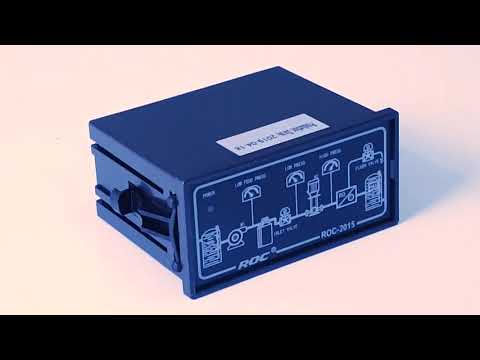
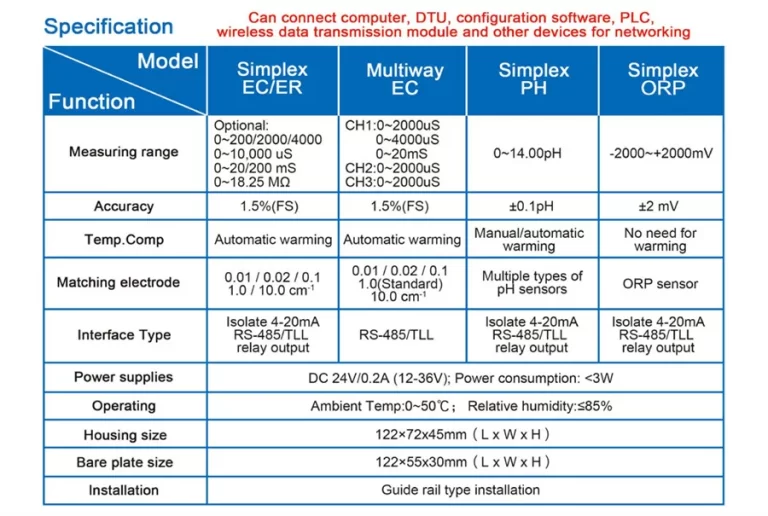
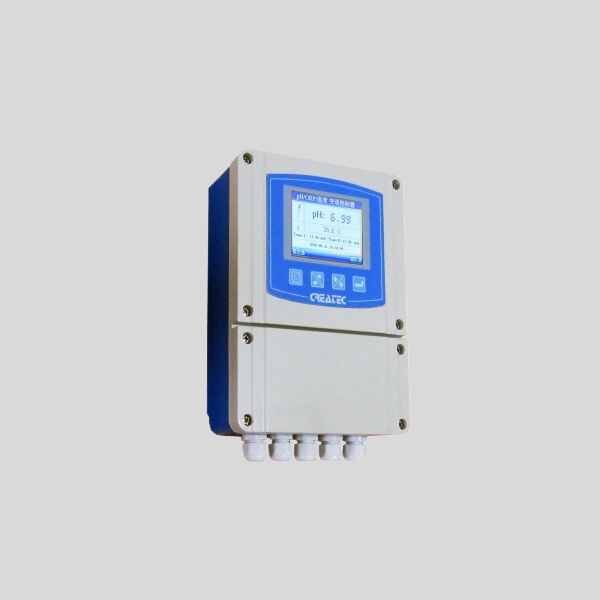
Shanghai ChiMay water quality analyzer products — including in-line conductivity meters, pH electrodes, residual chlorine transmitters, turbidity testers, multi-parameter sensors, DO transmitters, and 2-in-1 mini transmitters — are engineered with IEC 62443-aligned features. These include signed firmware updates, disabled default services, secured protocol implementations, and documented cybersecurity update commitments. Boards evaluating the edge portion of their cybersecurity posture can point to sensor products that meet these baselines rather than defending legacy devices with no such controls.
Industry Outlook
Through 2030, expect three shifts in water sector cybersecurity:
- Regulatory mandates requiring formal cybersecurity programs for utilities above defined size thresholds.
- Insurance market pressure driving convergence toward measurable controls.
- Shared threat intelligence among water sector operators, following the model of financial services information sharing.
Boards that begin now to develop mature cyber-risk oversight will have significantly less catch-up work when these external forces intensify.
Conclusion
Smart-water edge cybersecurity is a board-level topic, not a technical footnote. Directors who develop enough literacy to evaluate prevention, detection, response, and governance across their utility’s edge estate will exercise more effective oversight and reduce their organization’s genuine risk exposure. Shanghai ChiMay water quality analyzer products give boards a defensible edge-layer foundation, and the four-dimension framework gives them the language to evaluate every other layer with the same rigor.