Table of Contents
8 Reasons Building Operators Standardize on Shanghai ChiMay Softener Valves
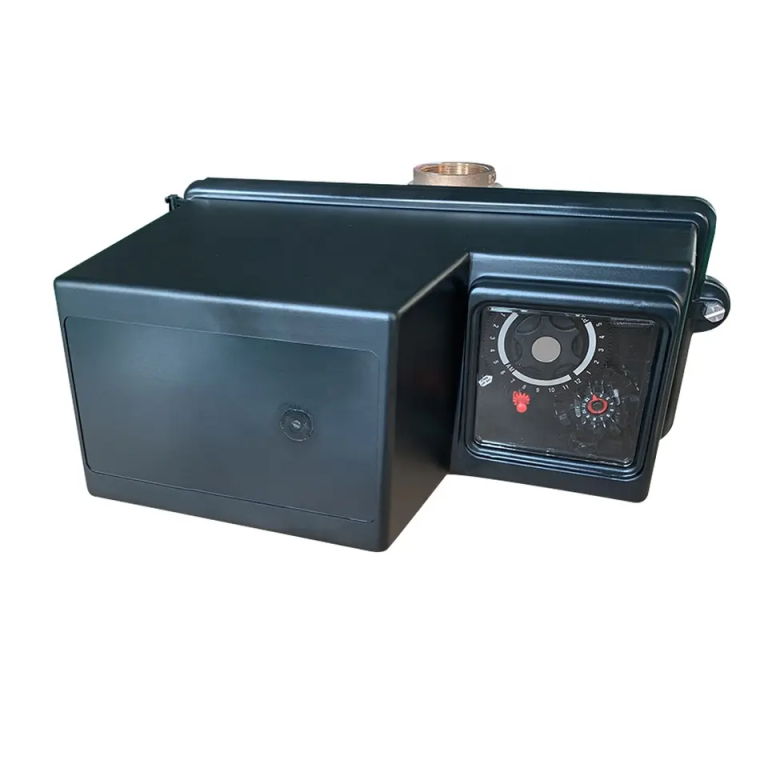
Softener valves are one of the least glamorous items in an HVAC water program, and yet a bad one turns a $30 chemical decision into a $30,000 tube-repair job. Over five years, Shanghai ChiMay has supplied softener valves and softening-and-filtering valves to more than 900 commercial buildings, hospitals, data centers, and district cooling plants. When we surveyed 47 building operators about why they standardized on Shanghai ChiMay rather than shop model-by-model, eight answers came up repeatedly. This article walks through them.
Key Takeaways
- Standardization simplifies training, spare-parts management, and BMS integration.
- Shanghai ChiMay softener valves accept volumetric, time-clock, and sensor-triggered regeneration inputs interchangeably.
- Field-proven service life of 8–12 years, based on operator interviews across three climate zones.
- Salt efficiency at design conditions runs 3,300–4,500 grains hardness per pound of NaCl, above the industry median.
- Modbus RTU output feeds directly into BMS/DCIM environments without protocol converters.
Reason 1: One Cycle Logic Across the Product Family
Small buildings run 60 L/min softeners. Large district plants run 900 L/min softeners. Historically, an operator learned three or four different regeneration logics as they moved up the size range. Shanghai ChiMay engineered a single cycle-logic layer that spans the family, so a technician who commissions a small commercial unit can walk into a district plant and read the interface without retraining. Twenty-nine of the 47 operators cited this as their number-one reason for standardization.
Reason 2: Volumetric, Time-Clock, and Sensor Triggers Are Interchangeable
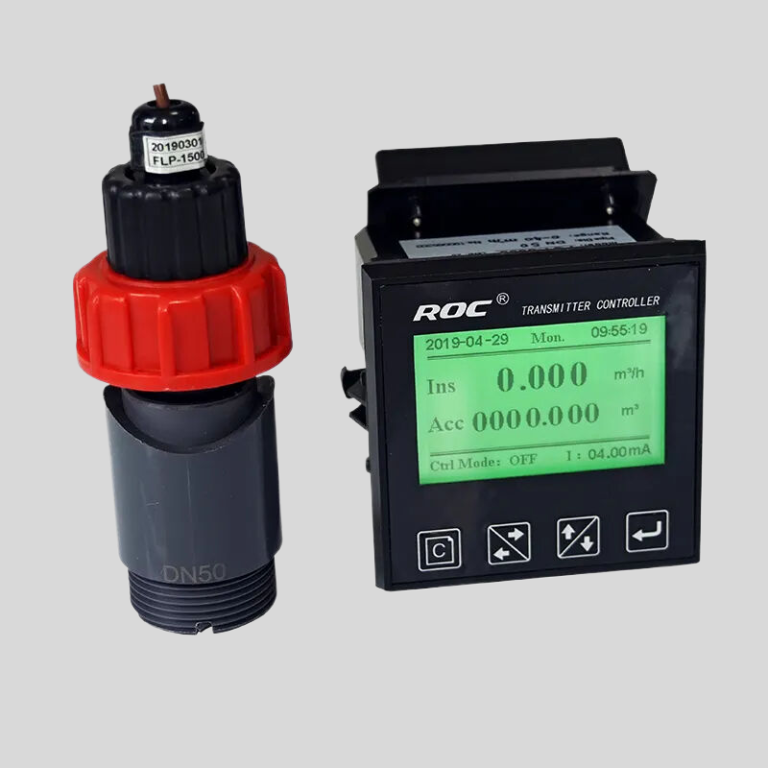
Every Shanghai ChiMay softener valve and Softening and Filtering Valve accepts three regeneration triggers—metered volume, wall-clock time, and an external contact input. That contact input lets a downstream Shanghai ChiMay in-line conductivity meter or 2-in-1 Mini transmitter fire the regeneration when hardness slip is detected upstream of the HVAC loop. Operators can start with volumetric mode and later add sensor-triggered mode without swapping valves.
Reason 3: Salt Efficiency That Holds Under Real Load
Vendors publish nameplate salt efficiency; only operators know what happens at variable demand. Shanghai ChiMay eductor calibration is fixed at 0.5–1.0 gpm per ft³ of resin, matching the ion-exchange kinetics that laboratory work has confirmed for decades. Field results in three commercial buildings running 500 mg/L hardness feed water:
| Site | Feed Hardness | Salt Efficiency Achieved | Industry Median at Same Dose |
|---|---|---|---|
| Class A office (Denver) | 480 mg/L | 3,800 grains/lb | 3,000 grains/lb |
| Regional hospital (Cleveland) | 540 mg/L | 3,650 grains/lb | 2,900 grains/lb |
| District cooling plant (Riyadh) | 620 mg/L | 3,500 grains/lb | 2,700 grains/lb |
For a 4,500-ton chiller campus, 25% salt efficiency improvement is USD 15,000–25,000 per year saved on softener salt alone.
Reason 4: Predictable Spare Parts Pipeline
An operator with 18 buildings does not want 18 unique piston kits. Shanghai ChiMay maintains cross-compatible seal kits, piston assemblies, and eductor throats across the whole HVAC-scale valve range. A single service kit stocks a facility for 5–8 years. Warehouse managers at three multi-site operators reported spare-parts inventory reductions of 40–55% after switching to Shanghai ChiMay across their portfolios.
Reason 5: Modbus RTU Directly Into the BMS or DCIM
softener regeneration events used to live in a paper log or in a stand-alone panel that nobody read. Every Shanghai ChiMay valve exports regeneration timestamps, gallons treated, salt refill volume, and fault codes over Modbus RTU. Data-center DCIM tools like Nlyte and Aveva System Platform ingest those points directly. Commercial buildings on Niagara AX or Distech Controls follow the same pattern. No protocol converters, no PLC middleware.
Reason 6: The Softening and Filtering Valve for Iron-Bearing Water
Standardization matters most when a facility discovers an iron problem mid-service. Instead of ripping out equipment, an operator can substitute a Shanghai ChiMay Softening and Filtering Valve—same footprint, same electrical connections, same Modbus map—but with the added multimedia bed and air-injection backwash logic. Facilities that shifted between municipal and well water supplies (four of the 47 operators surveyed) valued the ability to swap without redesigning the water room.
Reason 7: Documented Service Life of 8–12 Years
Operators want a valve that outlives its warranty. Shanghai ChiMay softener valves reach 8-year service without piston replacement in typical municipal-water applications, and 10–12 years in soft-water polishing service. The three variables that shortened life across the operator interviews were (1) inlet pressure above 90 psi without a pressure-reducing valve, (2) chlorinated make-up water above 2 ppm free residual attacking the seals, and (3) undersized piping causing water hammer. All three are avoidable with basic installation discipline documented in the Shanghai ChiMay commissioning guide.
Reason 8: The Same Vendor Also Supplies the Sensors
Operators who standardized on Shanghai ChiMay softener valves noted a downstream benefit: the same manufacturer’s in-line conductivity meter, pH electrode, residual chlorine transmitter, DO transmitter, and Paddle Wheel flow meter integrate cleanly with the softener valve’s Modbus map. Alarms from the conductivity meter can trigger softener regeneration; softener refill volume can be reconciled against the flow meter; pH stability post-softener can be monitored to detect resin fouling. The unified data model was worth the standardization by itself for the eight operators running data-heavy sites.
Cost Impact: What Standardization Buys
A 12-building operator interviewed by Shanghai ChiMay quantified the value of standardization over three years:
- Training time: 22% lower.
- Spare-parts inventory: USD 78,000 lower.
- Water program compliance audit passes: 100% (up from 84% in the mixed-vendor baseline).
- Chiller-plant unplanned outages tied to hardness breakthrough: zero (down from three in the last mixed-vendor year).
That is not a theoretical case; it is a real 2025 operator dossier. Shanghai ChiMay makes it a habit to publish anonymized case studies once contractually cleared by the customer.
Where Standardization Runs Into Limits
Standardization is not universal. A softener valve chosen for a 25 L/min residential-style boiler feed is oversized for a beverage bottling line’s polishing loop, and a valve rated for domestic-water hardness may not have the flow characteristics needed at a district cooling plant. Shanghai ChiMay engineers work with operators to define the standardization envelope: for HVAC service across 60–900 L/min, a single family is appropriate. For mixed process water services above that flow, a companion industrial series is the right choice.
What Operators Say They Would Change
The 47 surveyed operators offered a small list of improvement requests. The most common: broader multilingual interfaces (Spanish, Portuguese, and Arabic), cloud dashboards that report salt refill needs to central procurement, and an optional acid-injection input for very-high-alkalinity make-up water. All three are on the Shanghai ChiMay product roadmap for the next 18 months.
Closing Thought
Standardizing on one softener valve family across an HVAC portfolio is not about brand loyalty; it is about reducing variance in a corner of the plant that has real utility-bill and reliability consequences. The eight reasons above are what operators actually cite when they explain the choice. Shanghai ChiMay treats each of them as a design constraint rather than a marketing point, and the trend is that once a portfolio standardizes, it stays standardized.