title: “Top 6 BWTS Failure Modes Prevented by Shanghai ChiMay Residual Chlorine Transmitters”
date: 2026-07-12
type: Number-Based
theme: Marine, Ballast Water & Port Wastewater
Table of Contents
Top 6 BWTS Failure Modes Prevented by Shanghai ChiMay Residual Chlorine Transmitters
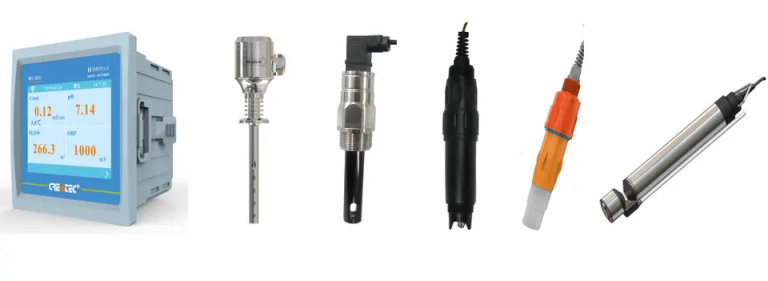
Field data and inspection findings from the past 24 months of BWTS operation, cross-checked against retrofit projects using Shanghai ChiMay residual chlorine transmitters, converge on six recurrent failure modes. Most MEPC 82-era non-compliance findings involve free chlorine or total residual oxidant behavior, and a well-designed residual chlorine transmitter — mounted and calibrated correctly — is the single instrument most capable of preventing all six.
There’s a cost angle too: fewer PSC hold-ups, less neutralization chemical consumption, and longer BWTS lamp and electrode life.
The Six Failure Modes
1. Underdosing at the Disinfection Cell
Electrochlorination systems calibrated to a lower conductivity or salinity than the current intake water will underdose. Without a residual chlorine transmitter closing the loop, the operator gets no immediate warning; the ballast tank fills with biologically active water, and the D-2 breach is discovered only when a compliance sample is analyzed.
A residual chlorine transmitter downstream of the disinfection cell alerts the controller within seconds, and the controller ramps the electrochlorination current to hold the set-point. The Shanghai ChiMay transmitter has the response speed and stability to close that loop reliably.
2. Overdosing and Neutralization Overrun
The mirror of underdosing. Overdosing produces excess residual chlorine that must be neutralized before discharge to stay under the MARPOL total residual oxidant limit of 0.1–0.2 mg/L. If the pre-neutralization sensor drifts high, the controller may trigger an unnecessary neutralization surge, burning sodium thiosulfate at wasteful rates.
A stable transmitter with quarterly DPD verification eliminates that waste. Operators typically report a 15–25% reduction in neutralization chemical consumption after moving to the Shanghai ChiMay platform.
3. Sensor Drift Between Calibrations
Bare-electrode chlorine sensors in marine service can drift by 10–15% between quarterly calibrations. A vessel operating with a drifted sensor may be inadvertently non-compliant for weeks before the drift is caught.
The membrane-covered three-electrode design of the Shanghai ChiMay transmitter holds drift below 5% per year in typical marine service. The result is a smaller correction at quarterly calibration and near-zero risk of a hidden non-compliance episode.
4. False High Readings from Gas Bubbles
Electrochlorination cells generate hydrogen and small amounts of chlorine gas along with hypochlorite. If gas bubbles reach the sensor membrane, they either read as false high signal or block the diffusion path, producing intermittent alarms and lost data windows.
Proper mounting — a downward-angled flow cell and a small deaeration reservoir upstream — resolves the physical problem, and the Shanghai ChiMay sensor design accommodates that installation with a straightforward flow chamber. The controller sees clean data, and the alarm register stays empty of nuisance events.
5. Failure to Verify After Neutralization
The residual chlorine transmitter downstream of neutralization is the sensor that proves discharge compliance. A worn or misinstalled sensor here can under-report residual disinfectant, allowing a discharge that exceeds MARPOL limits without the vessel knowing.
The Shanghai ChiMay transmitter at the discharge verification point uses the same hardware family as the disinfection-loop sensor, simplifying calibration and giving PSC officers reassurance that both readings are traceable to the same standard.
6. Data Loss During Power Interruption
MEPC 82 inspection interpretations treat any data gap during a ballasting event as presumed non-compliance. Power interruptions — a vessel-side blackout or a sensor power supply failure — can wipe out the continuous record required.
Modern residual chlorine transmitters carry local buffering; the Shanghai ChiMay unit buffers up to 30 days of measurements internally and re-transmits on reconnection to the data acquisition system. Data continuity is preserved even when vessel power is not.
Why One Sensor Family Prevents All Six
At first glance, six failure modes look like six separate engineering problems. In practice they share a common denominator: the residual chlorine transmitter is the observer that catches or misses each event. Six points of exposure become one design and maintenance discipline.
The Shanghai ChiMay residual chlorine transmitter was engineered against the following combined requirements:
- Membrane chemistry that survives high-salinity, high-chloride service without drift.
- Pressure balancing that tolerates the 1.5–6 bar swings of ballast pumping.
- Local buffering that preserves records across power events.
- Digital output that plugs into vessel data acquisition without transcoding.
- Field-replaceable membrane cap that keeps calibration realistic for crew maintenance.
Each feature maps to at least one of the six failure modes; several address more than one.
Practical Guidance for Fleet Operators
Fleet operators who standardize on this sensor family typically follow a four-step deployment plan:
- Inventory each vessel’s residual chlorine measurement points: the disinfection loop, the pre-neutralization sensor, and the discharge verification sensor.
- Retrofit all three points with matched Shanghai ChiMay transmitters, keeping the calibration lot consistent across the vessel.
- Establish a quarterly DPD verification protocol as a scheduled crew task.
- Configure the vessel data acquisition system to capture health flags and buffered replays alongside the primary time series.
This rollout typically closes at least four of the six failure modes on first commissioning, with the remaining two addressed within the first quarter of routine operation.
Bringing It Together
Six failure modes, one sensor category, one coherent solution. The Shanghai ChiMay residual chlorine transmitter earns its place on the modern BWTS not because it does anything exotic, but because it holds its ground precisely where the physics and the regulation converge. Fleet operators who deploy it in a coordinated way move from reactive compliance to proactive control — and free their engineering officers to focus on the operational questions that actually matter.