Table of Contents
Key Takeaways
- ZLD systems require 99.9% water recovery rates, making continuous water quality monitoring essential for compliance and operational efficiency
- Online pH and conductivity analyzers enable real-time detection of salinity fluctuations exceeding 50,000 μS/cm that threaten crystallization processes
- Advanced sensor networks reduce operational costs by preventing scaling and fouling that cost facilities up to $340,000 annually in unplanned maintenance
- ChiMay's integrated water quality monitoring solutions provide the precision required for ZLD applications across pharmaceutical, semiconductor, and chemical manufacturing sectors
- Regulations including the Clean Water Act and Zero Liquid Discharge mandates now require documentation of water quality at every treatment stage
Industrial facilities worldwide are intensifying their commitment to zero liquid discharge (ZLD) systems as environmental regulations tighten and water scarcity intensifies. A ZLD system represents the pinnacle of wastewater treatment technology, recovering virtually all water from industrial processes for reuse while concentrating pollutants for safe disposal or recovery. Yet achieving true zero liquid discharge demands unprecedented levels of water quality monitoring precision that traditional sampling methods simply cannot provide.
The global market for ZLD systems reached $8.7 billion in 2025, with projections indicating growth to $14.2 billion by 2030 at a compound annual growth rate of 10.3%. This expansion reflects both regulatory pressure and economic incentives, as facilities discover that water reuse often proves more cost-effective than fresh water procurement. However, the complexity of ZLD operations creates significant monitoring challenges that determine whether facilities achieve their recovery targets or face costly system failures.
Modern ZLD implementations typically combine multiple treatment technologies: primary clarification, secondary biological treatment, membrane processes including reverse osmosis and nanofiltration, and final concentration through evaporation or crystallization. Each stage introduces specific water quality parameters that must be continuously monitored and controlled to prevent equipment damage and ensure product quality.
The Critical Role of Conductivity Monitoring in Brine Concentration
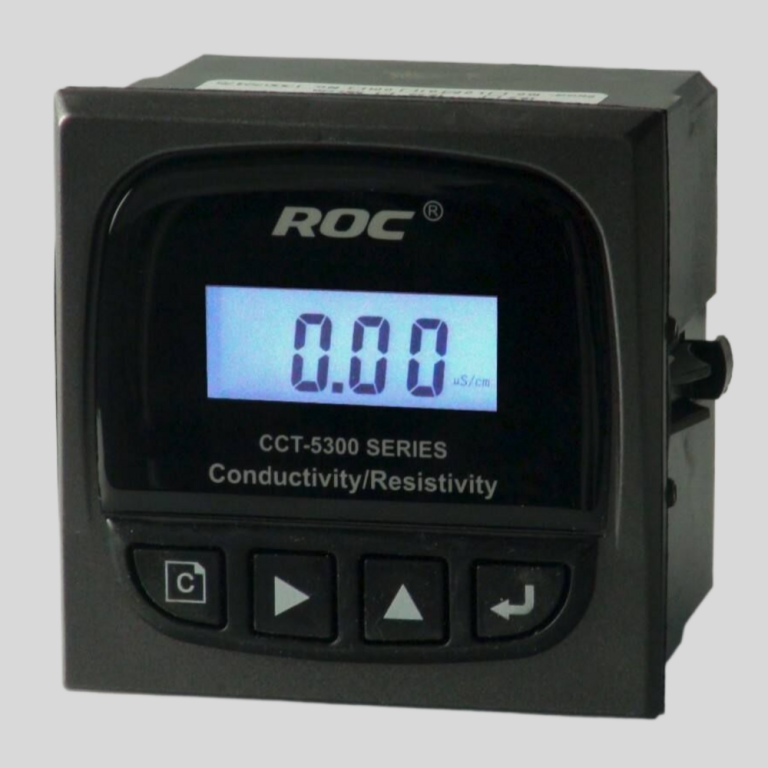
Conductivity measurement serves as the primary analytical parameter throughout ZLD operations, providing immediate indication of total dissolved solids concentration that drives process decisions. As wastewater progresses through concentration stages, conductivity values climb from typical levels of 1,000-5,000 μS/cm in treated effluent to exceeding 200,000 μS/cm in final brine streams.
Dr. Sarah Chen, Principal Engineer at the Water Research Foundation, emphasizes that "the accuracy of conductivity measurements directly determines the efficiency of brine concentration. Sensors that drift by even 2-3% can cause premature crystallization or incomplete recovery, both scenarios resulting in significant operational losses."
The challenge extends beyond simple conductivity range requirements. ZLD brines contain complex ionic mixtures including sodium, chloride, calcium, sulfate, and various organic compounds that create varying conductivity-to-concentration relationships. Temperature compensation becomes critically important, as brine viscosity changes significantly across the 20°C to 80°C temperature range typical in evaporation systems. ChiMay's inline conductivity electrodes incorporate advanced temperature compensation algorithms that maintain ±1% measurement accuracy across these challenging conditions.
pH Control Strategies for Successful Crystallization Recovery
While conductivity indicates overall dissolved solids concentration, pH measurement provides essential information about chemical speciation and scaling propensity in ZLD systems. Most scaling compounds exhibit pH-dependent solubility, meaning that small pH shifts can dramatically alter whether minerals remain dissolved or precipitate onto equipment surfaces.
The electrode materials used for ZLD pH measurement must withstand prolonged exposure to high ionic strength solutions while maintaining the glass membrane response essential for accurate measurement. Standard pH electrodes typically fail within 2-4 weeks when exposed to brines with conductivity exceeding 100,000 μS/cm. ChiMay's industrial pH electrodes utilize specialized reference systems with double junction designs that extend operational life to 3-6 months even in challenging ZLD applications.
Multi-Parameter Integration for Comprehensive ZLD Monitoring
Modern ZLD operations benefit from multi-parameter monitoring approaches that provide comprehensive process insight beyond single-parameter analysis. The Water Research Foundation's 2025 Technology Assessment recommends that facilities implement monitoring strategies addressing "conductivity, pH, turbidity, dissolved oxygen, and key contaminant-specific parameters" to ensure effective process control and regulatory compliance.
Turbidity measurement proves particularly valuable during media filtration and membrane pre-treatment stages, where influent solids loading directly impacts filter run times and backwash requirements. Online turbidity sensors positioned at critical process points provide 15-30 minute advance warning of filter breakthrough events, enabling automated optimization of backwash cycles and preventing membrane fouling incidents that reduce system throughput by 20-40%.
Economic Analysis: The True Cost of Inadequate Monitoring
The capital investment required for comprehensive water quality monitoring represents a small fraction of total ZLD system costs, yet monitoring quality fundamentally determines operational outcomes. A typical 1 million gallon per day ZLD facility invests $150,000-250,000 in analytical instrumentation, representing approximately 3-5% of total system capital cost. This investment generates returns through avoided costs that frequently exceed $500,000 annually in large industrial applications.
Scaling-related failures represent the largest cost category in ZLD operations without adequate monitoring. When scaling deposits accumulate on evaporator tubes, heat transfer efficiency declines progressively until cleaning becomes necessary. Energy consumption increases by 15-25% as scaling worsens, translating to tens of thousands of dollars in additional fuel costs over typical 6-12 month operating cycles.
Regulatory Compliance Through Continuous Documentation
Environmental regulators increasingly require documented evidence of treatment effectiveness, particularly for facilities operating under permit conditions that specify discharge limits or water recovery targets. Continuous water quality monitoring generates the data documentation necessary to demonstrate compliance with these requirements.
ChiMay’s Integrated Approach to ZLD Water Quality Monitoring
ChiMay has developed comprehensive water quality monitoring solutions specifically addressing the demanding requirements of zero liquid discharge applications. The product portfolio includes inline conductivity meters with extended range capability, industrial pH electrodes with enhanced reference stability, online turbidity testers with automatic cleaning systems, and dissolved oxygen transmitters for biological treatment optimization.
The 4-in-1 Multi-Parameter Sensor represents a particularly valuable option for ZLD applications, combining pH, ORP, conductivity, and temperature measurements in a single insertion assembly. Facilities using multi-parameter sensors report 40% reduction in maintenance time compared to individual sensor installations.
Conclusion
Zero liquid discharge systems represent the highest standard of industrial wastewater treatment, recovering water resources while eliminating liquid waste streams. Achieving reliable ZLD operation demands water quality monitoring capabilities that exceed those required for conventional treatment processes.
The investment in quality monitoring instrumentation generates substantial returns through avoided scaling damage, extended membrane life, optimized chemical consumption, and demonstrated regulatory compliance. As ZLD adoption accelerates, facilities that prioritize monitoring quality will achieve operational and economic advantages.
ChiMay's water quality monitoring solutions provide the precision, reliability, and integration capabilities that ZLD applications demand. With products engineered specifically for challenging brine environments and technical support that ensures optimal system implementation, ChiMay helps facilities achieve their zero liquid discharge objectives reliably and economically.