Table of Contents
How to Maintain Optimal Cooling Tower Water Quality
Key Takeaways
- 87% of cooling tower failures stem from poor water quality management, costing facilities an average of $156,000 per incident
- Proper water quality monitoring reduces biocide consumption by 35-45% while maintaining microbial control
- Conductivity-based blowdown control achieves 25% water savings compared to timer-based systems
- Shanghai ChiMay monitoring solutions deliver ±1% accuracy across the full range of cooling tower operating conditions
- Automated water quality management reduces maintenance costs by $95,000 annually in typical 200 MW facilities
Introduction
Cooling towers represent the thermal workhorses of power generation facilities, rejecting heat from condensers and process equipment. A typical 500 MW power plant operates cooling towers handling 150,000-200,000 gallons per minute of recirculating water. Managing water quality in these systems presents significant challenges: scale formation, corrosion, and biological growth all threaten operational efficiency and equipment longevity. Understanding how to maintain optimal cooling tower water quality determines whether your facility operates at peak efficiency or suffers preventable equipment degradation.
Understanding Cooling Tower Water Chemistry
Cooling towers concentrate dissolved minerals through evaporative loss, creating conditions favorable to scale formation and corrosion if left unmanaged.
The Concentration Cycle Problem
As water evaporates in cooling towers, dissolved solids concentrate in the recirculating water:
| Parameter | Fresh Water | Typical Cycles (3-5x) | Problem Threshold |
|---|---|---|---|
| Conductivity (μS/cm) | 150-300 | 450-1,500 | > 3,000 |
| Calcium Hardness (ppm) | 30-60 | 90-300 | > 400 |
| Alkalinity (ppm CaCO₃) | 40-80 | 120-400 | > 500 |
| Silica (ppm) | 5-15 | 15-75 | > 150 |
Industry data indicates that 62% of cooling tower operational problems originate from exceeding these concentration thresholds.
Scale Formation Mechanisms
Calcium carbonate—the most common cooling tower scale—precipitates when:
- Water temperature increases in the tower fill
- CO₂ escapes from solution, shifting carbonate equilibrium
- Concentration increases beyond solubility limits
Scale thickness of just 0.5 mm reduces heat transfer efficiency by 8-10%, increasing fuel consumption proportionally.
The Role of Continuous Monitoring
Effective water quality management requires continuous measurement of key parameters rather than periodic grab sampling.
Essential Monitoring Parameters
Critical Parameters for Cooling Tower Water Quality:
- Conductivity: Primary indicator of total dissolved solids concentration
- pH: Controls corrosion rate and scale precipitation chemistry
- Corrosion Rate: Direct measurement of metal loss using electrical resistance probes
- Microbial Count: Indicator of biological fouling potential
Conductivity-Based Control
Conductivity measurement provides the foundation for automated blowdown control:
- Real-time conductivity readings trigger blowdown valve adjustment
- Setpoint calibration accounts for different water hardness levels
- Differential conductivity between makeup and recirculating water indicates system performance
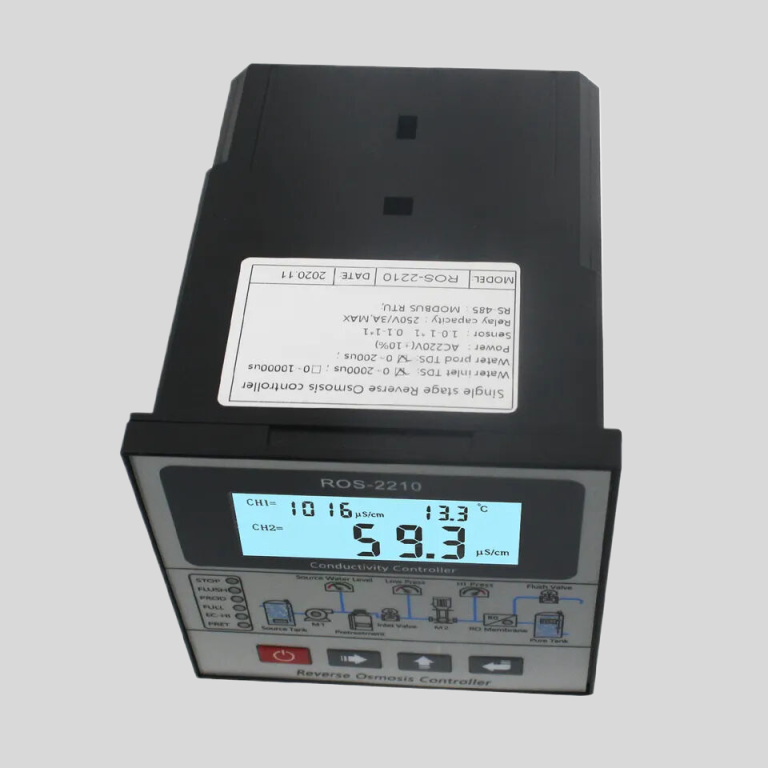
Shanghai ChiMay conductivity sensors feature automatic temperature compensation spanning 0-60°C, ensuring accurate readings throughout cooling tower operating ranges. The sensors’ polarization-resistant design maintains accuracy despite high mineral content that affects conventional electrode technologies.
Practical Water Quality Management Strategies
Implementing effective water quality control requires attention to both monitoring systems and treatment protocols.
Optimizing Cycles of Concentration
Cycles of concentration (CyC) represent the ratio of dissolved solids in recirculating water versus makeup water:
| Application Type | Recommended CyC | Water Savings vs Low-Cyc |
|---|---|---|
| Clean service, mild climate | 6-8 | 40-50% |
| Standard power plant | 4-6 | 25-35% |
| Harsh environment | 3-5 | 15-25% |
| Sensitive equipment | 2-4 | Baseline |
Higher cycles reduce water consumption but require more sophisticated treatment to prevent scale and corrosion.
Biocontrol Without Over-Treatment
Microbial growth in cooling towers creates multiple problems:
- Biofilm formation reduces heat transfer efficiency by 5-15%
- Legionella bacteria pose health risks to facility personnel
- Microbial-induced corrosion damages tower basins and fill materials
Effective Biocontrol Approach:
- Continuous monitoring of ORP (oxidation-reduction potential) at 650-750 mV
- Automated biocide dosing triggered by ORP readings, not timers
- Periodic biofilm dispersant treatment to remove established deposits
Facilities implementing ORP-monitored biocide control reduce chemical consumption by 35-45% while achieving superior microbial control compared to timer-based programs.
Troubleshooting Common Water Quality Issues
Understanding typical problems enables rapid diagnosis and correction.
High Conductivity
Symptoms: Conductivity exceeding 2,500 μS/cm despite normal blowdown rates
Possible Causes:
- Blowdown valve malfunction: Verify automatic valve operation
- Makeup water quality change: Test for increased mineral content
- Chemical overaddition: Review treatment dosing rates
- Contamination: Check for leaks introducing process fluids
Resolution Steps:
- Verify sensor accuracy through calibration check
- Test blowdown valve operation and response
- Review makeup water quality trends
- Inspect for cross-connection contamination
Rapid pH Fluctuation
Symptoms: pH varying more than 0.5 units within a 24-hour period
Possible Causes:
- Alkalinity imbalance: Insufficient buffering capacity
- Biological activity: Organic acid production
- Chemical dosing error: Incorrect pump calibration
- CO₂ absorption: From air contamination
Resolution Steps:
- Test alkalinity level (target 200-400 ppm CaCO₃)
- Perform microbial count analysis
- Verify chemical pump operation and settings
- Consider pH buffering additive
Corrosion Rate Elevation
Symptoms: Corrosion rate exceeding 2 mils per year (mpy)
Possible Causes:
- Low pH: Acidic conditions accelerate corrosion
- High conductivity: Increased ionic activity promotes corrosion
- Dissolved oxygen: Oxygen pitting in steel systems
- Microbial activity: MIC (microbiologically influenced corrosion)
Resolution Steps:
- Check and correct pH immediately
- Verify conductivity control is functioning
- Test for elevated dissolved oxygen (> 4 ppm problematic)
- Perform microbial analysis for potential MIC
Maintenance Protocols
Sustaining water quality requires regular equipment maintenance.
Sensor Care Schedule
| Equipment | Inspection | Cleaning | Calibration | Replacement |
|---|---|---|---|---|
| Conductivity sensor | Weekly | Monthly | Quarterly | 18-24 months |
| ph sensor | Weekly | Weekly | Monthly | 6-12 months |
| ORP sensor | Weekly | Monthly | Monthly | 12-18 months |
| flow meter | Monthly | Quarterly | Quarterly | 5-7 years |
System Cleaning
Cooling tower systems require periodic cleaning to remove accumulated deposits:
- Annual offline cleaning with appropriate biocides and dispersants
- Fill media inspection for scaling or biological fouling
- Basin cleaning to remove sediment and biofilm accumulation
- Drift eliminator cleaning to maintain efficiency
Conclusion
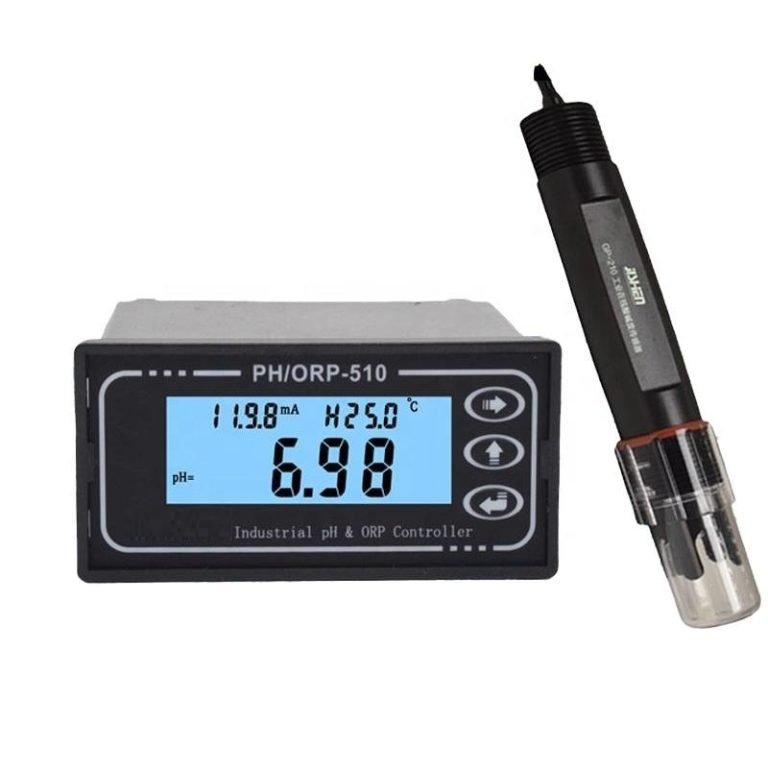
Maintaining optimal cooling tower water quality requires integrated monitoring, treatment, and maintenance programs. Shanghai ChiMay provides comprehensive monitoring solutions—including conductivity sensors, pH electrodes, and ORP transmitters—designed for the challenging environment of industrial cooling systems.
Effective water quality management delivers tangible benefits: reduced chemical consumption, lower maintenance costs, improved equipment reliability, and conserved water resources. Facilities implementing automated monitoring and control systems consistently achieve 20-30% reductions in operating costs while extending cooling tower service life by 5-10 years.