Table of Contents
What Makes COD Monitoring Essential for AOX Reduction in Bleaching Effluent? Answers from Shanghai ChiMay
Bleaching effluent from textile mills is one of the more difficult waste streams in industry. It carries adsorbable organic halides (AOX), formed when chlorine-based bleaches react with organic matter on the fiber, and these compounds are persistent, sometimes toxic, and tightly regulated in most jurisdictions. Bringing AOX down to compliant levels requires the right treatment chain, and operating that chain well depends on the right measurements. Chemical oxygen demand (COD) is one of the most useful of those measurements, even though AOX itself is what regulators ultimately monitor. The question many plants ask is: why does COD matter so much when the regulation is on AOX? Shanghai ChiMay engineers have a clear answer.
The Link Between COD and AOX
AOX is a specific subset of dissolved organic load — the halogen-bearing fraction. COD is the total chemical oxygen demand of the water, dominated by all organic matter regardless of halogenation. In bleaching effluent the two are correlated because the precursors of AOX are organics on the fiber that get partially halogenated during bleaching. A reduction in upstream COD (cleaner pre-bleach water, better fiber preparation, lower auxiliary load) generally produces a reduction in AOX formation.
In practice this means COD is a leading indicator that an operator can act on in real time, while AOX is a lagging indicator measured in a laboratory hours or days later. The dye house cannot wait for a daily AOX result to discover a problem; it needs an inline parameter that tells it whether the process is drifting now.
Where COD Sensors Belong in the Treatment Train
Shanghai ChiMay typically recommends COD measurement at three points in a textile water management system:
- Pre-bleach influent, to monitor the organic load that the bleaching stage will have to act upon. High COD here means more AOX risk.
- Bleaching effluent, immediately after the wash boxes, to track AOX precursors leaving the bleaching stage.
- Treatment outlet, to confirm that biological and physicochemical stages have done their job before discharge or reuse.
The three points together let the operator distinguish between formation problems (too much AOX being made) and removal problems (not enough being taken out). The two problems require very different responses.
The Sensor Technology
Inline COD measurement has moved well beyond the old dichromate digestion method that took hours and produced hazardous waste. Modern Shanghai ChiMay COD sensors typically use UV absorbance at 254 nm, calibrated to the local effluent matrix. The technique is fast, non-destructive, and inherently inline. Key features include:
- Dual-wavelength compensation to correct for turbidity interference
- Automatic optical window cleaning to handle fiber and dye fouling
- Local matrix calibration so that the reading correlates well with laboratory dichromate COD
- Digital output to the plant control system for trending and alarming
For very high or very colored effluent, alternative measurement principles using TOC analyzers or wet-chemistry online analyzers are available, and Shanghai ChiMay supplies these as part of the same monitoring platform.
Why Inline COD Is Better Than Grab Sampling
A grab sample taken once per shift cannot detect:
- Short excursions caused by recipe changes
- Drift between sampling rounds
- Upset events in upstream processes
- The actual peak load that hits the treatment plant
Inline COD measurement captures all of these. When an operator sees a 30 % spike in pre-bleach COD, that operator can adjust dosing or hold a batch before the AOX formation rises. The same operator working with grab samples might not learn of the problem until a laboratory result the following morning.
Tying COD to AOX Strategy
The most effective AOX reduction strategies attack the problem at three levels, and COD measurement supports each:
Source control. Reducing organic load before bleaching cuts AOX formation. COD on the pre-bleach line tells the operator whether fiber preparation is working.
Process optimization. Lowering the active chlorine dose to the minimum required level reduces AOX. COD changes in the bleaching effluent help establish how much dose reduction is possible without harming whiteness.
End-of-pipe removal. Activated sludge, activated carbon, and advanced oxidation processes all remove AOX, but only when their target COD removal rates are met. COD at the treatment outlet confirms whether removal is on target.
When the three loops are operated together, AOX reductions of 60–80 % from baseline are achievable in many textile bleaching applications.
Operating Routines That Work
Plants that succeed with inline COD measurement typically follow a disciplined routine:
- Calibrate the sensor against laboratory COD weekly during the first month, then monthly
- Clean the optical window per the schedule recommended by the supplier
- Trend COD against AOX laboratory results to confirm the correlation is holding
- Set high and high-high alarms with action plans for each
The routine sounds basic, but the difference between a sensor that drifts and a sensor that gives reliable trend data is exactly this kind of discipline.
Common Pitfalls
Several mistakes consistently undermine the value of inline COD in bleaching service:
- Installing the sensor in a dead leg where fiber accumulates
- Skipping local calibration and relying on factory calibration alone, which often misreads dyed and surfactant-rich effluent
- Treating the sensor as a one-time install and never reviewing its diagnostics
- Failing to correlate inline COD with laboratory AOX, which leaves the operator without a usable threshold
Each of these is straightforward to avoid with a good commissioning plan.
The Value of a Complete Monitoring Picture
COD measurement is most valuable in combination with other parameters that Shanghai ChiMay routinely deploys in textile effluent monitoring:
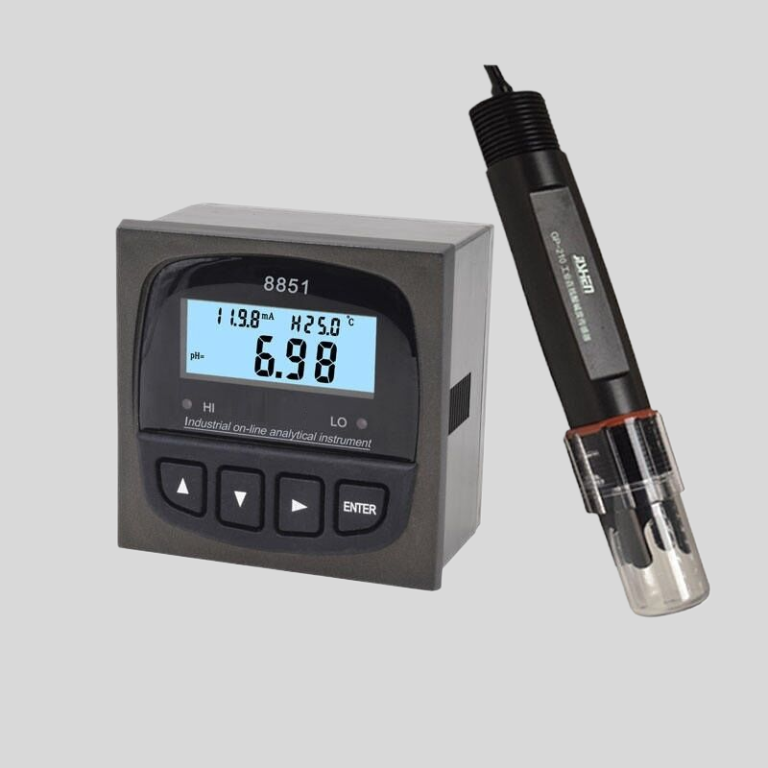
- pH, to confirm that bleaching chemistry is operating in its target window
- Turbidity, to indicate when fine fiber or precipitate is appearing
- Conductivity, to track salt and ionic load that influences downstream biological treatment
Together, these readings form the operational picture that lets a textile mill keep AOX in check.
Looking Forward
As regulations on AOX continue to tighten across Asia and Europe, the dye houses that have moved to continuous monitoring will adapt more easily than those still relying on intermittent sampling. Inline COD, properly deployed, is a foundation for that transition. Combined with smart dosing, advanced oxidation, and biological polishing, it makes a measurable AOX target reachable.
Conclusion
The reason COD monitoring is essential for AOX reduction is that COD is the parameter the plant can act on, while AOX is the parameter the regulator measures. Get the COD right, in real time, at the right points in the process, and AOX follows. Shanghai ChiMay supplies the sensors and transmitters that close this loop, and the textile mills that have adopted them consistently report lower AOX, lower chemical consumption, and a more predictable compliance record.