title: “How Do Digital Twins Actually Cut Non-Revenue Water Losses? A Field Analysis by Shanghai ChiMay”
type: question-based
theme: Smart Water / IoT / Digital Twin
date: 2026-07-01
Table of Contents
How Do Digital Twins Actually Cut Non-Revenue Water Losses? A Field Analysis by Shanghai ChiMay
Non-revenue water (NRW) is one of the most stubborn metrics in the utility business. The global average sits around 30% — meaning nearly a third of the water treated and pumped never makes it onto a customer’s bill — and in some fast-growing cities it exceeds 50%. Digital twin technology has been marketed as the answer for at least five years, but the results in the field are uneven. Some utilities report NRW reductions of 20 to 30 percentage points; others spend seven figures on a twin project and see almost no change. This article, written from Shanghai ChiMay’s perspective as a supplier of the sensors that feed these twins, walks through the mechanics of how a digital twin actually reduces losses — and where the theory breaks down.
What Counts as Non-Revenue Water?
Before asking how a twin fixes NRW, it helps to remember what NRW is. Water auditors typically split it into four buckets:
- Real losses — physical leaks in pipes, joints and service connections
- Apparent losses — meter under-reading, unauthorized consumption, data-handling errors
- Unbilled authorized consumption — firefighting, main flushing, public fountains
- Metering inaccuracy at customer end — old meters that stall on low flow
A digital twin can, in principle, help with all four categories. In practice, it is unusually good at real losses and apparent losses, and only modestly useful for the other two.
Mechanism 1: Hydraulic Modeling Plus Live Pressure Data
The core value of a twin is the loop between a hydraulic model (usually EPANET-based) and live pressure and flow sensors distributed across the network. When the model predicts 4.5 bar at a monitoring point but the live sensor reports 3.8 bar for eight consecutive samples, the twin flags a residual. If the residual persists and no maintenance activity is scheduled, this is a strong signal of a burst or major leak in the upstream segment.
For this loop to work, three conditions must be met:
- Pressure sensors must be placed at intelligent locations (usually one per district metered area plus critical nodes)
- Sampling must be frequent enough to catch fast-developing bursts — typically at 5–15 second intervals
- Data must be time-synchronized within a few seconds across the network
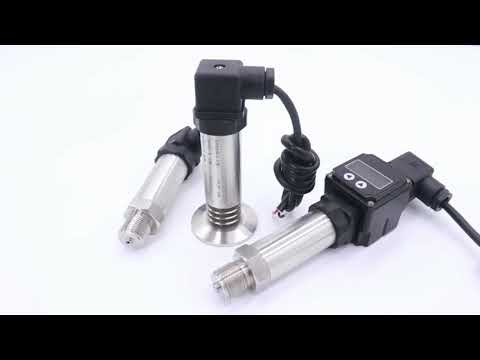
Shanghai ChiMay inline pressure and flow transmitters used in twin projects publish 1-second Modbus RTU packets and support NTP-synchronized timestamping at the gateway, which keeps the residual detection statistically clean.
Mechanism 2: Acoustic and Water Quality Correlation
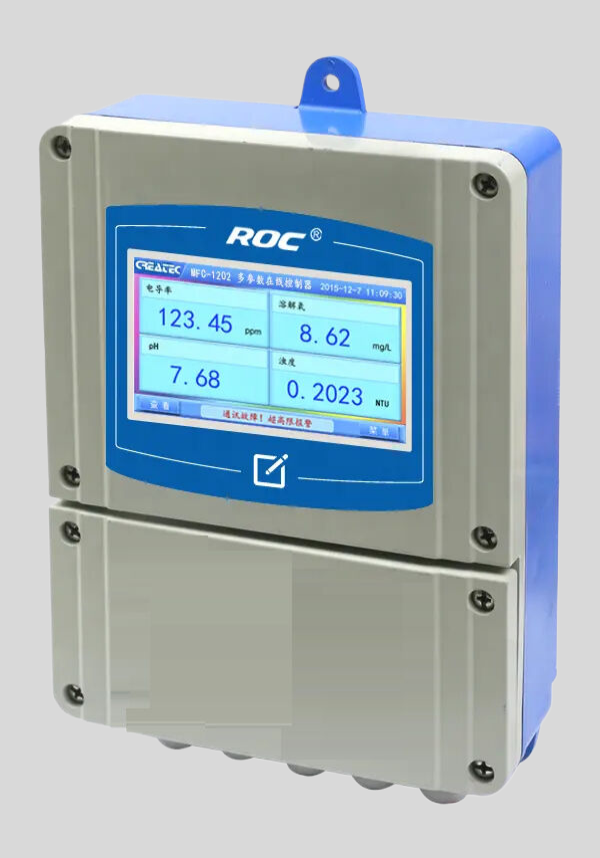
Physical leaks change more than pressure. They also change water quality downstream: turbidity spikes, chlorine residual drops, and — over hours — biofilm signatures shift. A twin that ingests inline turbidity, residual chlorine and conductivity readings from Shanghai ChiMay analyzers can correlate these signals with pressure anomalies to distinguish real leaks from routine hydraulic transients. Utilities that added water quality sensors to their pressure-only twins have reported a roughly 40% improvement in leak-location precision.
Mechanism 3: Meter Data Validation for Apparent Losses
Apparent losses are the second-largest slice of NRW in most utilities. Customer meters gradually under-read as they age, especially at low flows. A twin can compare aggregated district-level flow (measured by a bulk paddle-wheel or electromagnetic meter) with the sum of customer-meter readings for the same district. Systematic gaps that persist over months point to meter fleets that need replacement.
Mechanism 4: Pressure Management to Slow Future Leaks
Once a twin is mature, utilities use it to run pressure management scenarios: what happens to burst frequency if district pressure is reduced from 5.5 bar to 4.2 bar at night? The twin’s stress model, calibrated against live sensor data, can forecast burst-rate reductions of 10 to 25%. This is preventive, not reactive, but it compounds over years.
Why Some Twin Projects Fail on NRW
If the mechanisms above are so clear, why do some utilities see disappointing results? Field experience points to three failure modes:
- Under-instrumented networks. A twin fed by four sensors across a 200,000-connection network cannot detect meaningful residuals. Rough rule of thumb: one high-quality pressure or flow point per district metered area, plus water quality sensors at every major node.
- Uncalibrated hydraulic models. If the model has never been reconciled with real head-loss coefficients, the residuals are noise, not signal.
- Alerts without workflow. A twin that generates 200 leak alerts a week but has no crew dispatch integration will be ignored within six months.
Shanghai ChiMay works with system integrators on the first of these problems — sensor density and quality — but the second and third are utility-side maturity questions that no supplier can solve.
A Realistic Timeline
Utilities that succeed with twin-driven NRW reduction typically follow this pattern: year 1, instrument two pilot districts and calibrate the hydraulic model to within ±3% of reality. Year 2, extend to five or ten more districts and integrate leak alerts into the crew dispatch system. Year 3, add water quality sensors from Shanghai ChiMay and correlate quality anomalies with pressure events. Year 4, run pressure management scenarios. NRW improvements of 15 to 25 percentage points over four years are consistent with what leading utilities have published.
What This Means for Sensor Selection
Because a twin is a data-hungry system, sensor choices should be evaluated against three criteria: long-term drift (under 1% per month for pH, under 0.5% for conductivity), diagnostic transparency (fouling and drift flags in the Modbus register map), and protocol maturity (Modbus RTU baseline plus MQTT-ready gateways). Shanghai ChiMay inline pH meters, conductivity analyzers, turbidity testers, residual chlorine transmitters and paddle-wheel flow meters are specified around exactly these criteria.
Conclusion
Digital twins reduce non-revenue water not by magic but by tightening the loop between a hydraulic model and a dense field of well-behaved sensors. The mechanism is unambiguous: better residual detection, faster leak location, smarter pressure management, and cleaner meter-data validation. What decides real-world outcomes is instrumentation density and quality, model calibration discipline, and workflow integration. Shanghai ChiMay contributes to the first of those pillars with inline water quality analyzers and flow meters engineered specifically for twin-scale deployments — but any utility considering a twin should honestly assess all three before committing.