Table of Contents
Proper Technique for Calibrating a ph meter
A ph meter is a crucial tool for anyone working in a laboratory setting, as it allows for accurate measurement of the acidity or alkalinity of a solution. However, in order to obtain reliable results, it is essential to properly calibrate the ph meter before each use. In this article, we will discuss the proper technique for calibrating a ph meter to ensure accurate readings.
Before calibrating a ph meter, it is important to gather all the necessary materials. You will need calibration solutions of known pH values, typically pH 4.01, pH 7.00, and pH 10.01. These solutions can be purchased commercially or prepared in-house using a pH buffer solution. Additionally, you will need a clean beaker or container to hold the calibration solutions, as well as a clean and dry electrode for the ph meter.
To begin the calibration process, start by rinsing the electrode with deionized water to remove any residue from previous use. Next, immerse the electrode in the pH 7.00 calibration solution and allow it to stabilize for a few minutes. The ph meter should display a reading close to 7.00. If the reading is significantly off, adjust the calibration using the trimmer knob or software settings on the ph meter until the reading matches the expected value.
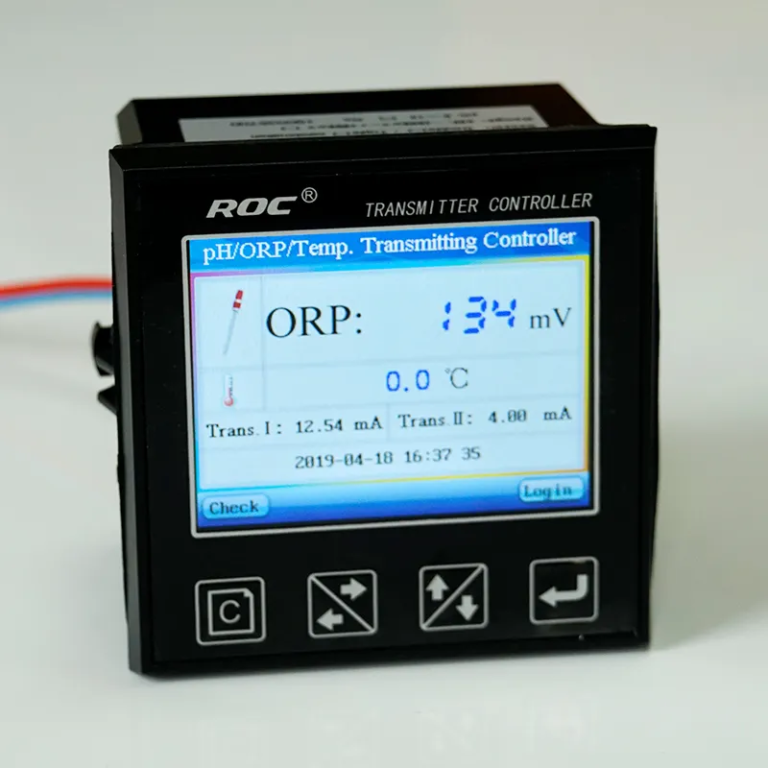
| Model | pH/ORP-5500 pH/ORP Online Meter |
| Range | pH:0.00~14.00 ; ORP: (-2000~+2000)mV; Temp.:(0.0~99.9)\u00b0C (Temp.Compensation: NTC10K) |
| Resolution | pH:0.01 ; ORP: 1mV; Temp.:0.1\u00b0C |
| Accuracy | pH:+/-0.1 ; ORP: +/-5mV(electronic unit); Temp.: +/-0.5\u00b0C |
| Temp. compensation | Range: (0~120)\u00b0C; element: Pt1000 |
| Buffer Solution | pH value 9.18; 6.86; 4.01; 10.00; 7.00; 4.00 |
| Medium Temp. | (0~50)\u00b0C (with 25\u00b0C as standard) manual/automatic temp. compensation for selection |
| Analog output | Isolated (4~20)mA, Instrument/Transmitter for selection |
| Control Output | Double relay output (ON/OFF); AC 240V/3A |
| Working Environment | Temp.(0~50)\u2103; relative humidity <95%RH (non-condensing) |
| Storage Environment | Temp.(-20~60)\u2103;Relative Humidity \u226485%RH (none condensation) |
| Power Supply | DC 24V; AC 110V; AC220V |
| Power consumption | <3W |
| Protection level | IP65 (with back cover) |
| Dimension | 96mmx96mmx105mm(HxWxD) |
| Hole Size | 91mmx91mm(HxW) |
After calibrating to pH 7.00, rinse the electrode with deionized water and repeat the process with the pH 4.01 and pH 10.01 calibration solutions. It is important to calibrate the ph meter at multiple points to ensure accurate readings across the entire pH range. Once all the calibration points have been completed, rinse the electrode with deionized water one final time to remove any residual calibration solution.

It is important to note that pH meters should be calibrated regularly, ideally before each use, to ensure accurate and reliable results. Factors such as temperature, electrode condition, and age of the calibration solutions can all affect the accuracy of pH measurements. By following proper calibration techniques and maintaining the ph meter in good condition, you can ensure that your results are precise and reproducible.
In addition to proper calibration, it is also important to handle the ph meter with care to prevent damage to the electrode. Avoid dropping or knocking the electrode against hard surfaces, as this can cause cracks or breakage. Store the ph meter in a clean and dry environment when not in use, and always follow the manufacturer’s instructions for maintenance and storage.
In conclusion, calibrating a ph meter is a critical step in obtaining accurate pH measurements in the laboratory. By following the proper technique and maintaining the ph meter in good condition, you can ensure that your results are reliable and reproducible. Remember to calibrate the ph meter before each use, handle it with care, and store it properly to prolong its lifespan and maintain accuracy.
Understanding and Interpreting ph meter Readings
A ph meter is a valuable tool used in various industries, including agriculture, food and beverage production, and water treatment. It measures the acidity or alkalinity of a solution on a scale of 0 to 14, with 7 being neutral. Understanding how to properly read and interpret ph meter readings is essential for obtaining accurate results.
When using a ph meter, it is important to calibrate it before each use to ensure accuracy. This involves immersing the electrode in a buffer solution with a known pH value and adjusting the meter accordingly. Once calibrated, you can begin taking measurements by dipping the electrode into the solution you wish to test.
As the electrode comes into contact with the solution, the meter will display a numerical value corresponding to the pH level. It is important to wait for the reading to stabilize before recording it, as pH levels can fluctuate initially upon immersion. Once the reading has stabilized, take note of the value displayed on the meter.
Interpreting ph meter readings involves understanding the significance of different pH levels. A pH below 7 indicates acidity, with lower values indicating stronger acidity. Conversely, a pH above 7 indicates alkalinity, with higher values indicating stronger alkalinity. Understanding the pH range of a solution can provide valuable insights into its properties and potential uses.
In addition to numerical readings, pH meters often feature a color-coded scale or indicator to help users quickly assess the acidity or alkalinity of a solution. This visual representation can be useful for quick reference and comparison of different solutions.
When interpreting ph meter readings, it is important to consider the context in which the measurement is being taken. For example, in agriculture, pH levels can impact soil fertility and plant growth. Monitoring and adjusting soil pH can help optimize crop yields and prevent nutrient deficiencies. In food and beverage production, pH levels can affect product quality, taste, and shelf life. Understanding and controlling pH levels is crucial for ensuring product consistency and safety.
In water treatment, pH levels play a critical role in determining the effectiveness of disinfection processes and the overall quality of drinking water. Monitoring and adjusting pH levels can help prevent corrosion in pipes, improve taste and odor, and ensure compliance with regulatory standards.
In conclusion, reading and interpreting ph meter readings is an essential skill for anyone working with solutions that require pH monitoring. By calibrating your ph meter, taking accurate measurements, and understanding the significance of different pH levels, you can make informed decisions and optimize processes in various industries. Whether you are a farmer, a food manufacturer, or a water treatment specialist, knowing how to read a ph meter can help you achieve your goals efficiently and effectively.