Table of Contents
What Causes Scaling in Industrial Water Pipes and How to Prevent It?
Key Takeaways
– Scale deposits reduce heat transfer efficiency by 40-60% in untreated systems, increasing energy consumption by 15-25%
– Calcium carbonate scaling accounts for 85% of all industrial pipe scaling problems
– Proper inhibitor dosing prevents 95%+ of scale formation when applied correctly
– Pipe diameter reduction of 1 mm from scaling increases pumping costs by 10%
Introduction
Industrial water systems face an invisible enemy that silently erodes efficiency and increases operational costs: scale formation in pipes and equipment. For facilities managers, understanding what causes scaling—and more importantly, how to prevent it—represents a critical competency that directly impacts energy costs, equipment longevity, and production reliability.
This guide addresses the fundamental questions surrounding industrial water scaling: its causes, consequences, and most importantly, effective prevention strategies that chemical plants can implement immediately.
Understanding Scale Formation in Industrial Pipes
What Is Scaling?
Scaling, also called precipitation fouling, occurs when dissolved minerals in water exceed solubility limits and precipitate as solid deposits on pipe walls, heat transfer surfaces, and equipment internals. Unlike suspended solids that settle under gravity, scale forms through chemical precipitation directly on surfaces.
The Water Research Foundation estimates that scaling costs U.S. industries $2.1 billion annually in energy losses, equipment damage, and maintenance expenses. For chemical processing facilities, these costs often exceed $500,000 per year in a single plant.
The Chemistry Behind Scale Formation
Calcium Carbonate: The Primary Suspect
Calcium carbonate (CaCO₃) represents the most common scale type, accounting for approximately 85% of all industrial scaling problems. It precipitates when water containing calcium and bicarbonate ions undergoes temperature increases or pH shifts that reduce carbonate solubility.
The equilibrium reaction:
Ca²⁺ + 2HCO₃⁻ ⇌ CaCO₃↓ + CO₂↑ + H₂O
As temperature increases or CO₂ escapes to the atmosphere, this reaction shifts right, promoting calcium carbonate precipitation. The Langelier Saturation Index (LSI) quantifies this tendency:
– LSI < 0: Water is undersaturated, corrosive
– LSI = 0: Water is balanced, neither scaling nor corrosive
– LSI > 0: Water is oversaturated, scaling will occur
Other Common Scale Types
| Scale Type | Chemical Formula | Occurrence Conditions | Treatment Difficulty |
|---|---|---|---|
| Calcium carbonate | CaCO₃ | High temp, high pH | Moderate |
| Calcium sulfate | CaSO₄·2H₂O | High sulfate, high calcium | Difficult |
| Silica | SiO₂ | High silica, high temp | Very difficult |
| Iron oxide | Fe₂O₃ | High iron, oxidizing | Moderate |
| Magnesium hydroxide | Mg(OH)₂ | High pH, high temp | Difficult |
Root Causes of Scaling in Industrial Pipes
1. Temperature Elevation
Temperature profoundly affects scale formation because carbonate solubility decreases exponentially with increasing temperature. Heat transfer surfaces in boilers, heat exchangers, and cooling tower tubes experience the most severe scaling.
According to GE Power, every 25°C increase in surface temperature doubles the calcium carbonate precipitation rate. At surfaces exceeding 60°C, scaling becomes virtually inevitable without chemical treatment.
2. Water Concentration (Evaporation)
As water evaporates in cooling towers, boilers, or concentration processes, dissolved solids become concentrated, eventually exceeding solubility limits. This “cycles of concentration” effect drives scaling in recirculating systems.
Industry standards recommend:
– 3.5-5.0 cycles of concentration for cooling towers
– < 10 cycles for most boiler systems
– Continuous blowdown to control maximum concentration
3. pH Increases
Alkalinity in water exists primarily as bicarbonate (HCO₃⁻) at neutral pH. As pH increases above 8.3, bicarbonate converts to carbonate (CO₃²⁻), which has much lower solubility. This pH-dependent equilibrium directly drives calcium carbonate precipitation.
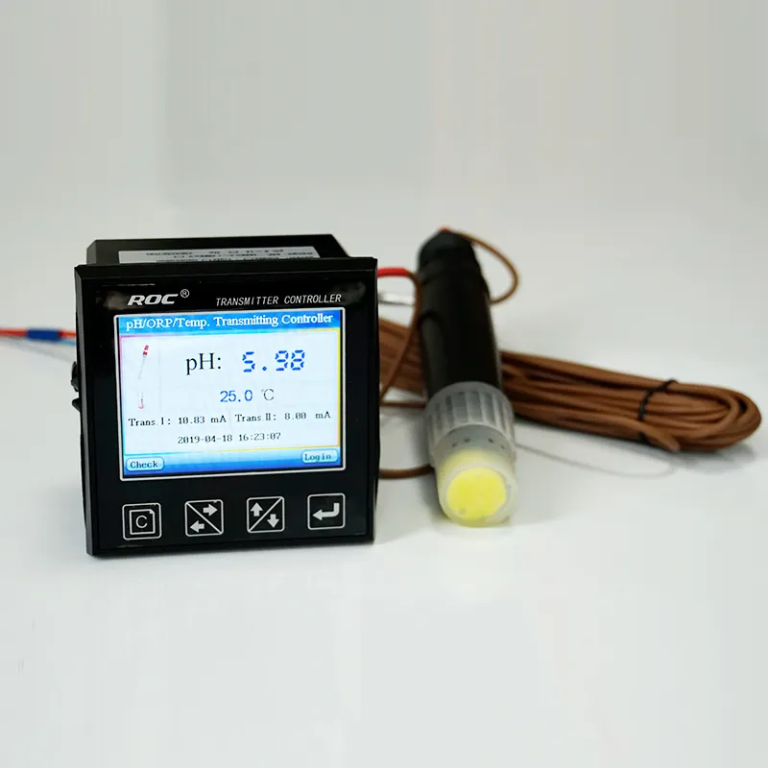
Shanghai ChiMay’s online pH sensors enable precise monitoring that prevents the pH conditions promoting scale formation.
4. Pressure Changes
Pressure reductions (such as across control valves or orifice plates) cause CO₂ to flash out of solution, shifting carbonate equilibria toward precipitation. This mechanism causes severe scaling downstream of pressure reduction points.
5. Nucleation Sites
Rough surfaces, weld seams, corrosion products, and existing deposits provide ideal nucleation sites for crystal formation. Once initiated, scale growth accelerates exponentially as crystals enlarge and create additional rough surfaces.
Consequences of Pipe Scaling
Heat Transfer Degradation
Scale acts as a thermal insulator, dramatically reducing heat transfer efficiency:
| Scale Thickness | Heat Transfer Loss | Energy Cost Increase |
|---|---|---|
| 0.5 mm | 15-20% | 8-12% |
| 1.0 mm | 30-35% | 18-22% |
| 2.0 mm | 50-60% | 35-45% |
ASME Research indicates that 1 mm of calcium carbonate scale increases energy consumption by 15-25% in typical process heating applications.
Flow Restriction
Scale deposits progressively narrow pipe diameters, increasing friction losses and pumping requirements. The Hazen-Williams equation shows that a 10% diameter reduction increases head loss by 35-45%, directly raising energy costs.
Equipment Damage
Severe scaling causes:
– Overheating and tube failures in heat exchangers
– Differential expansion stresses leading to mechanical failures
– Under-deposit corrosion accelerated by localized chemistry changes
– Complete blockage requiring emergency maintenance
Prevention Strategies
1. Water Softening
Ion exchange softening removes calcium and magnesium hardness ions before water enters the system:
Resin Exchange Reaction:
Ca²⁺(water) + 2Na⁺(resin) → Ca²⁺(resin) + 2Na⁺(water)
Softening achieves 95-99% hardness removal, virtually eliminating calcium carbonate scaling when properly maintained.
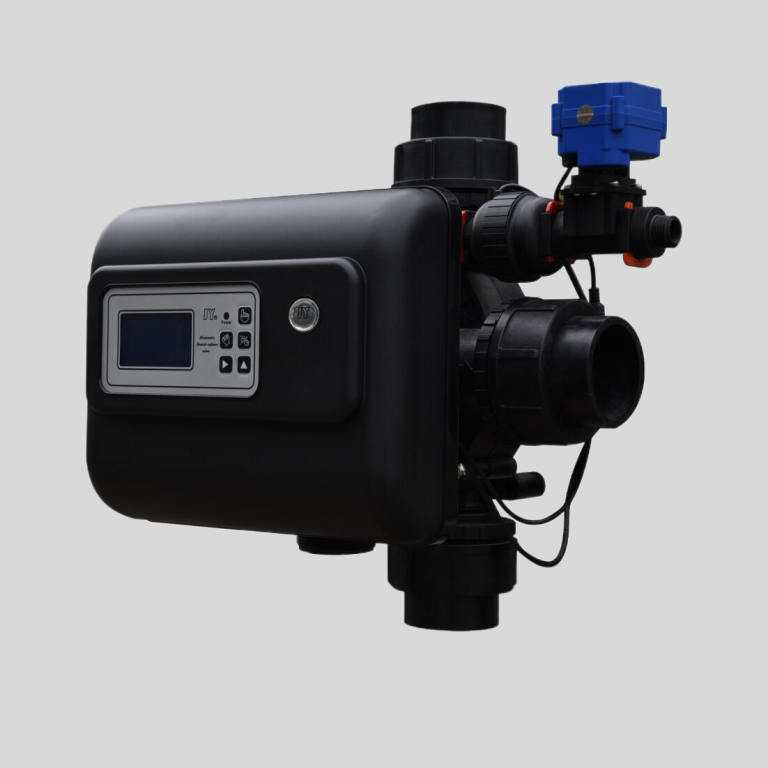
Shanghai ChiMay’s Softener Valves integrate with industrial softening systems, providing automatic regeneration control that maintains consistent softening performance.
2. Scale Inhibitors
Threshold inhibitors prevent scale formation at dosages far below stoichiometric requirements:
Phosphonate Inhibitors
- ATMP: Excellent calcium carbonate inhibition
- HEDP: Broad-spectrum scale control
- PBTC: Superior performance at high temperatures and pH
Polymeric Dispersants
- Polyacrylates: Cost-effective, broad-spectrum
- Poly maleates: High temperature applications
- Copolymers: Combined inhibition and dispersion
Effective inhibitor programs achieve 90-98% scale prevention at dosages of 2-10 ppm.
3. Acid Dosing
Controlled acid addition converts bicarbonate alkalinity to carbonic acid, which remains in solution rather than precipitating:
H₂SO₄ + 2NaHCO₃ → Na₂SO₄ + 2CO₂ + 2H₂O
Sulfuric acid dosing requires careful control—over-dosing creates acidic corrosion conditions. API Recommended Practice 571 recommends maintaining system pH above 7.0 when using acid treatment.
4. Anti-Scale Devices
Physical water treatment devices offer chemical-free scaling control:
– Magnetic water conditioners: Controversial effectiveness
– Electronic scale prevention: Some documented success in low-hardness applications
– Ultrasonic scale removal: Effective for existing scale in some applications
5. Operational Controls
Optimize system operation to minimize scaling tendency:
– Reduce cycles of concentration in cooling systems
– Maintain lower temperatures where possible
– Avoid pressure drops that trigger CO₂ release
– Implement continuous blowdown to control dissolved solids
Monitoring for Scale Prevention
Online Monitoring Parameters
Effective scale prevention requires continuous monitoring of:
- Conductivity: Indicates total dissolved solids concentration
- pH: Determines carbonate equilibrium position
- Calcium hardness: Directly tracks scaling ion concentration
- Langelier Saturation Index: Predicts scaling tendency
- Inhibitor residual: Confirms chemical treatment presence
Testing Protocols
| Parameter | Test Frequency | Action Threshold |
|---|---|---|
| Conductivity | Continuous | > 1,500 μS/cm |
| pH | Continuous | > 8.5 or < 7.0 |
| Calcium hardness | Weekly | > 400 ppm CaCO₃ |
| LSI | Daily calculation | > +0.5 |
| Inhibitor residual | Daily | < 5 ppm (phosphonate) |
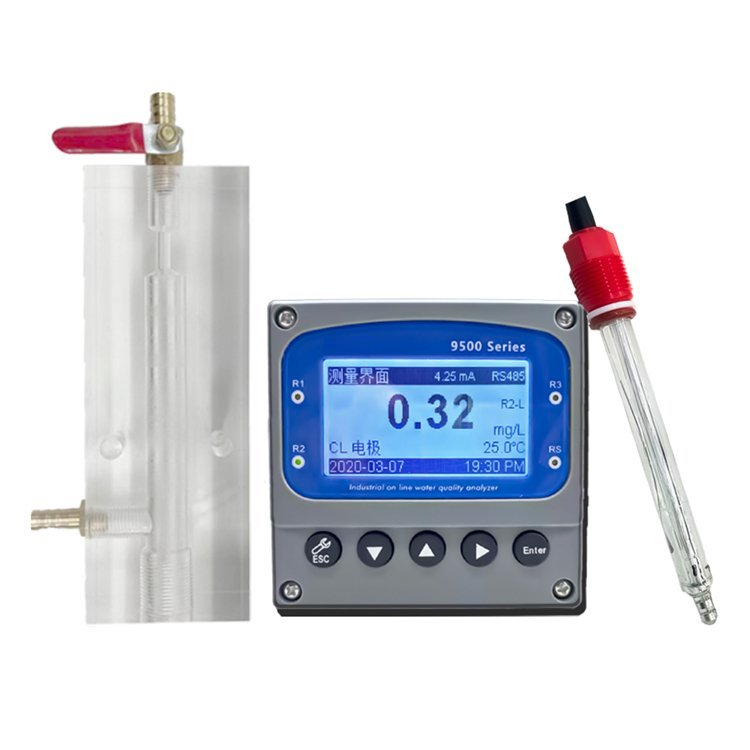
Shanghai ChiMay’s 4-in-1 Multi-Parameter Sensors simultaneously monitor conductivity, pH, ORP, and temperature, providing comprehensive data for scale prediction and prevention.
Conclusion
Scaling in industrial water pipes results from complex chemical and physical interactions that every plant operator must understand and manage. The consequences—energy losses, equipment damage, and production interruptions—make prevention far more cost-effective than remediation.
Effective scale prevention combines water treatment technologies (softening, inhibitors, acid dosing) with operational optimization (cycles of concentration control, temperature management) and continuous monitoring. Chemical plants implementing comprehensive scale control programs consistently achieve:
- 40-60% reduction in scale-related energy losses
- 25-35% extension of equipment service life
- $200,000-500,000 annual savings in maintenance and energy costs
Shanghai ChiMay’s water quality monitoring solutions—including conductivity sensors, pH analyzers, and multi-parameter transmitters—provide the instrumentation foundation for effective scale prevention in chemical processing and industrial water applications.