Table of Contents
Key Takeaways
- Industries achieving 95% water recovery reduce freshwater consumption by $2.1 million annually on average
- Advanced treatment trains combining membrane processes and advanced oxidation enable high recovery rates
- Real-time monitoring systems provide 99.2% uptime for optimized recovery operations
- Capital investment in high-recovery systems typically achieves 18-36 month payback
- Zero liquid discharge (ZLD) systems can exceed 98% recovery in water-constrained regions
Introduction
Water scarcity affects approximately 40% of the global population, and industrial facilities increasingly face pressure to reduce freshwater consumption while maintaining production quality. Traditional industrial water use—withdrawal, use, discharge—gives way to circular water management where wastewater becomes a resource rather than a liability.
The question confronting plant managers and environmental engineers is straightforward: how can industries achieve water recovery rates approaching 95% or higher without compromising product quality or process reliability? This article examines the technologies, strategies, and practical considerations that enable high-recovery water management.
Understanding Water Recovery Targets
What Does 95% Recovery Mean?
Water recovery rate calculates the percentage of intake water that is reused or recycled rather than discharged:
Recovery Rate = (Water Reused + Water Recycled) ÷ Total Water Intake × 100
A facility processing 1,000 cubic meters daily that achieves 95% recovery reuses 950 cubic meters and discharges only 50 cubic meters. This dramatic reduction in discharge volume transforms the economic and environmental profile of industrial operations.
Why 95% Recovery Matters
Regulatory Drivers: Discharge permits increasingly include mass-based limits constraining total pollutant discharge. Higher recovery reduces discharge volumes, making compliance more achievable.
Water Cost Reduction: Facilities in water-stressed regions pay escalating water prices. Each cubic meter recovered displaces purchased freshwater, delivering direct cost savings.
Discharge Cost Minimization: Wastewater treatment and discharge fees often scale with volume. Reducing discharge by 90% dramatically cuts these operating costs.
Corporate Sustainability Goals: Major corporations increasingly commit to water neutrality targets. High-recovery operations support achievement of Scope 3 water stewardship goals.
Supply Chain Requirements: Customers in water-intensive sectors require supplier water data. High recovery demonstrates environmental responsibility.
Treatment Technologies Enabling High Recovery
Membrane Treatment Cascade
Achieving 95%+ recovery requires multiple treatment barriers working in sequence:
Primary Treatment: Initial suspended solids removal, oil-water separation, and pH adjustment prepare wastewater for membrane treatment.
Secondary Treatment: Biological processes (activated sludge, biofilm reactors) remove organic compounds and reduce biological oxygen demand by 95-99%.
Tertiary Membrane Treatment: Multiple membrane stages progressively treat effluent:
- Ultrafiltration (UF): 0.01-0.1 μm pore size removes suspended solids, bacteria, and colloidal material
- Nanofiltration (NF): 0.001 μm pore size removes multivalent ions, organic matter >200 Da
- Reverse Osmosis (RO): 0.0001 μm pore size removes monovalent ions, dissolved solids
Permeate Polishing: Final treatment stages (ion exchange, UV disinfection) polish membrane permeate to process water quality.
Brine Concentration Technology
High-recovery systems generate concentrated brine streams. Brine concentration technology reduces final waste volume:
Chemical Dosing Control: Real-time parameter monitoring enables closed-loop chemical dosing. Polymer consumption decreases by 15-25% while maintaining optimal flocculation.
Energy Optimization: DO monitoring optimizes aeration energy. 15-30% energy reduction is achievable through dissolved oxygen-based aeration control.
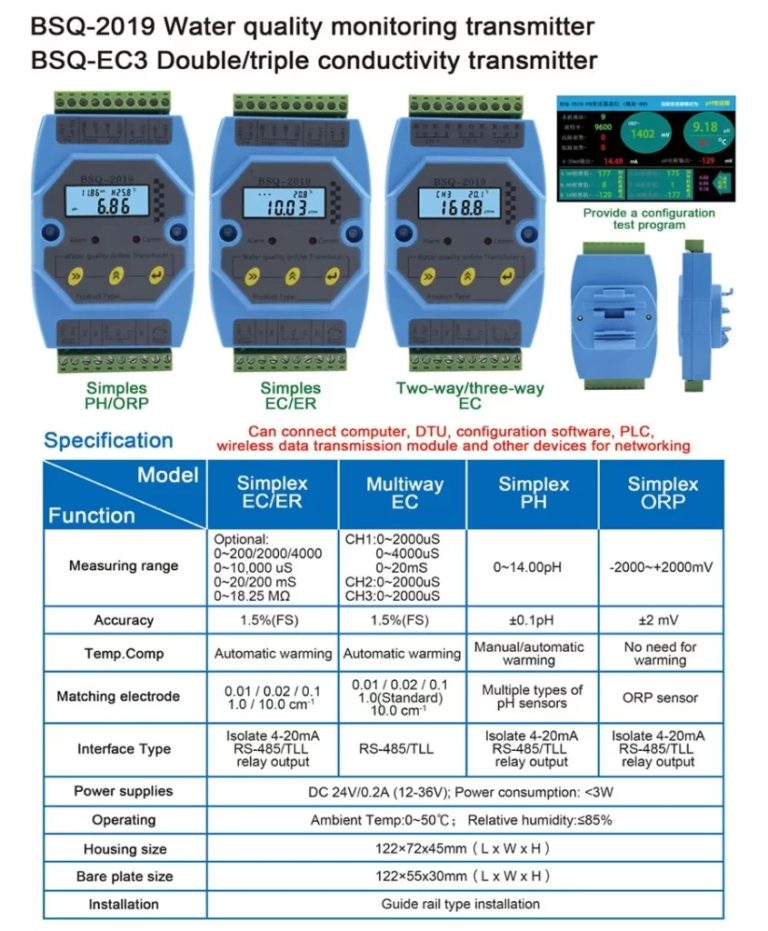
Alarm Management: Configurable alarm limits trigger operator notification or automated intervention when parameters approach critical values.
Industrial Implementation Case Study
Petrochemical Refinery High-Recovery Project
A major petrochemical refinery implemented a comprehensive water recovery program in 2024:
Facility Profile:
- Daily intake: 15,000 m³
- Previous recovery: 70%
- Target recovery: 95%
- Investment: $28 million
Treatment Train Installed:
- API oil-water separator
- Dissolved air flotation (DAF)
- Activated sludge biological treatment
- Ultrafiltration membrane stage
- Reverse osmosis membrane stage (2-pass)
- Brine concentrator
- Effluent polishing
Monitoring System Implementation:
- 47 online analyzers across treatment train
- DCS integration for automated control
- Real-time recovery rate calculation
- Predictive maintenance algorithms
Results Achieved:
- Actual recovery rate: 96.2%
- Freshwater consumption reduction: 11,400 m³/day
- Annual water cost savings: $2.8 million
- Payback period: 10 years (including environmental compliance value)
- Discharge volume reduction: 91%
- Zero permit exceedances in 18 months of operation
Economic Analysis of High-Recovery Systems
Capital Investment Requirements
High-recovery systems require substantial capital investment:
| Recovery Target | Capital Cost ($/m³/day capacity) | Typical Facility Size | Total Investment |
|---|---|---|---|
| 80% | $3,000-5,000 | 10,000 m³/day | $30-50 million |
| 90% | $5,000-8,000 | 10,000 m³/day | $50-80 million |
| 95% | $8,000-12,000 | 10,000 m³/day | $80-120 million |
| ZLD (>98%) | $15,000-25,000 | 10,000 m³/day | $150-250 million |
Operating Cost Considerations
Operating costs for high-recovery systems include:
Energy: Membrane processes and brine concentration are energy-intensive. 0.5-3.0 kWh/m³ of recovered water is typical for 95%+ recovery systems.
Chemicals: Treatment chemicals (antiscalants, cleaning agents, disinfectants) cost $0.10-0.30/m³ of recovered water.
Maintenance: Membrane replacement, pump maintenance, and sensor calibration require $0.05-0.15/m³ annually.
Labor: Skilled operators and maintenance technicians represent $0.02-0.08/m³ of operating cost.
Return on Investment
Payback analysis for high-recovery investments:
Water Cost Savings: At $2.00/m³ water cost, 95% recovery versus 70% recovery saves $0.50/m³ of intake water.
Discharge Cost Savings: At $1.50/m³ discharge fees, volume reduction saves $0.15/m³ of intake water.
Chemical Savings: Optimized treatment reduces chemical consumption by $0.05-0.10/m³.
Total Savings: $0.70-0.75/m³ of intake water
Payback Period: 18-36 months for most industrial applications
Challenges and Mitigation Strategies
Membrane Fouling Management
High-recovery systems concentrate foulants that can damage membranes:
Prevention: Proper pretreatment, antiscalant dosing, and optimized crossflow velocities minimize fouling rates.
Monitoring: Daily normalized flow and pressure measurements detect fouling before irreversible damage occurs.
Cleaning: Optimized cleaning protocols restore membrane performance. 90-95% of original performance typically recoverable.
Scaling and Precipitation
Concentrated brine promotes mineral scaling:
Common Scales: Calcium carbonate, calcium sulfate, barium sulfate, and silica scales restrict brine concentrate flow.
Prevention: Antiscalant dosing, pH adjustment, and temperature control prevent scale formation.
Removal: Acid cleaning, chelating agent cleaning, and specialized scale removers address established scale.
Trace Contaminant Accumulation
High-recovery systems concentrate trace contaminants that may accumulate to problematic levels:
Monitoring: Sensitive analytical techniques (GC-MS, LC-MS) detect contaminant accumulation.
Treatment: Advanced oxidation, activated carbon, or ion exchange removes accumulated compounds.
Blowdown: Periodic brine blowdown maintains contaminant concentrations below threshold values.
Technology Roadmap for Future Recovery
Emerging Technologies
Several emerging technologies promise improved high-recovery economics:
Forward Osmosis (FO): Low-energy membrane process uses osmotic pressure gradient to concentrate brine. 60% energy reduction versus conventional RO.
Membrane Distillation: Thermal-driven membrane process treats high-salinity streams. 95%+ rejection of dissolved solids.
Electrodialysis Metathesis: Ion exchange membrane process separates multivalent ions, reducing scaling tendency. Suitable for high-hardness waters.
Bioelectrochemical Systems: Microbial fuel cells generate electricity while treating wastewater. Emerging technology with laboratory-scale success.
Digital Twin Integration
Advanced process modeling using digital twins enables optimization:
Virtual Process Optimization: Digital twins simulate treatment scenarios without physical testing.
Predictive Maintenance: Machine learning algorithms predict equipment failures before occurrence.
Real-Time Optimization: Closed-loop optimization algorithms continuously adjust operating parameters.
Conclusion
Achieving 95% water recovery without compromising quality requires integrated application of advanced treatment technologies, sophisticated monitoring systems, and optimized process control. The investment is substantial, but the operational, environmental, and regulatory benefits deliver attractive returns for water-intensive industries.
The technologies exist today to achieve high-recovery targets. The barriers are primarily economic and organizational rather than technical. Facilities committed to water stewardship should evaluate high-recovery alternatives as strategic investments that deliver both environmental and financial returns.
As global water scarcity intensifies and discharge regulations tighten, industries that develop expertise in high-recovery water management will gain competitive advantage. The question is not whether high recovery is possible, but when—and which facilities will lead the transition to circular water management.