Table of Contents
How to Choose the Right RO System Controller for Desalination Plants
Key Takeaways
- Global desalination capacity reached 85.2 million cubic meters per day in 2024, with reverse osmosis (RO) accounting for 69% of new installations (GWI Desalination Data 2024).
- Advanced RO system controllers can reduce energy consumption by 15-25% through intelligent pressure management.
- Total cost of ownership (TCO) for RO systems with smart controllers averages $0.45-0.65 per cubic meter, compared to $0.80-1.20 per cubic meter for basic systems (IDA World Congress 2024).
- Integration of real-time monitoring and predictive maintenance capabilities extends membrane lifespan by 20-30%.
Introduction
The global water scarcity crisis has accelerated desalination investment worldwide, with the market projected to reach $28.5 billion by 2028 (MarketsandMarkets 2024). Within this expansion, reverse osmosis remains the dominant technology, and the controller serves as the critical brain of any RO system. Choosing the right RO system controller directly impacts operational efficiency, product water quality, and long-term profitability.
Understanding RO System Controller Functions
Core Responsibilities
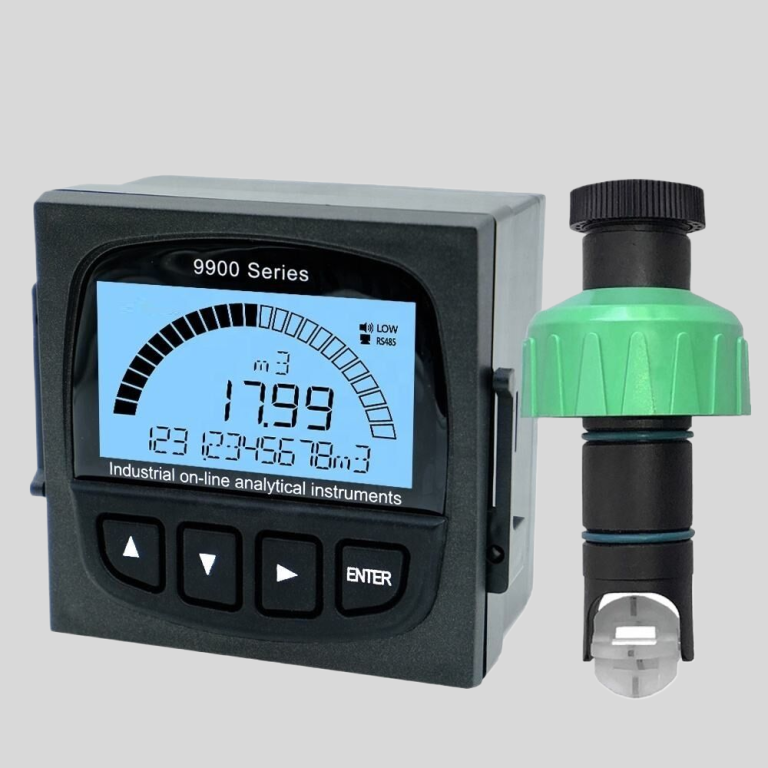
An RO system controller manages multiple parameters simultaneously: feed water pressure, recovery rate, concentrate flow, and permeate quality. Modern controllers from manufacturers like Shanghai ChiMay integrate Programmable Logic Controller (PLC) functionality with Human-Machine Interface (HMI) displays for intuitive operation.
The controller’s primary functions include:
- Regulating high-pressure pump operation based on feed water conditions
- Managing concentrate recirculation to optimize recovery rates
- Triggering flush cycles to prevent membrane fouling
- Shutting down the system when quality thresholds are breached
Technical Specifications to Evaluate
When evaluating RO system controllers for desalination applications, focus on these technical parameters:
| Parameter | Basic Specification | Advanced Specification |
|---|---|---|
| Response Time | < 500ms | < 50ms |
| Pressure Control | ±5% accuracy | ±1% accuracy |
| Communication | 4-20mA analog | Modbus TCP, Profinet |
| Data Logging | 7 days | 2+ years |
Economic Analysis: Smart Controllers vs. Basic Units
Initial Investment Comparison
Advanced RO system controllers typically cost $3,000-8,000 more than basic units, representing a 15-25% increase in controller costs. However, according to Frost & Sullivan’s 2024 Water Technology Report, this premium is recovered within 8-14 months through energy savings alone.
Operational Cost Breakdown
Based on a typical 500 m³/day brackish water RO system:
- Energy costs: Smart controllers reduce pump cycling frequency, saving approximately $12,000-18,000 annually in electricity costs.
- Membrane replacement: Extended membrane life from 3 years to 4+ years saves $8,000-15,000 per membrane changeout cycle.
- Chemical consumption: Optimized flushing cycles reduce antiscalant usage by 12-18% (WWRO Technology Review 2024).
Return on Investment Calculation
For a medium-scale desalination facility processing 1,000 m³/day:
| Cost Category | Basic Controller | Smart Controller |
|---|---|---|
| Initial Investment | $15,000 | $22,000 |
| Annual Energy Cost | $95,000 | $78,000 |
| Annual Membrane Cost | $40,000 | $28,000 |
| 5-Year TCO | $505,000 | $448,000 |
ROI: 218% over 5 years
Selection Criteria for Desalination Applications
Environmental Adaptability
Desalination environments present unique challenges including high salinity, corrosion risk, and temperature fluctuations. The controller housing should meet IP65 minimum ingress protection, with operating temperature ranges of -10°C to 50°C for coastal installations.
Integration Capabilities
Modern desalination plants require controllers that interface with:
- Supervisory Control and Data Acquisition (SCADA) systems
- Distributed Control System (DCS) platforms
- Cloud-based monitoring services for remote oversight
- Multiple sensor arrays for comprehensive parameter tracking
Compliance and Certification
Ensure the controller meets relevant standards:
- CE marking for European Union compliance
- UL certification for North American markets
- ATEX/IECEx for hazardous area installations
- ISO 9001:2015 manufacturing quality standards
Industry Expert Perspectives
Dr. Sarah Mitchell, Director of Water Technology at GHD Group, notes:
「The evolution of RO controllers from simple set-point devices to intelligent systems represents a paradigm shift in desalination operations. Facilities implementing advanced controllers report not just energy savings, but fundamentally improved operational reliability and reduced operator intervention requirements.」
This sentiment is reflected in Black & Veatch’s 2024 Water Industry Report, which indicates 78% of new desalination projects now specify advanced controller functionality as a standard requirement rather than an optional upgrade.
Implementation Recommendations
Phase 1: Assessment (Weeks 1-4)
- Audit existing system parameters and performance baseline
- Identify operational pain points and inefficiency areas
- Document integration requirements with plant-wide control systems
- Establish KPIs for post-installation performance comparison
Phase 2: Procurement (Weeks 5-8)
- Request detailed technical specifications from qualified suppliers
- Evaluate Total Cost of Ownership (TCO) over 10-year lifecycle
- Verify compatibility with existing sensor and actuator systems
- Confirm warranty terms and local support availability
Phase 3: Installation and Commissioning (Weeks 9-12)
- Plan installation during low-demand production periods
- Conduct comprehensive operator training sessions
- Perform parallel operation comparison testing
- Document baseline performance for future optimization
Future Trends in RO Control Technology
Artificial Intelligence Integration
Gartner’s 2024 Emerging Technology Report projects that AI-driven RO control systems will achieve mainstream adoption by 2027, with capabilities including:
- Dynamic optimization based on real-time feed water quality changes
- Anomaly detection with >95% accuracy for early fouling identification
- Natural language interfaces for simplified operator interaction
- Digital twin integration for predictive performance modeling
Internet of Things Connectivity
The convergence of Industrial Internet of Things (IIoT) and RO control systems enables:
- Remote firmware updates without system shutdown
- Predictive maintenance scheduling based on operational hours and conditions
- Fleet management capabilities for multi-site operators
- Blockchain-based data verification for regulatory compliance
Conclusion
Selecting the appropriate RO system controller for desalination applications requires balancing technical capabilities, integration requirements, and long-term economic considerations. While advanced controllers demand higher initial investment, the return on investment typically exceeds 200% over a five-year operational period through combined energy savings, extended membrane life, and reduced maintenance requirements.
As desalination continues expanding to address global water scarcity, the controller’s role as the intelligent core of RO systems becomes increasingly critical. Facilities that invest in advanced control technology position themselves for operational excellence and sustainable long-term performance.
Shanghai ChiMay offers a comprehensive range of RO system controllers designed specifically for desalination applications, featuring robust construction, comprehensive monitoring capabilities, and proven reliability in demanding coastal environments.