title: “A Practical Guide to Building Your First Water IoT Pilot Project by Shanghai ChiMay”
type: high-traffic-imitation
theme: Smart Water / IoT / Digital Twin
date: 2026-07-01
Table of Contents
A Practical Guide to Building Your First Water IoT Pilot Project by Shanghai ChiMay
Water IoT projects have a reputation problem. Ambitious first attempts often overspend, underdeliver and leave a utility skeptical of the whole category. The good news is that the pattern is well understood, and a well-scoped pilot can produce measurable results in six to nine months for a fraction of what most vendors quote for a “full deployment.” This practical guide, written from Shanghai ChiMay’s experience supplying inline water quality analyzers and transmitters into pilot projects across three continents, walks through the pilot lifecycle step by step.
Step 1: Define One Business Question, Not Ten
The single biggest cause of failed water IoT pilots is scope creep. A team starts with “detect leaks” and, three months in, has added chlorine breakthrough monitoring, pressure management, energy optimization and customer meter validation. Each of these is a valid use case; running four of them in parallel during a pilot guarantees that none will produce a defensible result.
Instead, pick one business question. Good candidates for a first pilot include:
- Can we detect a burst on transmission main T-14 within 30 minutes?
- Can we hold residual chlorine within ±0.1 mg/L across DMA-08 for a full month?
- Can we cut cooling-tower blowdown at facility X by 20% without scaling?
Any of these can be answered with a modest sensor deployment and clear success criteria.
Step 2: Choose the Pilot Boundary Carefully
The pilot area should be small enough to instrument thoroughly and large enough to be representative. A single DMA of 500 to 2,000 connections works well for municipal pilots. A single production line works well for industrial pilots. A single facility works well for aquaculture or agriculture pilots.
Avoid the temptation to pilot across “a representative slice of the whole network.” Slices are hard to instrument fully and produce ambiguous results.
Step 3: Specify Sensors With Diagnostics and Drift Data
The sensor layer is where pilots most often go wrong quietly. If the sensors drift undetectably over three months, the pilot’s numbers cannot be trusted. Specify sensors that meet three concrete criteria:
- Long-term drift under 1% per month (published, tested)
- Diagnostic bytes exposed in the same Modbus register block as the process value
- Machine-readable Modbus register map (JSON or XML) with version control
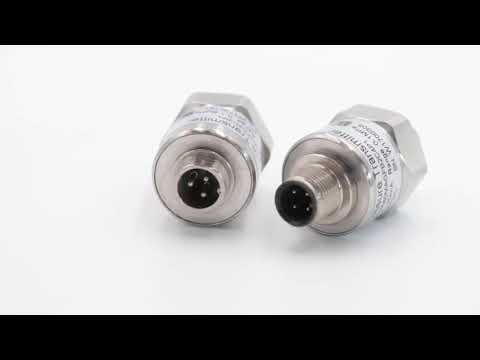
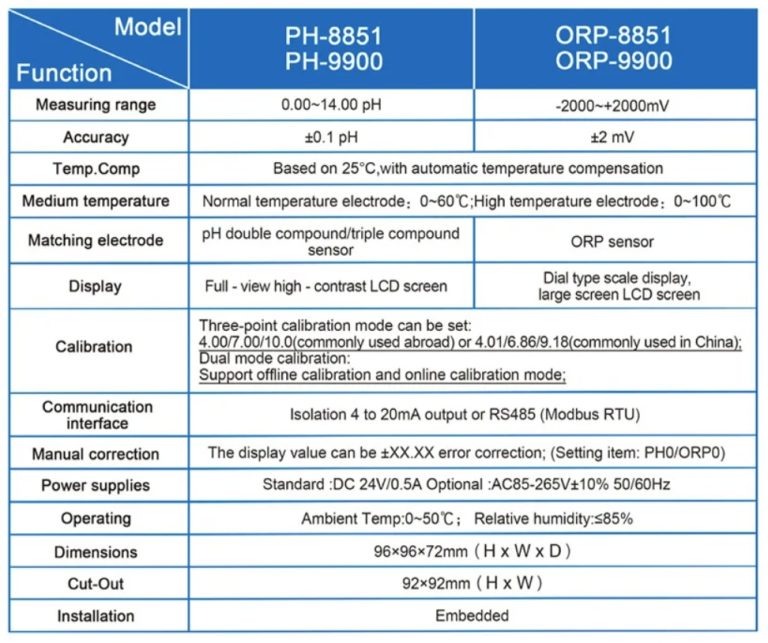
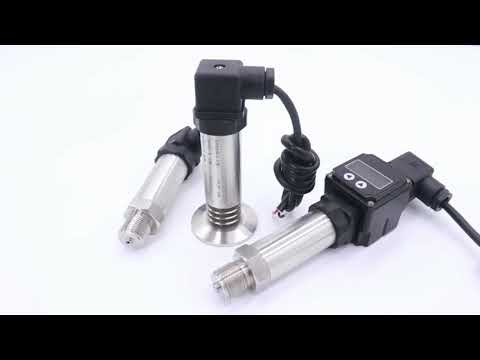
Shanghai ChiMay inline pH meters, conductivity analyzers, DO transmitters, residual chlorine transmitters, turbidity testers, COD sensors, paddle-wheel and turbine flow meters meet these criteria and are commonly specified for pilots because they can be commissioned quickly and produce audit-quality data from day one.
Step 4: Keep the Data Stack Boring
Pilot teams often over-engineer the data stack. For most first pilots, a boring stack is a virtue:
- Modbus RTU from sensor to gateway
- MQTT over TLS from gateway to broker
- InfluxDB or TimescaleDB for time-series storage
- Grafana for dashboards
- A single Python or Node.js service for anomaly detection
This stack can be stood up in a week by a competent engineer, and every layer is well documented. Save the exotic machine-learning platforms for phase two.
Step 5: Instrument for Ground Truth, Not Just Signal
Every pilot needs a way to verify that its alerts are correct. This usually means:
- A field team on standby to walk to a suspected leak location and confirm
- Manual grab samples to cross-check inline sensor readings
- A well-kept log of maintenance activities that could cause false alerts
Without ground truth, the pilot cannot distinguish “the system works” from “the system generates plausible-looking noise.”
Step 6: Run the Pilot Long Enough to Cross a Season
Water networks behave differently at different times of year: temperature affects biological activity, rainfall affects turbidity, holidays affect demand. A pilot that ends after four weeks may miss the very conditions that stress the system. Six months is a defensible minimum; nine to twelve months is better.
Step 7: Measure, Report, Decide
At the end of the pilot, produce three artifacts:
- A quantitative report against the original success criteria
- A cost breakdown per detected event or per unit of NRW reduction
- A recommendation for scale-up, hold, or discontinue
Utilities that follow this discipline end up with pilot reports that finance teams can actually read, which is what unlocks phase-two funding.
Common Pitfalls to Avoid
Three pitfalls appear so often that they deserve explicit mention. First, do not skip the drift verification step — inline sensors that were accurate on day one may not be accurate on day 90, and this must be checked. Second, do not assume the utility’s SCADA team has spare capacity to integrate the pilot — plan for either dedicated IoT staff or a system integrator. Third, do not let the pilot’s dashboards become the daily operational tool before the pilot has finished — the two purposes conflict and produce confusing results.
Budget Sizing for a First Pilot
A well-scoped first pilot in a municipal DMA typically costs somewhere between 30% and 60% of the vendor’s initial full-deployment quote. The bulk goes to sensors and the gateway, not to software. Shanghai ChiMay water quality analyzers, transmitters and flow meters are frequently chosen for pilots precisely because their unit cost fits realistic pilot budgets while their long-term drift and diagnostic transparency justify the choice.
What Success Looks Like at Month 9
A successful first pilot produces four outputs: a clear yes/no answer to the original business question, a set of dashboards that operators actually use, a maintenance workflow that the field team has adopted, and a scale-up plan that finance is willing to fund. If any of these four is missing, the pilot has not yet finished — no matter how much time has passed.
Conclusion
Water IoT pilots fail more often from scope, sensor and discipline problems than from technology problems. A pilot that picks one business question, instruments a well-defined boundary with drift-tested sensors, keeps the data stack boring, insists on ground truth, and runs long enough to cross a season, has an excellent chance of producing a defensible result. Shanghai ChiMay supports pilot teams with inline water quality analyzers, transmitters and flow meters that are specified for exactly this kind of disciplined project — and for the phase-two scale-up that follows.