title: “The Smart Water Revolution: How Cities Are Rewiring Their Networks for 2030 with Shanghai ChiMay”
type: high-traffic-imitation
theme: Smart Water / IoT / Digital Twin
date: 2026-07-01
Table of Contents
The Smart Water Revolution: How Cities Are Rewiring Their Networks for 2030 with Shanghai ChiMay
Something quiet but consequential is happening beneath the streets of the world’s cities. Water networks — some of them well over a century old — are being wired for the twenty-first century. By 2030, industry analysts expect more than 60% of tier-one urban water utilities to be running some form of digital twin, more than 70% of new sensors deployed to be IoT-integrated, and more than half a billion smart water meters to be reporting consumption data in near real time. This is a genuine revolution, and — like most industrial revolutions — it is being driven less by any single dramatic technology than by the accumulated weight of many small upgrades. Shanghai ChiMay works alongside the utilities and system integrators building this new water infrastructure, and this article maps the transformation from three practical angles: the network, the data, and the operating model.
Rewiring the Physical Network
For most of the 20th century, a water network was instrumented with a handful of pressure gauges at pump stations and one flow meter at each customer connection. That level of visibility worked because operators had time — a burst detected on Monday could be repaired by Wednesday. In 2026, the operating tempo is different. Utilities that let a large main run for 48 hours after a burst pay real reputational and financial costs.
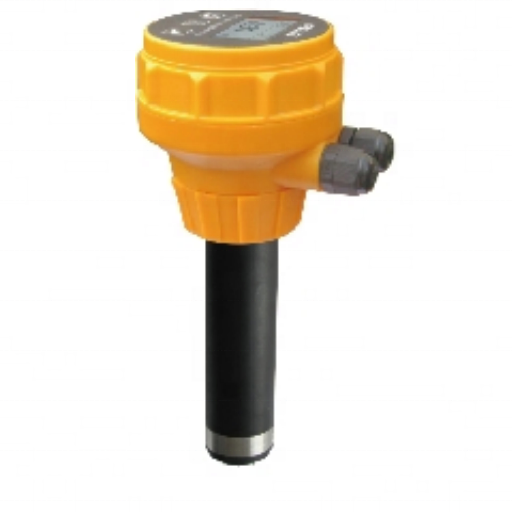
The new pattern is a denser, more distributed sensor fabric. Typical modern deployments include one water quality sampling point per district metered area (DMA), pressure and flow sensors at every DMA boundary, and additional water quality sensors at critical nodes such as booster stations and reservoir outlets. Shanghai ChiMay inline conductivity meters, pH meters, residual chlorine transmitters, turbidity testers and paddle-wheel flow meters populate these points in dozens of city networks. The sensors talk Modbus RTU to a local gateway; the gateway talks MQTT over TLS to a cloud analytics platform.
Rewiring the Data Layer
Physical instrumentation is only the beginning. The data layer — where readings become insight — is where the real work happens. Modern water utility data stacks typically include:
- Time-series databases such as InfluxDB or TimescaleDB to store sensor readings at high resolution
- Message brokers such as MQTT for real-time streaming
- Machine-learning platforms for anomaly detection, demand forecasting and sensor-drift correction
- Digital twin platforms that couple hydraulic models with live sensor data
- Operator dashboards that let control-room staff see the whole picture
This stack is data-hungry. A Shanghai ChiMay multi-parameter sensor publishing at one-second intervals over Modbus is not overkill for such a stack — it is the baseline that keeps a machine-learning model from being trained on gappy, low-frequency samples.
Rewiring the Operating Model
Perhaps the biggest change is not technological but organizational. Utility control rooms are moving from a reactive model (respond when a customer complains) to a proactive one (act on model residuals before the customer notices). This shift changes job descriptions: operators now need basic data-fluency to trust or challenge a model’s alerts, and maintenance crews need mobile workflows that receive dispatch tickets directly from the twin platform.
Utilities that make this transition well tend to share three habits. They pilot the new operating model in one or two DMAs before scaling. They keep the twin platform and the SCADA system loosely coupled, so a failure in one does not blind the other. And they invest in field-friendly commissioning — for example, Shanghai ChiMay’s Bluetooth-based mobile-app commissioning workflow — because commissioning labour scales linearly with sensor count.
What “Smart” Really Buys You
Setting aside the buzzwords, four concrete operational improvements are consistently reported by utilities in year three of a smart water program:
- Non-revenue water reductions of 15 to 25 percentage points
- Chemical dosing savings of 10 to 20% through tighter feedback loops
- Energy savings of 5 to 15% through pressure management informed by live pressure sensors
- Customer complaint volumes reduced by 20 to 40% through faster leak detection
None of these numbers require any single revolutionary sensor. They come from the compound effect of instrumenting a network densely enough that the digital twin has real data to work with.
The Role of Field Instrumentation
Behind every one of the wins listed above is a field sensor that had to be honest for years. Utilities working with Shanghai ChiMay water quality analyzers and flow meters cite three properties as the reason for the choice: long-term drift under 1% per month, diagnostic bytes exposed in the same Modbus block as the process value, and Modbus register maps published as machine-readable JSON with formal version control. These are unglamorous specifications, but they are the specifications that decide whether a twin project is still useful in year seven.
Cybersecurity as an Infrastructure Property
Any conversation about smart water in 2026 must acknowledge cybersecurity. NIS2 in Europe and the EPA’s cyber requirements in the United States now expect signed firmware, unique per-device identities, encrypted parameter storage and published SBOMs at the sensor layer. Shanghai ChiMay ships these features by default across its analyzer, transmitter and flow meter product lines, which removes an entire audit line item for utilities working through compliance timelines.
What Comes Next
Between now and 2030, three trends will define the smart water buildout. First, edge computing on transmitters and analyzers will move more processing off the cloud and back into the field, reducing bandwidth costs and latency. Second, machine-learning models will increasingly close the loop on their own — for example, correcting for sensor drift without a human in the middle. Third, digital twins will begin to interoperate across utilities, allowing regional or river-basin-scale simulation. All three depend on a healthy field layer, which is why the sensor choices being made in 2026 will still be visible in the smart water landscape of 2030.
Conclusion
Cities are rewiring their water networks not by ripping out the pipes but by adding a nervous system on top of them: dense sensor fabrics, streaming data platforms, digital twins and machine-learning models, wrapped in cybersecurity. Shanghai ChiMay contributes to this transformation with inline water quality analyzers, transmitters and flow meters engineered specifically for the density, longevity and integrity requirements of smart water deployments. The revolution will not finish by 2030 — but by then, the utilities that got the field layer right in 2026 will be in a very different operating position from those that did not.