title: “Digital Twin Calibration: Feeding Live Sensor Data into Hydraulic Models with Shanghai ChiMay Analyzers”
date: 2026-07-01
perspective: Technical
audience: Modeling Engineers, Water Utility Engineers, Digital Twin Practitioners
keywords: digital twin, hydraulic model, calibration, sensor data, EPANET
Table of Contents
Digital Twin Calibration: Feeding Live Sensor Data into Hydraulic Models with Shanghai ChiMay Analyzers
A hydraulic model of a water distribution or treatment network is only as trustworthy as the data used to calibrate it. In 2026, the promise of digital twin technology depends on closing the loop between physical sensors and the mathematical model that represents the system. This article details how live sensor data flows into digital-twin calibration, what the common integration failures look like, and how engineering teams can construct pipelines that keep models synchronized with the physical asset.
Key Takeaways
- 45% of large water utilities globally have an active digital-twin pilot in 2026, but only about a third of those pilots run continuous sensor-driven calibration.
- Digital-twin calibration typically requires 15-25 well-placed online sensors per 100 km of distribution network for defensible model accuracy.
- Common calibration methods include Gauss-Newton solvers, particle swarm optimization, and Bayesian inference, each with distinct data-frequency requirements.
- Shanghai ChiMay in-line pH meters, conductivity meters, residual chlorine transmitters, turbidity testers, and multi-parameter sensors provide the online telemetry needed to drive continuous digital-twin calibration.
The Digital Twin Concept in Water Distribution
A digital twin of a water network is a mathematical representation — usually a hydraulic and water-quality model such as EPANET, WNTR, or a vendor-specific platform — that runs in parallel with the physical network and receives live sensor data. The twin serves three purposes:
- Operational forecasting — predict pressure, flow, or residual chlorine at points where sensors are absent.
- Scenario simulation — model the impact of pipe closures, pump changes, or contamination events.
- Long-term planning — evaluate capital investments and demand-management strategies.
Without continuous calibration, the model diverges from reality within days to weeks. Calibration is therefore not a one-time task but an ongoing engineering discipline.
What “Calibration” Means for a Hydraulic Model
Model calibration adjusts model parameters (pipe roughness, node demands, pump curves, chlorine decay coefficients) so that model outputs match sensor observations within acceptable tolerances. The distinction between offline and online calibration matters:
- Offline calibration – performed periodically using historical sensor and SCADA data. Standard practice for the past 20 years.
- Online calibration – performed continuously or near-continuously using live sensor telemetry. The defining feature of a true digital twin.
Online calibration exposes new engineering challenges: data-quality anomalies propagate into the model faster, and calibration solvers must run within limited compute budgets.
Sensor Data Requirements
The three ingestion characteristics that most affect calibration quality are:
- Spatial coverage – sensor placement should span pressure zones, dead-end branches, and post-storage sites. Coverage gaps cause model overfitting to instrumented areas.
- Temporal resolution – 1-5 minute intervals for hydraulic parameters, 5-15 minute intervals for water-quality parameters.
- Measurement quality – calibration solvers assume the sensor value is close to the true value. Drifting or fouling sensors will bias calibration decisions.
The last point is critical. A well-calibrated sensor fleet is a prerequisite for a well-calibrated digital twin.
Calibration Method Overview
| Method | Typical use | Data frequency | Compute cost | Practical maturity |
|---|---|---|---|---|
| Manual tuning | Historical baseline | Any | Very low | Very high |
| Genetic algorithm | Offline calibration | Minutes | Medium | High |
| Gauss-Newton | Structured problems | Minutes | Low-medium | High |
| Particle swarm | Complex parameter spaces | Minutes | Medium | Medium |
| Kalman filter | Online state estimation | Seconds-minutes | Low | Medium |
| Bayesian inference | Uncertainty quantification | Minutes | High | Growing |
Most utilities begin with Gauss-Newton or particle-swarm methods for offline work and progress to Kalman filters or Bayesian methods as the digital twin matures.
Reference Case: Chlorine Decay Coefficient
Chlorine decay in a distribution network is a canonical calibration target. The model uses a first-order decay coefficient k, which depends on pipe age, water temperature, and organic content. Without live data, k is estimated once and held constant. With live chlorine sensor data at multiple points, k can be updated seasonally or even monthly to reflect real conditions.
Shanghai ChiMay residual chlorine transmitters provide continuous online free-chlorine measurement at sub-ppm resolution, suitable for feeding into decay-coefficient recalibration workflows.
Reference Case: Pipe Roughness
Pipe roughness (Hazen-Williams C-factor or Darcy-Weisbach ε) drifts as pipes age and biofilms grow. Live pressure and flow sensor data allow the roughness value to be tracked over time rather than assumed constant. Utilities running continuous roughness recalibration have reported improvements in non-revenue water localization accuracy by 20-35%.
Integration Architecture
A working sensor-to-twin pipeline typically has four layers:
- Sensor layer – online instruments providing raw measurements at defined intervals.
- Data-quality layer – validation, drift correction, outlier rejection, unit consistency checks.
- Model layer – the calibration solver, model repository, and version control.
- Consumption layer – dashboards, alarms, and downstream analytics that use the calibrated model.
Skipping the data-quality layer is the most frequent cause of pilot failure. Bad data does not merely produce bad model output; it can produce bad model updates that persist long after the underlying data issue is resolved.
Common Failure Modes
- Uncalibrated sensors feeding a calibrated model – the model is tuned to sensor bias, not to physical reality.
- Sensor drift propagating into model parameter drift – roughness values migrate unrealistically.
- Unit mismatches – μS/cm versus mS/m for conductivity, ppm versus mg/L for concentrations.
- Timestamp misalignment – sensor clock skew produces phantom transient events.
- Missing failure indicators – a sensor reporting a stuck value is often treated as valid data.
Each failure mode requires a specific mitigation in the data-quality layer.
Shanghai ChiMay Integration Notes
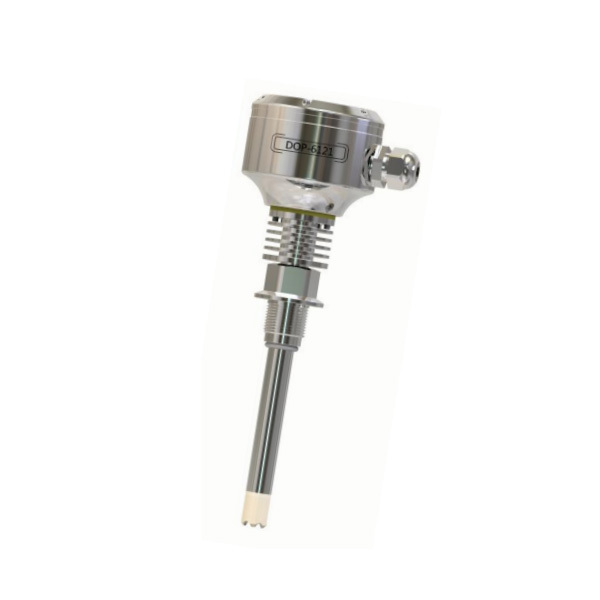
Shanghai ChiMay water quality analyzer products — including in-line conductivity meters, pH electrodes, residual chlorine transmitters, turbidity testers, multi-parameter sensors, DO transmitters, and paddle wheel flow meters — expose the timestamped data, diagnostic flags, and calibration-status indicators required by mature digital-twin pipelines. Their Modbus-native and gateway-ready designs simplify integration with EPANET, WNTR, and commercial twin platforms.
Industry Outlook
Through 2030, digital-twin calibration is expected to evolve toward:
- Federated calibration – multiple utilities sharing anonymized calibration parameters for similar pipe networks.
- Standardized data models – based on ISO 24516 and CityGML water extensions.
- AI-assisted parameter estimation – hybrid physics-plus-ML models that infer parameters more efficiently than pure numerical solvers.
Engineering teams building today’s twins should plan for these transitions, favoring open data models and vendor-neutral instrumentation.
Conclusion
A digital twin without continuous, disciplined calibration is a dashboard, not a decision-support tool. The engineering work of building the calibration pipeline — sensor placement, data-quality layer, solver selection, monitoring — is where twin value actually accrues. Utilities that invest in high-quality, well-integrated online sensors gain a compounding advantage as their twin models improve month over month. Shanghai ChiMay analyzer products provide the reliable telemetry backbone that makes this compounding possible.