Table of Contents
Key Takeaways
- The global zero liquid discharge (ZLD) market will expand from $29.99 billion in 2025 to $66.84 billion by 2035, at a CAGR of 8.34% (Market Research Future)
- ZLD systems achieve water recovery rates exceeding 95%, reducing freshwater consumption by 60-80% compared to conventional treatment
- Properly designed ZLD systems demonstrate payback periods of 3-7 years through water and wastewater cost savings
- Online conductivity monitoring reduces ZLD system operating costs by 15-25% through optimized concentrate management
- Industrial facilities implementing ZLD report 40-70% reductions in wastewater discharge volumes
Introduction
Water scarcity has emerged as a defining challenge for industrial facilities worldwide. According to the United Nations, approximately 2 billion people lack access to safely managed drinking water, creating both ethical imperatives and regulatory pressure for industrial water stewardship.
Zero liquid discharge (ZLD) systems offer the most comprehensive solution to industrial wastewater challenges, eliminating liquid discharge entirely while recovering valuable water resources. This practical guide walks through ZLD technology, implementation considerations, and operational best practices.
Understanding Zero Liquid Discharge
What ZLD Actually Means
ZLD describes treatment systems designed to eliminate liquid wastewater discharge from industrial facilities. Rather than releasing treated effluent to surface waters or municipal sewers, ZLD systems:
- Recover 90-99% of wastewater as reusable water
- Convert remaining liquid concentrates to solid residues
- Produce saleable or disposable solid byproducts
The result: zero liquid discharge to the environment.
Why Facilities Pursue ZLD
Facilities adopt ZLD for diverse drivers:
Regulatory Compliance: Stringent discharge limits for dissolved solids, nutrients, or specific pollutants make conventional treatment increasingly impractical.
Water Cost Reduction: Freshwater and wastewater treatment costs continue rising. ZLD reduces consumption while minimizing disposal expenses.
Environmental Commitment: Corporate sustainability goals and stakeholder expectations drive ZLD adoption.
Resource Recovery: Recovered salts, chemicals, and water create potential revenue streams.
Permitting Advantages: ZLD facilities often receive preferential permitting treatment, including relaxed limits for other parameters.
ZLD System Components
Pretreatment Systems
Raw wastewater requires conditioning before advanced treatment:
Solids Removal: Filtration, sedimentation, and flotation remove suspended solids that would damage downstream equipment.
pH Adjustment: Acid or alkali addition conditions wastewater for optimal treatment performance.
Scale Prevention: Antiscalant addition prevents precipitation in membranes and evaporators.
Oil/Grease Removal: Dissolved air flotation and coalescing separators remove oils that would foul treatment equipment.
Membrane Treatment
Pressure-driven membrane processes concentrate dissolved constituents:
Reverse Osmosis (RO): Rejects 95-99% of dissolved ions, producing high-purity permeate. Multiple stages achieve 75-85% recovery from typical wastewater streams.
Nanofiltration (NF): Provides selective rejection of divalent ions while passing monovalent species. Useful for partial desalination and resource recovery.
Ultrafiltration (UF): Removes colloidal and macromolecular constituents, protecting RO membranes from fouling.
Membrane treatment typically achieves 70-85% water recovery before concentrate treatment.
Brine Concentration
Further volume reduction concentrates brine streams:
Brine Concentrators: Mechanical vapor recompression (MVR) evaporators achieve 88-95% recovery, producing highly concentrated brine.
Second-Stage RO: Specialized membranes operating at elevated pressures provide additional concentration before evaporation.
Crystallization Prep: Brine concentrators bring streams to saturation, preparing for final crystallization.
This stage typically achieves 10-20% additional water recovery.
Crystallization and Solid Handling
Final processing produces dry solids:
Crystallizers: Thermal crystallizers produce crystalline salts from concentrated brines.
Solid/Liquid Separation: Centrifuges, filters, or dryers separate crystalline products from mother liquor.
Product Handling: Recovered salts are packaged for sale or disposal.
Modern ZLD systems produce dry solids meeting disposal or reuse specifications.
The Critical Role of Conductivity Monitoring
Why Conductivity Matters in ZLD
Conductivity measurement serves multiple essential functions in ZLD systems:
Concentration Tracking: Conductivity directly correlates with total dissolved solids (TDS), enabling continuous monitoring of concentrate streams.
Recovery Optimization: Operating at maximum conductivity before scaling onset maximizes recovery while preventing equipment damage.
Equipment Protection: Conductivity-based controls prevent exceedance of design limits that would cause scaling or fouling.
Quality Verification: Permeate conductivity confirms product water quality for reuse applications.
Key Monitoring Points
| Location | Parameter | Control Function |
|---|---|---|
| Feed Water | Conductivity | Influent characterization |
| Membrane Permeate | Conductivity/Rejection | Membrane integrity verification |
| Concentrate Stream | Conductivity | Recovery optimization |
| Brine Concentrator Feed | Conductivity | Scale prevention |
| Final Effluent | Conductivity | Quality confirmation |
Control Strategies
Effective conductivity monitoring enables sophisticated control:
Setpoint-Based Bleed Control: Automated dilution or blowdown maintains conductivity below scaling thresholds.
Predictive Scaling Detection: Trend analysis identifies impending scale conditions before damage occurs.
Recovery Maximization: Operating as close as possible to scaling limits without exceeding them maximizes water recovery.
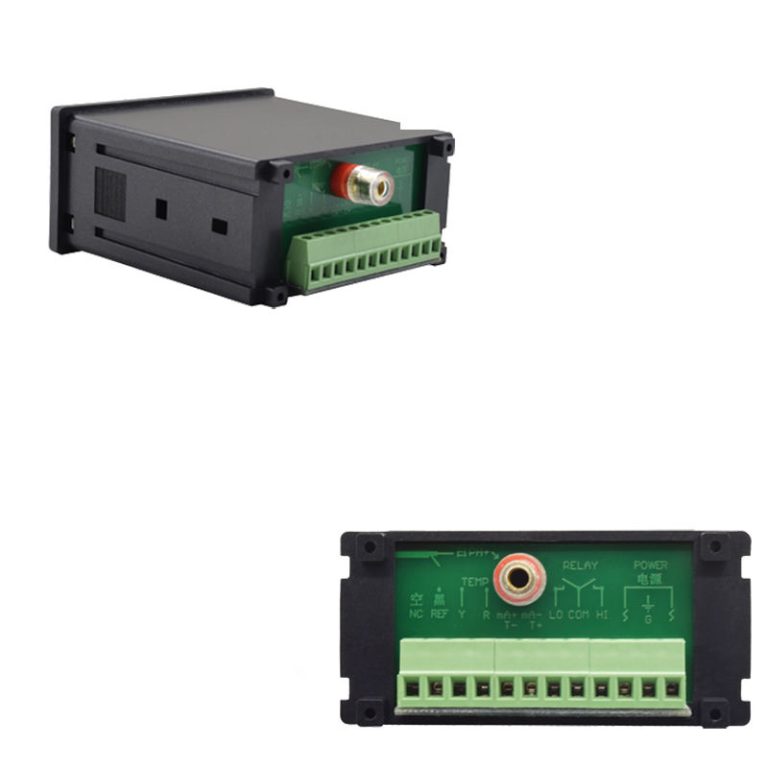
ChiMay's inline conductivity meters provide the accuracy and reliability that ZLD applications demand, with measurement ranges covering dilute wastewater through concentrated brines.
Implementation Considerations
Feasibility Assessment
Before committing to ZLD, facilities should conduct comprehensive evaluation:
Wastewater Characterization: Detailed analysis of wastewater composition, flow variability, and seasonal variations.
Technology Screening: Evaluate membrane, thermal, and hybrid approaches for specific wastewater characteristics.
Economic Analysis: Compare capital and operating costs against current water and wastewater expenses.
Regulatory Review: Confirm that ZLD approach satisfies all applicable discharge requirements.
Design Considerations
Successful ZLD design addresses site-specific factors:
Throughput Requirements: Size systems for peak flows with appropriate surge capacity.
Water Quality Targets: Define permeate quality requirements for intended reuse applications.
Byproduct Markets: Evaluate opportunities for salt recovery and sale.
Energy Integration: Consider waste heat availability for thermal systems.
Operating Philosophy
ZLD operation requires different approaches than conventional treatment:
Proactive Maintenance: ZLD systems tolerate less operational flexibility; preventive maintenance prevents costly failures.
Chemical Management: Precise dosing control optimizes performance while minimizing consumption.
Monitoring Intensity: ZLD demands more comprehensive monitoring than conventional treatment.
Operator Training: Skilled operators understand complex system interactions.
Case Studies
Pharmaceutical Facility ZLD Implementation
A mid-sized pharmaceutical manufacturer implemented ZLD to address increasingly stringent discharge limits for active pharmaceutical ingredients (APIs):
Challenge: Conventional biological treatment failed to achieve required API removal, and discharge limits tightened.
Solution: Full ZLD system including:
- Advanced oxidation for API destruction
- Membrane filtration for product water
- Mechanical vapor compression for brine concentration
- Crystallization for salt recovery
Results:
- Zero discharge achieved
- 98.5% water recovery rate
- $1.2 million annual savings in water and wastewater costs
- 4.5-year payback on $5.4 million capital investment
Food Processing ZLD
A dairy processing facility sought to reduce wastewater discharge while recovering resources:
Challenge: High-strength wastewater with variable composition and seasonal production variations.
Solution: Hybrid ZLD approach:
- Anaerobic pretreatment for organic reduction
- Membrane bioreactor (MBR) for suspended solids removal
- RO for water recovery
- Spray dryer for lactose recovery
Results:
- 95% water recovery for reuse in non-potable applications
- Lactose recovery generating $400,000 annual revenue
- 60% reduction in freshwater consumption
- Net positive operating economics after year two
Common Implementation Mistakes
Avoiding common pitfalls improves project outcomes:
Underestimating Pretreatment
Inadequate pretreatment damages membranes and reduces ZLD reliability. Investment in robust pretreatment pays dividends in system longevity.
Ignoring Scaling Potential
Failing to account for scaling compounds—silica, calcium sulfate, barium sulfate—causes evaporator failures. Comprehensive water analysis guides appropriate design.
Inadequate Monitoring
Cutting monitoring budgets compromises system performance. Comprehensive conductivity, pH, and flow monitoring enables optimization.
Insufficient Operator Training
Complex ZLD systems require trained operators. Investment in training prevents operational errors.
The Future of ZLD Technology
Emerging Developments
ZLD technology continues advancing:
Forward Osmosis: Osmotic dilution and concentration offer energy-efficient concentration alternatives.
AI-Driven Optimization: Machine learning optimizes ZLD operations based on real-time data.
Resource Recovery: Electrochemical methods recover lithium, rare earths, and other valuable materials from brine streams.
Hybrid Systems: Combining technologies addresses diverse wastewater characteristics more effectively.
Market Evolution
The ZLD market reflects intensifying interest:
- North America leads adoption, driven by water scarcity and regulation
- Asia-Pacific is fastest-growing region, led by China and India
- Europe drives innovation in resource recovery approaches
Conclusion
Zero liquid discharge represents the most comprehensive approach to industrial wastewater management, eliminating liquid discharge while recovering valuable water and resource streams. While ZLD requires significant capital investment and operational sophistication, the combination of regulatory drivers, cost savings, and sustainability benefits makes it increasingly attractive for water-intensive facilities.
With the ZLD market expanding to $66.84 billion by 2035, more facilities will confront ZLD as a strategic option for water management.
For facilities evaluating ZLD implementation, ChiMay offers comprehensive monitoring solutions—from inline conductivity meters to multi-parameter analyzers—that support every stage of ZLD system design, operation, and optimization.
Keywords: zero liquid discharge, ZLD, industrial wastewater, water recovery, brine concentration, wastewater treatment, water reuse, membrane technology