Table of Contents
Ultrapure Water Systems: A Complete Guide for Semiconductor Manufacturing
Key Takeaways:
– Modern semiconductor UPW systems achieve resistivity exceeding 18.2 MΩ·cm through multi-stage treatment
– RO+EDI technology has largely replaced conventional ion exchange for new installations
– Distribution system design prevents recontamination through closed-loop operation and nitrogenblanketing
– Online monitoring at multiple points ensures quality consistency throughout the distribution network
– Energy-efficient systems consume 0.5-1.5 kWh/m³, significantly less than traditional distillation
Ultrapure water (UPW) represents the lifeblood of semiconductor manufacturing—a resource so pure that even trace contaminants at parts-per-billion levels can compromise device performance and manufacturing yield. Understanding UPW systems design, operation, and monitoring enables facilities professionals to optimize performance and protect their manufacturing investments.
The Critical Role of Ultrapure Water
Semiconductor fabrication sequences involve hundreds of processing steps, many requiring wafer contact with water. Wet cleaning processes remove particles, organic contamination, and metallic impurities accumulated from previous operations. Rinse sequences following etching and deposition steps dilute chemical residues to acceptable levels. Tool cooling and chamber humidification also depend on UPW quality.
The scale of water consumption in semiconductor manufacturing surprises many observers. A modern 300mm fab consumes 2-4 million gallons of water daily, with 10-20 gallons required for each wafer processed through complete fabrication. This volume underscores the importance of reliable UPW supply and the economic consequences of water quality problems.
Water-related defects account for 3-7% of yield losses in facilities without robust quality management programs. Even microscopic contamination—particles too small for visual detection—can create open circuits, short circuits, or reliability failures in finished devices. The economics justify substantial investment in UPW system design and monitoring.
Feed Water Characteristics and Pretreatment
Municipal drinking water typically serves as UPW system feed water, though some facilities use groundwater or surface water sources. Feed water characteristics significantly influence treatment system design and operating costs. Key feed water parameters include:
- Total dissolved solids (TDS): typically 100-500 mg/L for municipal supplies
- Hardness: 50-250 mg/L as CaCO3 affecting scaling potential
- Organic content: 1-10 mg/L TOC requiring reduction to sub-ppb levels
- Silica: 5-25 mg/L requiring 99.99% removal efficiency
- Chlorine: 0.5-2 mg/L requiring removal to protect membrane systems
Pretreatment prepares feed water for primary treatment processes, removing constituents that would damage or foul downstream equipment. Media filtration removes suspended solids larger than 10-20 microns. Activated carbon adsorption eliminates chlorine that would oxidize RO membranes and removes organic compounds. Softening reduces hardness to prevent carbonate scaling in membrane systems.
Antiscalant dosing provides additional protection against silica and sulfate scaling in RO systems operating at high recovery rates. The antiscalant selection depends on feed water composition and system design parameters, requiring careful analysis to ensure effective scale prevention.
Primary Treatment: Reverse Osmosis and Electrodeionization
Reverse osmosis (RO) serves as the primary treatment step in virtually all modern UPW systems. Semi-permeable membranes separate dissolved contaminants from product water, achieving 95-99% removal of dissolved solids. Multiple RO stages in series increase overall rejection rates while minimizing concentrate volume.
Modern RO membrane elements achieve high rejection rates with moderate energy consumption. Energy recovery devices capture energy from the concentrate stream, reducing net energy consumption by 40-60% in high-capacity installations. System designs achieving 75-80% water recovery minimize both water consumption and wastewater volume.
Electrodeionization (EDI) polishes RO product water to ultra-pure specifications. Unlike conventional ion exchange requiring periodic chemical regeneration, EDI operates continuously through electrochemical regeneration of ion exchange media. This continuous operation eliminates chemical handling, reduces operating costs, and produces consistent water quality without regeneration-related variations.
The RO-EDI combination has become the standard for new semiconductor UPW installations, offering superior performance economics compared to alternative technologies. Conventional ion exchange remains in service at many existing facilities, but new construction almost universally specifies RO-EDI technology.
Polishing Systems for Ultimate Purity
Polishing systems remove residual contaminants achieving the extreme purity semiconductor applications demand. Multiple polishing technologies address different contaminant categories:
UV oxidation at 185nm and 254nm wavelengths destroys organic compounds and controls microbiological growth. The short-wavelength UV breaks apart organic molecules, converting them to carbon dioxide and water. Subsequent TOC analyzers verify organic removal effectiveness.
Mixed-bed ion exchange provides final polishing for ionic contaminants. Small polishing vessels containing intimate mixtures of cation and anion exchange resins achieve resistivity approaching 18.2 MΩ·cm. DI resin replacement frequency depends on water usage and feed quality, typically ranging from weekly to monthly for high-purity applications.
Membrane filtration at 0.05-0.1 micron ratings removes particles and microorganisms that could bypass earlier treatment stages. Ultrafiltration membranes with nanopore ratings below 0.01 micron provide additional protection for the most critical applications.
Distribution System Design
Distribution systems deliver UPW from production equipment to points-of-use throughout fabrication facilities. System design must prevent recontamination of water meeting specifications at production equipment outlets. Key design principles include:
Closed-loop circulation maintains continuous water movement, preventing stagnation that enables particle settling and biological growth. Circulation velocities of 3-5 feet per second ensure turbulent flow preventing sediment accumulation. Return water temperatures of 20-25°C minimize bacterial growth while avoiding excessive thermal loading on production equipment.
Nitrogenblanketing protects UPW from atmospheric contamination. Blanket pressure slightly above atmospheric prevents air infiltration, while dissolved nitrogen levels remain low enough for process compatibility. The nitrogen supply must exceed 99.999% purity to avoid introducing additional contaminants.
Sanitary piping systems with orbital welding and electropolished interiors minimize contamination sources. Pipe materials typically include PVDF (polyvinylidene fluoride) or 316L stainless steel with Ra surfaces below 15 microinches. Minimal dead legs and spring-loaded check valves prevent stagnation and particle accumulation.
Online Monitoring and Quality Assurance
Comprehensive monitoring throughout production and distribution systems ensures consistent UPW quality. Monitoring points typically include:
- Feed water inlet: screening parameters for system performance trending
- RO product: first-stage quality indicator for membrane integrity
- EDI product: primary quality specification measurement
- Polishing vessel outlets: final quality verification before distribution
- Critical points-of-use: quality confirmation at point of wafer contact
- Return water: detecting distribution system contamination
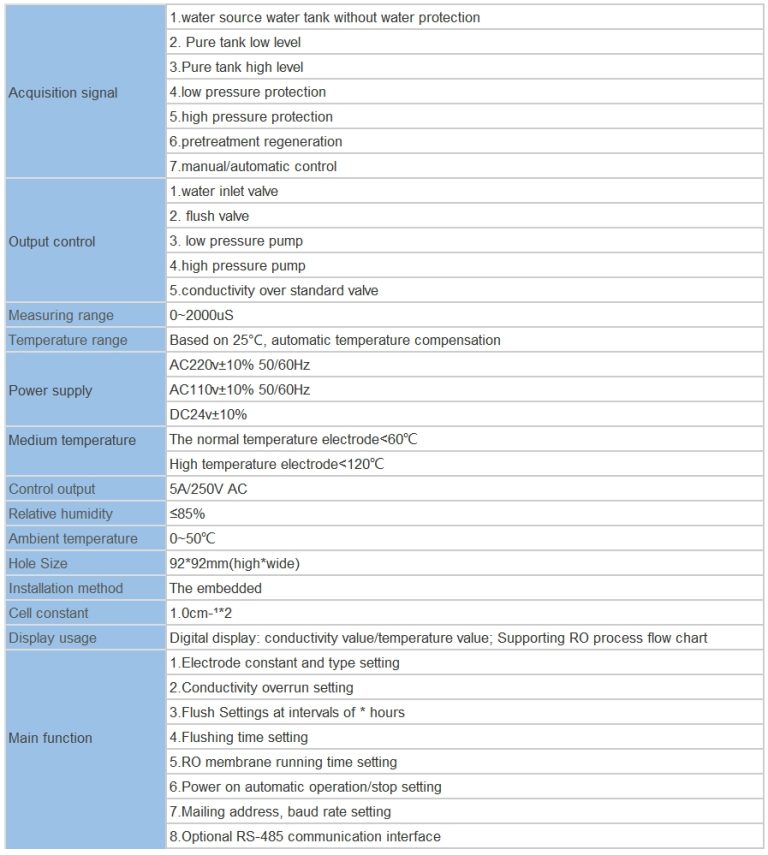
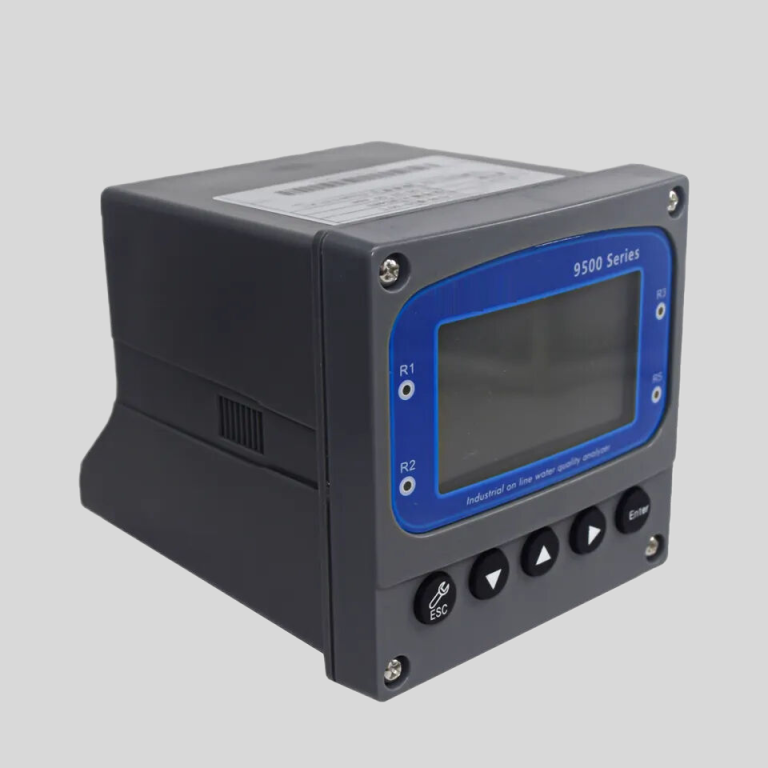
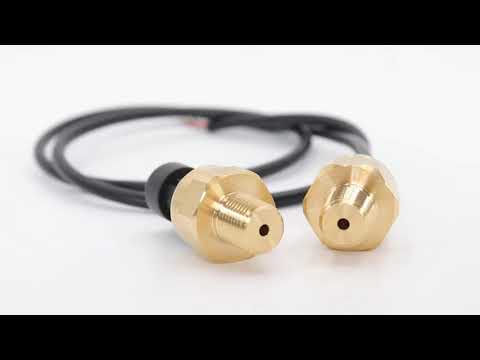
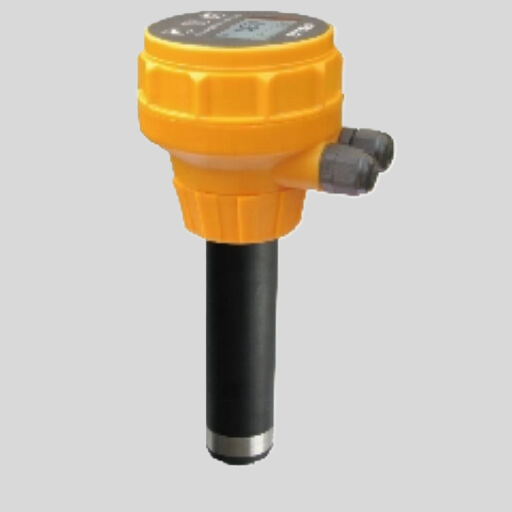
Multi-parameter monitoring systems measure resistivity, TOC, temperature, pressure, and flow continuously at each monitoring location. Distributed control systems (DCS) collect monitoring data, generating alarms when parameters exceed specification limits and trending data for predictive maintenance applications.
Shanghai ChiMay provides comprehensive water quality monitoring solutions for semiconductor UPW applications. The product portfolio includes conductivity meters with resistivity ranges exceeding 20 MΩ·cm, TOC analyzers achieving sub-ppb detection limits, and multi-parameter monitoring platforms integrating multiple sensors into unified measurement systems.
Article ID: 925
Word Count: ~1000 words