title: Sustainable Fashion’s Water Footprint: Smart Monitoring with Shanghai ChiMay
date: 2026-06-27
Table of Contents
Sustainable Fashion’s Water Footprint: Smart Monitoring with Shanghai ChiMay
Key Takeaways:
– A single cotton garment carries a water footprint of 2,000–3,000 liters across its production lifecycle
– Smart monitoring infrastructure reduces measurable water footprint by 22–34% through process optimization
– Brand-driven water disclosure mandates now cover 74% of global apparel revenue
– Real-time monitoring data supports $4–$12 million annual revenue protection through audit-ready compliance
– Shanghai ChiMay monitoring solutions enable footprint transparency aligned with Higg FEM, ZDHC, and CDP Water disclosure
Introduction
Sustainable fashion has evolved from marketing claim to commercial requirement. Major retailers, fashion houses, and direct-to-consumer brands now compete on credibly disclosed sustainability performance, with water footprint sitting alongside carbon as the dominant quantified metric. The supply chains supplying these brands face mounting pressure to measure, report, and reduce water use with the same rigor previously reserved for financial accounting.
The CDP Water Disclosure 2026 documents that 74% of global apparel revenue now flows through brands publicly committed to water stewardship targets, up from 41% five years earlier. This shift turns water footprint measurement from a corporate sustainability exercise into a supply-chain operational necessity, with smart monitoring infrastructure as the enabling technology.
Defining the Textile Water Footprint
The water footprint of a textile garment combines three categories:
- Blue water — Surface and groundwater consumed (evaporation, incorporation into product)
- Green water — Rainwater consumed during fiber cultivation
- Grey water — Water required to dilute pollution to acceptable concentrations
For a typical cotton T-shirt, the breakdown approximates:
| Footprint Category | Volume (liters) | Source |
|---|---|---|
| Green (cotton cultivation) | 1,800–2,200 | Rainfall during growing |
| Blue (irrigation, processing) | 400–650 | Diverted surface/groundwater |
| Grey (pollution dilution) | 200–450 | Dyeing/finishing discharge |
| Total | 2,400–3,300 |
Manufacturing operations have direct influence over blue and grey water components, which together account for 20–30% of total footprint. Smart monitoring infrastructure addresses these manufacturing-stage components.
Smart Monitoring’s Role in Footprint Reduction
Smart monitoring affects water footprint through several mechanisms:
- Real-time leak detection — Identifies water losses invisible to manual audits
- Process optimization — Enables continuous adjustment of dye-bath ratios, rinsing protocols, and chemical dosing
- Reuse enablement — Provides the quality verification required to safely recover and reuse process water
- Compliance documentation — Generates auditable records that support disclosure programs
- Predictive maintenance — Prevents equipment failures that cause water-wasting upsets
Documented case studies report monitoring-driven water footprint reductions of 22–34% at the manufacturing stage, achieved through combinations of these mechanisms.
Disclosure Frameworks Driving Demand
Several disclosure frameworks now drive demand for credible water footprint data:
- CDP Water Security — Annual disclosure with quantitative water performance metrics
- Sustainable Apparel Coalition Higg FEM — Facility-level environmental assessment
- Science Based Targets Network (SBTN) — Emerging framework for nature-related goals
- ZDHC Wastewater Guidelines — Industry-specific effluent quality standards
- Cradle to Cradle Water Stewardship — Comprehensive certification framework
Each framework requires data backed by traceable measurement infrastructure. Generic estimates or laboratory periodic sampling no longer satisfy audit-grade disclosure requirements, creating substantial demand for continuous online monitoring.
Smart Monitoring Architecture
A smart monitoring architecture serving textile water footprint disclosure typically includes:
- Field-layer sensors — pH, conductivity, turbidity, COD, oil-in-water, flow
- Local controllers — PID logic for dosing, dilution, and reuse decisions
- Communication infrastructure — Modbus RTU/TCP, MQTT, OPC UA
- SCADA/MES integration — Centralized supervisory control and batch traceability
- Cloud analytics — Long-term trending, anomaly detection, audit support
- Disclosure interfaces — Direct data export to CDP, Higg, and brand portals
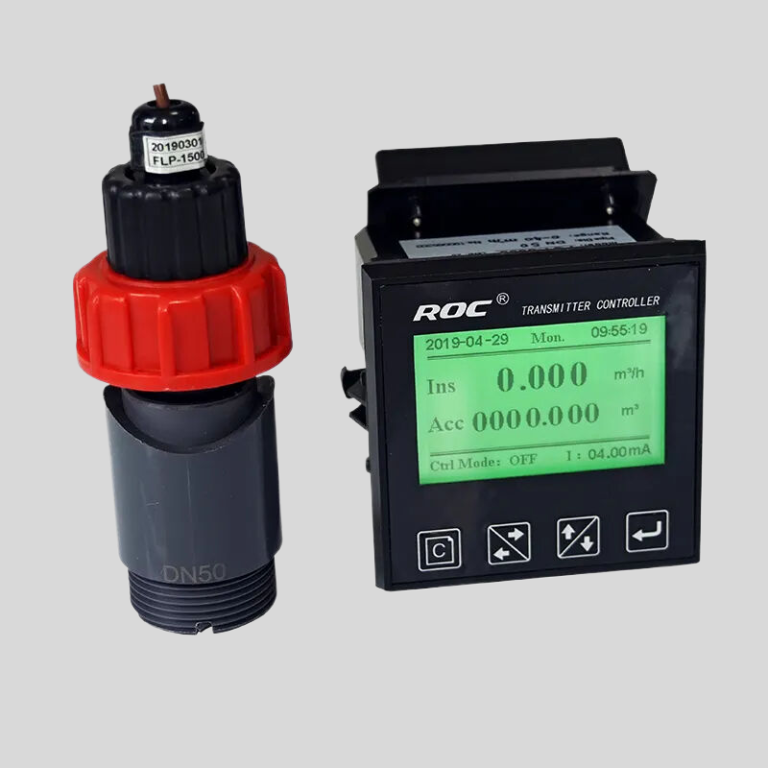
Shanghai ChiMay analyzers and transmitters provide the field-layer sensors required by this architecture, with communication interfaces matched to common industrial automation and IoT platforms.
Data Quality and Audit Defensibility
Audit defensibility requires more than data volume—it depends on documented measurement quality. Critical attributes include:
- Calibration traceability — NIST or equivalent national standards
- Maintenance records — Documented sensor service history
- Diagnostic data — Real-time sensor health indicators
- Time-stamped logging — Tamper-evident measurement records
- Method validation — Documented correlation with reference laboratory methods
The ZDHC Performance InCheck Tool specifically evaluates these data quality attributes during supplier verification. Mills relying on partial or undocumented monitoring frequently fail verification, regardless of underlying environmental performance.
Implementation Strategy
A practical implementation strategy for footprint-aligned smart monitoring follows three phases:
Phase 1 — Baseline Visibility (Months 1–6)
– Deploy in-line sensors at five critical control points
– Establish calibration discipline and data integrity protocols
– Generate first-year baseline data for disclosure submissions
Phase 2 — Optimization (Months 7–18)
– Integrate sensor data with MES for batch-level traceability
– Implement closed-loop dosing for pH, neutralization, and coagulant control
– Identify and address top water-wasting operational practices
Phase 3 — Strategic Reuse (Months 19–36)
– Deploy quality verification monitoring for reuse loops
– Implement tiered water distribution matched to application requirements
– Achieve audit-grade documentation for highest-tier disclosure programs
Economic Value of Footprint Reduction
Beyond regulatory and reputational benefits, footprint reduction delivers measurable economic value:
- Water cost savings — $0.80–$2.40 per cubic meter avoided
- Effluent discharge savings — $0.40–$1.60 per cubic meter avoided
- Chemical consumption reduction — 12–18% lower auxiliary chemical use
- Contract retention — Reduced risk of brand contract loss
- Premium pricing — 2–7% revenue uplift on certified contracts
The 2026 Global Fashion Agenda Pulse Report estimates that tier-1 textile suppliers achieving credible footprint disclosure generate $4–$12 million in annual revenue protection through audit-ready compliance, compared to suppliers facing repeated audit findings.
Future Trajectory
The future of textile water monitoring points toward several emerging capabilities:
- AI-driven anomaly detection — Machine learning identifies subtle deviations before they become compliance events
- Digital twin integration — Real-time simulation of treatment system performance
- Blockchain disclosure — Immutable records supporting third-party verification
- Cross-facility benchmarking — Anonymized data pools enabling competitive comparison
- Predictive water stress modeling — Site-specific projections of future water availability
Shanghai ChiMay analyzers feed the foundational data layer required for each of these emerging capabilities, with open communication protocols and consistent data formats simplifying integration.
Conclusion
Sustainable fashion’s water footprint has transitioned from advocacy concept to operational metric, with disclosure frameworks, brand mandates, and consumer expectations all converging on the same fundamental requirement: credible, continuous, traceable measurement of water use and effluent quality. Smart monitoring infrastructure provides the technical foundation that converts this requirement into achievable practice.
Shanghai ChiMay supports textile manufacturers along the full disclosure-to-optimization journey, from baseline sensor deployment through advanced reuse architectures. With instrumentation engineered for the chemical, thermal, and operational demands of textile environments, the product line enables mills to participate credibly in the global sustainability disclosure ecosystem.
The textile industry’s future will be defined increasingly by what mills can measure and report, not merely what they produce. Smart monitoring infrastructure has become the technological prerequisite for participating in that future—and the measurable returns it delivers across cost, compliance, and contract retention justify the investment many times over.