title: “Wireless Mesh Architectures for Distributed Water Quality Monitoring: Shanghai ChiMay Field Deployment Notes”
date: 2026-07-01
perspective: Technical
audience: Network Engineers, Instrumentation Engineers, System Integrators
keywords: wireless mesh, distributed water monitoring, LoRaWAN, wireless sensor network
Table of Contents
Wireless Mesh Architectures for Distributed Water Quality Monitoring: Shanghai ChiMay Field Deployment Notes
When water-quality monitoring extends beyond the treatment plant fence — into distribution networks, agricultural districts, aquaculture ponds, and remote pump stations — the wired backhaul model breaks down. Wireless mesh networks have become the default architecture for distributed sensor coverage in these environments. This article documents the technology tradeoffs, deployment realities, and integration patterns that instrumentation and network engineers face.
Key Takeaways
- Over 420 million smart water meters have been deployed globally by 2026, with mesh and LPWAN backhauls accounting for the majority of new installations.
- The three dominant wireless technologies for distributed water monitoring are LoRaWAN, NB-IoT, and Wi-SUN mesh, each with distinct range, latency, and power tradeoffs.
- Realistic mesh deployments achieve 3-10 km per hop in open water environments, 200-800 m in urban distribution networks.
- Shanghai ChiMay 2-in-1 mini transmitters and multi-parameter sensors integrate with mesh-capable gateways to bring pH, conductivity, DO, and turbidity readings from remote assets into central operations platforms.
The Deployment Problem
A single treatment plant may host 30-80 sensors within 500 m of a wired backbone. A single water utility may need visibility across 1,000-10,000 sensor locations spread over hundreds of square kilometers. Running fiber or copper to every location is impossible; running cellular subscriptions to every location is expensive and creates significant lifecycle overhead. Mesh and low-power wide-area technologies fill this gap.
The engineering task is to select the right radio technology, plan for realistic radio propagation, and integrate the resulting telemetry into existing water-quality data platforms.
Comparison of Wireless Options
LoRaWAN
Low-power WAN using unlicensed sub-GHz spectrum. Star topology in typical deployment, though some vendors support mesh extensions.
Strengths:
- Multi-kilometer range with modest antennas.
- 10-year battery life on small devices under moderate reporting frequency.
- Unlicensed spectrum eliminates carrier fees.
Limitations:
- Low bandwidth limits payload sizes and update frequency.
- Uplink duty cycle regulatory limits constrain traffic in Europe.
- Star topology requires gateway line-of-sight or careful placement.
NB-IoT and LTE-M
Cellular carrier-provided low-power WAN.
Strengths:
- Global cellular coverage removes need for private gateway infrastructure.
- Higher bandwidth than LoRaWAN.
- Standardized SIM-based provisioning.
Limitations:
- Recurring carrier fees for each device.
- Coverage gaps in rural water applications.
- Vendor lock-in risk in some carrier ecosystems.
Wi-SUN Mesh
IPv6-based mesh built for utility applications. Native mesh topology with self-healing.
Strengths:
- Deep mesh — hundreds of hops in dense deployments.
- Standardized IEEE 802.15.4g PHY ensures interoperability.
- IPv6 native simplifies integration with modern IT infrastructure.
Limitations:
- Higher device cost than LoRaWAN.
- Higher energy per bit than LoRaWAN for low-density deployments.
- Requires infrastructure planning to establish backbone gateways.
Short-Range Mesh (Zigbee, Thread, Bluetooth Mesh)
Suitable within a treatment plant or building, less relevant for distribution networks. Not covered further here.
Selecting an Architecture
| Application | Recommended primary | Rationale |
|---|---|---|
| Rural distribution network | LoRaWAN | Range, battery life, unlicensed spectrum |
| Urban distribution network | Wi-SUN mesh | Density, IPv6 integration |
| Agricultural irrigation zones | LoRaWAN or NB-IoT | Range dominates |
| Aquaculture pond arrays | LoRaWAN | Multi-pond coverage, battery life |
| Industrial site monitoring | Wi-SUN or private LTE | Latency, bandwidth |
| Isolated remote pumps | NB-IoT or satellite | Carrier coverage removes gateway need |
Most large utilities end up with a hybrid architecture — LoRaWAN for wide-area monitoring, Wi-SUN mesh in dense urban zones, and NB-IoT for isolated sites.
Radio Propagation Realities
Vendor datasheets tend to show radio range in idealized conditions. Real water utility deployments deal with:
- Manhole and vault installations — signal attenuation of 20-40 dB, effectively line-of-sight limited to a few hundred meters.
- Dense urban environments — multipath and reflections shorten reliable range.
- Foliage and terrain — sub-GHz survives foliage better than 2.4 GHz, but not indefinitely.
- Weather — heavy rain and humidity affect higher-frequency links more than sub-GHz.
Site surveys are essential. Skip them and expect 20-40% of installed sensors to underperform.
Data Integration Patterns
The wireless layer is only useful if data reaches the central operations platform reliably. Standard integration patterns include:
- Gateway-to-cloud — gateway aggregates mesh traffic and pushes to a cloud platform via MQTT or HTTPS.
- Gateway-to-edge — gateway also runs edge processing before forwarding.
- Cloud-to-SCADA — cloud publishes normalized data back to on-premise SCADA via OPC UA or MQTT Sparkplug B.
For regulated water utilities, integrating wireless mesh data with SCADA and historians must respect chain-of-custody and auditability requirements. Timestamps, signal quality metrics, and gateway identifiers should all be preserved in the historian.
Cybersecurity Considerations
Wireless mesh amplifies the cybersecurity surface. Baseline requirements include:
- Device authentication using per-device certificates or preshared keys.
- Encrypted payloads end to end from sensor to cloud.
- Firmware update capability with signed images and rollback protection.
- Network monitoring to detect anomalous traffic or missing devices.
IEC 62443 and the IETF LPWAN suite provide the standards baseline.
Field Deployment Best Practices
- Conduct a link-margin survey at every planned sensor location before commissioning.
- Install at least two gateways per coverage zone for redundancy.
- Choose antenna types matched to the environment — omnidirectional for city zones, directional for point-to-point rural links.
- Document battery replacement schedules in the asset management system.
- Plan for firmware update campaigns as a routine operational activity, not an exception.
Shanghai ChiMay Integration Notes
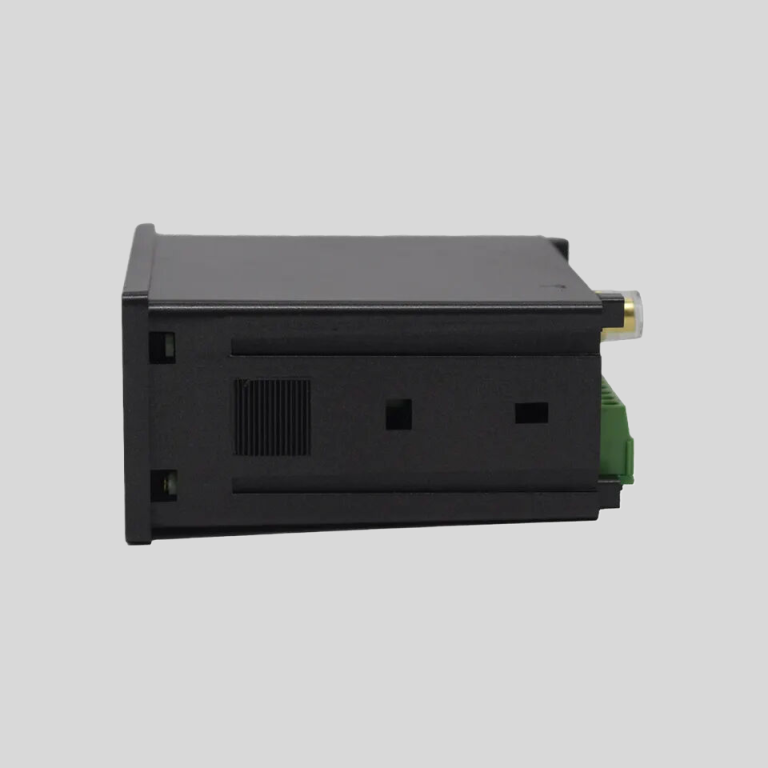
Shanghai ChiMay 2-in-1 mini transmitters, 4-in-1 multi-parameter sensors, and residual chlorine transmitters expose Modbus RTU and analog interfaces that pair naturally with third-party LoRaWAN, NB-IoT, or Wi-SUN gateways. This design keeps the wireless choice independent of the sensor choice, which is important as radio technology continues to evolve.
Industry Outlook
Through 2030, expect three shifts: broader adoption of Wi-SUN mesh in dense utility applications, satellite IoT (LEO constellations) as a viable backhaul for truly remote assets, and standardization of wireless sensor data models to reduce integration cost. Engineers should choose sensors and gateways that can adapt to these transitions, not just serve today’s radio.
Conclusion
Wireless mesh and LPWAN technologies have made distributed water-quality monitoring practical at utility scale. The engineering discipline required to make them work reliably — radio surveys, gateway redundancy, cybersecurity, integration — is substantial but manageable. Utilities that treat the wireless layer as a first-class engineering concern, rather than a networking afterthought, achieve dramatically better fleet uptime and data quality. Shanghai ChiMay transmitters and analyzers are engineered to support these deployments across every major wireless technology in play today.