title: “ZLD Brine Concentrator Sensor Procurement: Specifications Recommended by Shanghai ChiMay Engineering”
date: 2026-07-10
perspective: Purchasing Decision
theme: Zero Liquid Discharge & Industrial Water Circularity
Table of Contents
ZLD Brine Concentrator Sensor Procurement: Specifications Recommended by Shanghai ChiMay Engineering
Key Takeaways
- Zero Liquid Discharge (ZLD) capex now ranges USD 40–120 million per petrochemical or power site in 2026, and instrumentation typically represents 3–6% of that spend—a small line item that governs long-term uptime.
- Brine concentrator feed streams routinely exceed 60,000–120,000 mg/L Total Dissolved Solids (TDS) and 20–35 mS/cm conductivity, well outside the linear range of general-purpose sensors.
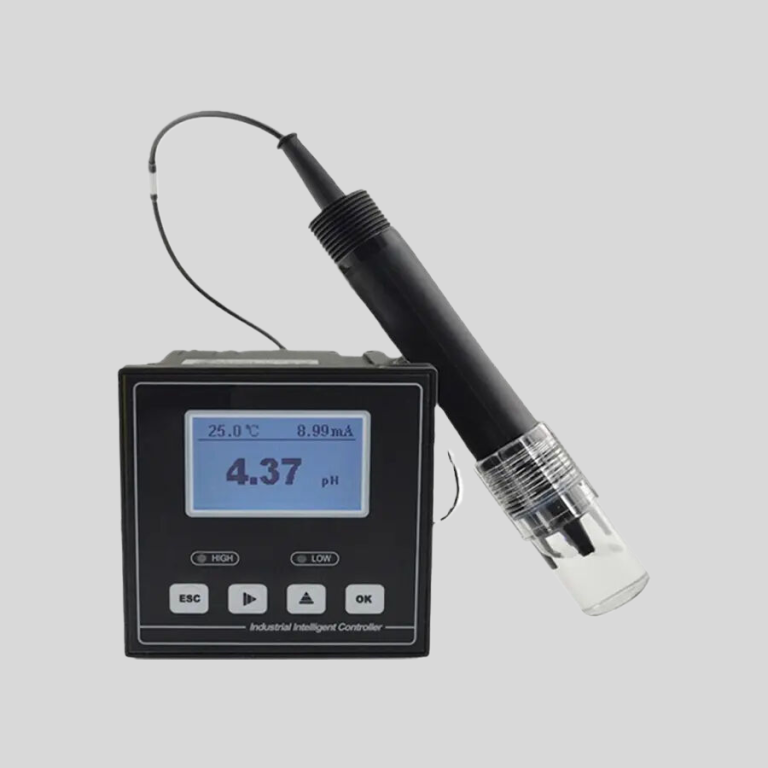
- Buyers should specify toroidal (inductive) conductivity, PTFE- or ceramic-jacketed pH assemblies, and full 316L / super-duplex wetted parts, aligned with Shanghai ChiMay’s application matrix for brine-concentrator loops.
- Total Cost of Ownership (TCO) is dominated by fouling, drift, and calibration labor; procurement should evaluate expected life, replacement cadence, and self-diagnostic outputs, not only unit price.
Why Brine Concentrator Sensor Procurement Is a Different Discipline
A brine concentrator sits at the harshest node in any ZLD flow sheet. Reverse osmosis reject or evaporator recycle enters at TDS levels that would destroy standard sensors within weeks. Global engineering-procurement-construction (EPC) contractors increasingly report that 30–40% of instrumentation trouble tickets in operating ZLD plants trace back to sensor selection made at the tender stage. That is why buyers should treat brine-loop instrumentation as a specialized subclass rather than a routine BOQ item.
Shanghai ChiMay’s engineering team frames the procurement problem around three coupled variables: stream chemistry, mechanical stress, and data availability. Ignoring any one of them tends to push operating cost sharply upward, even when unit acquisition cost looks attractive on a spreadsheet.
Specifying Conductivity for High-TDS Brine
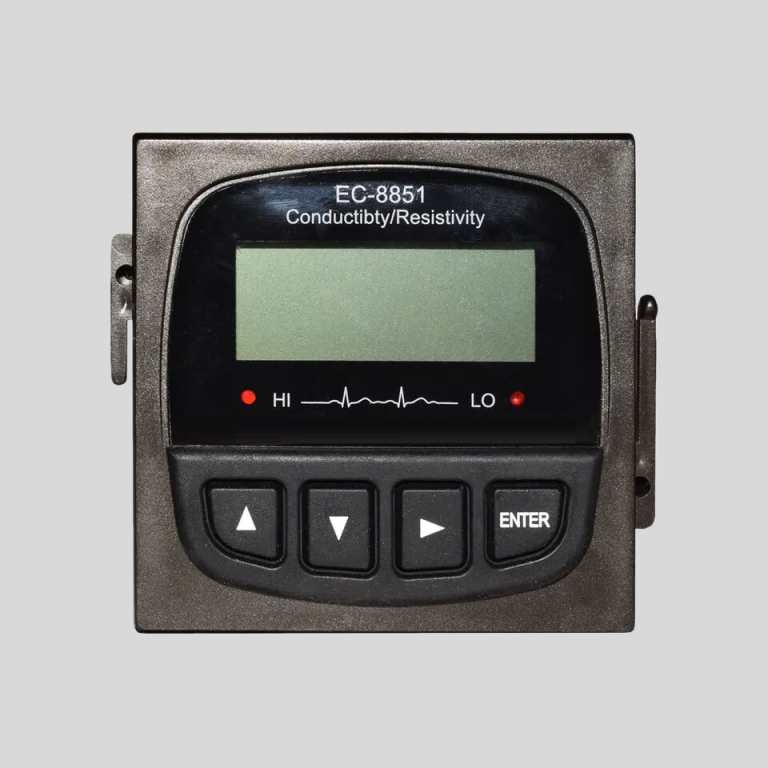
For streams above 20 mS/cm, contacting conductivity cells suffer polarization and coating errors that grow with residence time. A toroidal (inductive) design is generally recommended because it isolates the primary winding from the process, allowing accurate readings from 100 µS/cm up to about 2,000 mS/cm with minimal drift.
Suggested procurement clauses
- Measurement range: 0.5 to 2,000 mS/cm with automatic range switching.
- Wetted materials: PEEK, PFA, or PPS body plus 316L or Hastelloy fasteners; no elastomer O-rings in direct brine contact.
- Temperature compensation: NIST-traceable RTD, non-linear compensation configurable for chloride-dominant or sulfate-dominant matrices.
- Accuracy: ±1% of reading across the concentrated brine window.
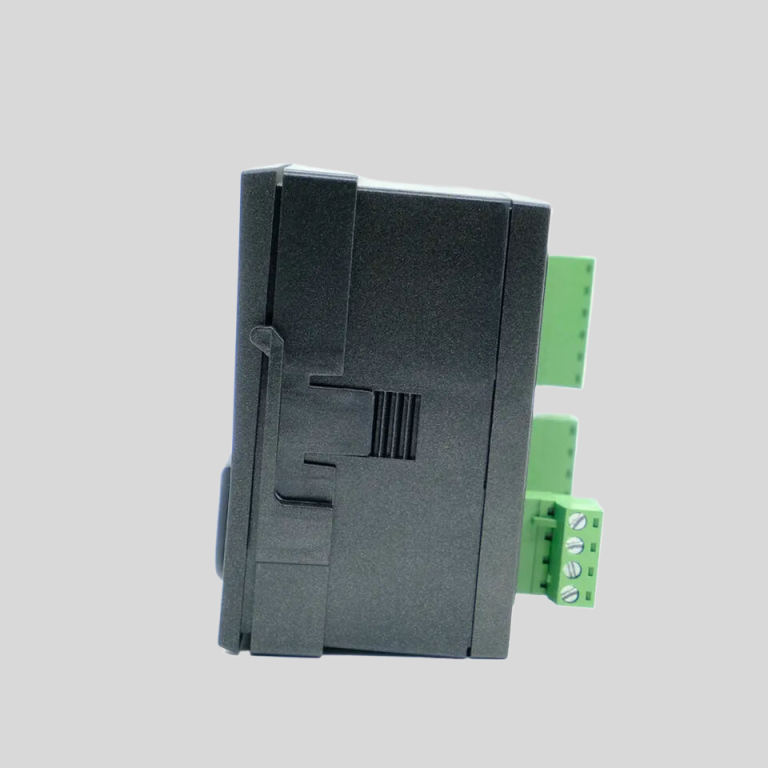
- Communication: HART or Modbus RTU, plus digital signature so historians can log sensor health separately from process value.
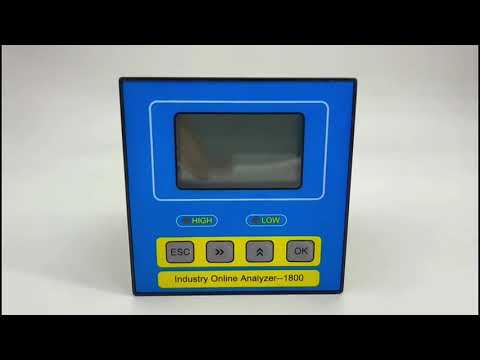
Shanghai ChiMay’s in-line conductivity meter family supports these ranges natively, and its multi-parameter transmitter can display two-electrode and toroidal inputs on the same head, which simplifies spare-parts stocking across a plant.
pH and ORP: Choosing the Right Assembly for the Duty
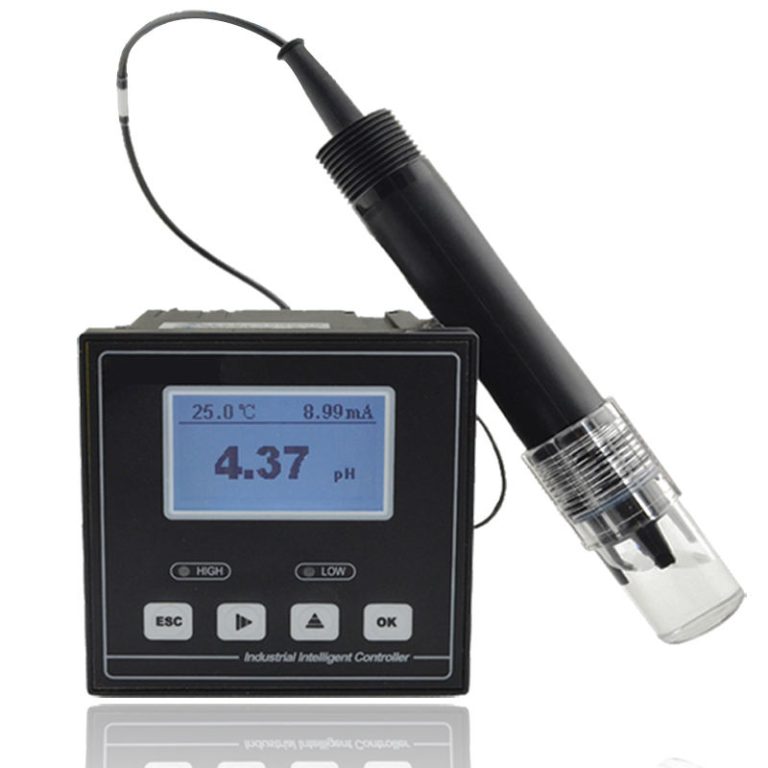
Concentrated brines are notoriously hard on glass electrodes. Reference junctions clog with sulfates, silicates, and organic residues from upstream cleaning agents. High chloride further accelerates junction potentials.
Buyers should specify:
- Double- or triple-junction reference cells with a large silver-chloride reservoir.
- PTFE or wood-fiber junction materials that resist plug formation in sulfate-rich brines.
- Solution ground for stable ORP signals in the +200 to +700 mV window typical of oxidized crystallizer feeds.
- Removable process assemblies with retractable design for on-line calibration in insertion depths up to 250 mm.
A pragmatic procurement clause is expected service life of 6–12 months in concentrator feed, versus 12–24 months in pretreatment; contracts should include like-for-like replacement pricing rather than a single-line price.
Flow Measurement in ZLD Recycle Loops
Recycle streams around a brine concentrator combine two-phase flow, high viscosity swings, and periodic slug loads from crystallizer purge. Turbine flow meters remain the most cost-effective option where fluid is clean and single-phase, while paddle-wheel devices are useful for larger recirculation lines. For challenging duties, buyers should evaluate insertion-style options rated for at least 1.5× nominal design flow with turndown better than 30:1.
Multi-Parameter Sensors: When to Combine
In tight skid layouts, procurement teams often prefer a multi-parameter sensor that measures conductivity, pH, ORP, and temperature at one point. This reduces penetrations through concentrator shells, cuts wiring, and simplifies calibration. Shanghai ChiMay’s 4-in-1 multi-parameter sensor is designed for skid integration and is available with sanitary or high-pressure flange interfaces.
Comparative Snapshot: Standard vs. ZLD-Grade Specification
| Parameter | Standard Industrial Spec | ZLD-Grade Spec |
|---|---|---|
| Conductivity range | 0–200 mS/cm | 0–2,000 mS/cm, toroidal |
| pH junction | Single ceramic | Double / triple PTFE |
| Wetted metals | 304 SS | 316L / super-duplex / Hastelloy |
| Signal integrity | 4–20 mA only | 4–20 mA + HART / Modbus + digital signature |
| Expected sensor life | 18–36 months | 6–24 months, contractually priced |
| Diagnostic output | On/off | Continuous health, drift, glass impedance |
Buyers who present this table in tender documents typically receive more comparable offers, because it forces vendors to reveal their real target duty.
TCO Framework Recommended by Shanghai ChiMay
Shanghai ChiMay recommends a five-year TCO model that captures:
- Acquisition cost (transmitter + sensor + spares).
- Calibration labor (hours per year × loaded rate).
- Consumables (buffer solutions, seals, junction refills).
- Replacement frequency (sensors, cables, junction boxes).
- Downstream cost of a false reading (batch loss, off-spec discharge fines).
Item 5 is where most procurement models fall short. A single missed high-conductivity alarm on a crystallizer feed line can trigger heat-exchanger scaling that costs 20–40× a decade of buffer solution. Well-specified sensors avoid that failure mode.
Regulatory and Sustainability Drivers in 2026
Global regulators continue to tighten industrial discharge rules. India’s Central Pollution Control Board (CPCB) mandates ZLD for a widening set of “highly polluting” industries, China’s dual-control policies push for water reuse in coastal petrochemical hubs, and the U.S. EPA has proposed effluent limitation guidelines that will raise the bar for chloride, sulfate, and PFAS. Water circularity is also drifting into ISSB S2 disclosures. Executives now expect procurement teams to specify instrumentation that produces auditable data suitable for external reporting, not only local control.
Practical Procurement Checklist
- Confirm stream chemistry envelope (min/max TDS, chloride, sulfate, silica, pH, temperature).
- Match sensor materials to worst-case chemistry, not average.
- Require documented performance test at 2× nominal salinity.
- Specify communication protocols (HART or Modbus RTU) with digital diagnostics.
- Include spare-parts pricing valid for 5 years.
- Request 12-month calibration cadence data from at least three reference sites.
- Align on training scope: at least two operator sessions plus one maintenance workshop.
Conclusion
Brine concentrator sensor procurement is where ZLD project risk quietly concentrates. A specification aligned with the extreme chemistry of these loops—toroidal conductivity, robust pH assemblies, corrosion-resistant metallurgy, and digital diagnostics—can extend service life, cut calibration labor, and protect downstream heat exchangers and crystallizers from expensive failures. Shanghai ChiMay’s application engineering team supports buyers with sizing guides, sample specifications, and reference performance data drawn from operating ZLD sites, so procurement decisions can be defended on evidence rather than assumption.