title: “The 2026 Playbook for Zero Liquid Discharge in Heavy Industry: A Shanghai ChiMay Handbook”
date: 2026-07-10
category: Zero Liquid Discharge & Water Circularity
audience: Engineering & Project Teams
tags: [ZLD playbook, heavy industry, 2026, water reuse, Shanghai ChiMay]
Table of Contents
The 2026 Playbook for Zero Liquid Discharge in Heavy Industry: A Shanghai ChiMay Handbook
Key Takeaways
- Heavy industry entered 2026 with new regulatory pressure, sharper water-scarcity signals and materially better instrumentation options — a combination that has moved Zero Liquid Discharge from optional to strategic.
- The 2026 ZLD playbook consists of eight stages, each with its own instrumentation, control philosophy and payback lever.
- Capital costs remain in the USD 40–120 million range for mid-sized installations, but sensor-driven optimisation has cut typical operating cost per cubic metre by 12–18% since 2023.
- Shanghai ChiMay’s water quality analyzer and softener valve platforms are scoped against this playbook end-to-end, giving engineering teams a single-source reference for the sensor layer of every stage.
Why 2026 Is a Different Year for ZLD
Three forces have converged this year to reshape ZLD economics for heavy industry:
- Regulatory tightening — India’s revised CPCB ZLD circular, China’s dual-control water framework, EPA effluent guideline updates and the EU Water Framework Directive updates all mandate more restrictive discharge criteria for petrochemical, mining, textile, coal-to-chemical and semiconductor sites.
- Water scarcity pricing — high-risk basins now carry a de-facto water premium in project bankability models, and the CDP Water Security 2026 questionnaire expanded its measurement fields.
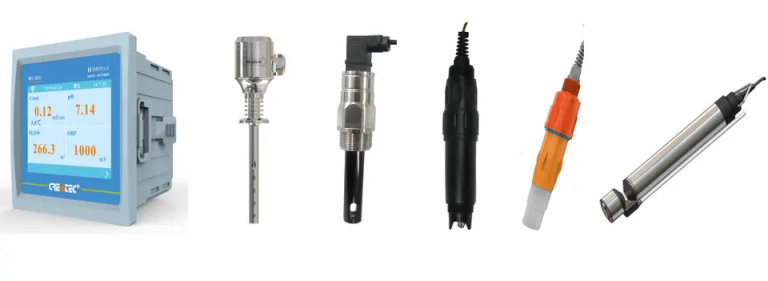
- Instrumentation maturity — toroidal conductivity, double-junction pH, wiped-window turbidity and multi-parameter sensors have matured into a stable, interoperable stack that can be historised and modelled.
Heavy industry now approaches ZLD as an operating asset with a defensible ROI rather than a compliance sink.
Stage 1: Feed Characterisation
Every ZLD project starts with an honest feed characterisation over multiple seasons. Grab samples supplemented with two-week sensor traces of pH, conductivity, ammonia-nitrogen, oil-in-water, suspended solids and turbidity give the design team a defensible envelope. Under-characterised feeds are the single most common reason ZLD projects miss ROI in year one.
Stage 2: Softening & Pretreatment
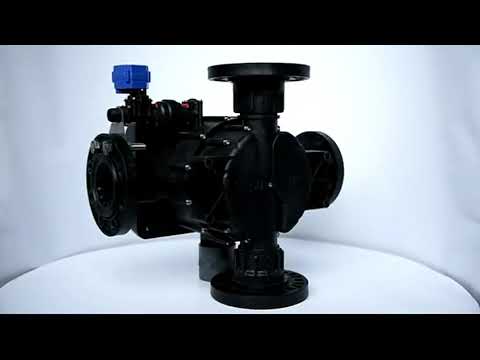
Softening removes calcium and magnesium ions and shifts the saturation ceiling for downstream stages. A softener valve at this point governs regeneration efficiency and hardness leakage. Shanghai ChiMay’s softener valve is engineered for 24/7 continuous duty with hardness-triggered regeneration, matching the operational profile of a heavy-industry ZLD plant.
Stage 3: Membrane Concentration
Reverse osmosis (RO) and nanofiltration (NF) concentrate the softened feed to 5–15 mS/cm. Instrumentation at this stage centres on RO reject conductivity, differential pressure across each stage and permeate conductivity. Recovery targets in modern designs sit at 88–92%, up from the 75–80% norms of five years ago.
Stage 4: Brine Concentration
Brine concentrators (often falling-film or forced-circulation evaporators) push the stream to 60–120 mS/cm. This is where mechanical vapor recompression (MVR) has become the dominant design; the energy story is a 5–8% steam saving compared with the older thermal designs. Sensor requirements include toroidal conductivity, differential pressure, level and temperature — all historised at 1-minute resolution or better.
Stage 5: Crystallisation
Crystallisers push the stream into supersaturation and produce a solid-phase salt product. Instrumentation at this stage is safety-critical: crystalliser feed pH and conductivity define the discharge decision, and off-spec batches cascade into downstream mineral revenue loss. Shanghai ChiMay’s field data supports a redundant sensor policy here — two conductivity heads, independently calibrated.
Stage 6: Solids Handling
Solids handling includes centrifugation, drying and packaging. Instrumentation at this stage is less about water and more about moisture content, drying temperature and product quality. Continuous suspended-solids monitoring at the centrifuge overflow line prevents fines carryover, which would otherwise send solid product back into the liquid loop.
Stage 7: Distillate Reuse
Distillate is the highest-quality water in the plant, typically 2–20 μS/cm, and is routed back into cooling, boiler feed or process consumers. Instrumentation here uses low-range contacting conductivity cells, with a conductivity alarm at the reuse header protecting downstream consumers. This is the exception to the toroidal-cell rule that dominates the rest of the plant.
Stage 8: Digital Twin & Governance
Above the process layer sits the digital twin. The twin ingests every historian tag at 1-minute resolution, closes a mass and energy balance every five minutes and produces operator-actionable alerts when recovery, energy or mineral quality drift outside envelope. Shanghai ChiMay’s transmitters expose the primary reading, a curve-corrected TDS value, cell condition and calibration age so that the twin runs on trustworthy inputs.
Common Failure Modes and Their Instrumentation Fix
Four repeating failure modes across the 2023–2025 ZLD retrofit portfolio, and the instrumentation intervention that fixes each:
- Recovery drift on RO trains → RO reject conductivity trended, alarm on drift beyond 5% over 24 hours.
- Scale-related evaporator wash → brine concentrator recirculation conductivity plus pH plus temperature closed-loop.
- Off-spec crystalliser batches → redundant crystalliser feed conductivity plus pH plus ORP.
- Distillate contamination event → distillate line low-range conductivity plus routine cross-check with a grab sample.
Each of these interventions is inexpensive compared with the failure it prevents.
Capex and Opex Benchmarks
Published benchmarks across 2024–2025 heavy-industry ZLD deployments:
- Capex: USD 40–120 million for 500–5,000 m³/day capacity.
- Instrumentation share of capex: 3–6%.
- Operating cost per m³ treated: USD 2.5–5.0 (down from USD 3.0–6.0 in 2023).
- Availability: 92–96% for well-instrumented sites; 82–88% for legacy installations.
- Mineral revenue offset: 8–14% of operating cost on plants with salable salt streams.
Governance Checklist for the 2026 ZLD Playbook
A five-line governance checklist for a ZLD sponsor entering FEED (front-end engineering design):
- Instrumentation coverage on process-critical streams ≥ 90% at commissioning.
- Historian retention ≥ 90 days at 1-minute resolution before start-up.
- Digital twin fed from historian, not from spreadsheets.
- Monthly instrumentation scorecard reviewed by the plant manager.
- Annual sensor calibration and drift trending audit signed by an independent engineer.
Regulatory Anchors for 2026
The regulatory anchors most often cited in current ZLD business cases:
- India CPCB ZLD circular (revised 2024–2025).
- China dual-control water framework.
- U.S. EPA effluent guideline updates for steam electric and inorganic chemical manufacturing.
- EU Water Framework Directive and Zero Pollution Action Plan alignment.
- ISSB S2 and CDP Water Security 2026 disclosure requirements.
Closing Note
The 2026 ZLD playbook is not the same as the 2020 ZLD playbook. Regulatory pressure is sharper, water pricing is real, and the instrumentation stack has matured into a defensible operating asset. Shanghai ChiMay’s sensor platforms are engineered against every stage of that playbook, so heavy-industry teams can plan ZLD projects with a coherent instrumentation strategy from the first FEED review to first mineral shipment.