Table of Contents
Understanding Scaling and Corrosion Mechanisms in Process Water
Key Takeaways
– Scaling and corrosion occur simultaneously in 85% of industrial water systems, creating synergistic deterioration
– Calcium carbonate precipitation begins when LSI exceeds +0.5, with 0.2 mm/year thickness accumulation rates
– Temperature increases of 10°C accelerate corrosion rates by 25-30% in carbon steel systems
– Combined scale-corrosion monitoring reduces combined system failures by 52%
Introduction
Industrial water systems face a persistent challenge: the simultaneous occurrence of scaling and corrosion. These two deterioration mechanisms do not operate independently—they interact, amplify, and accelerate each other in ways that compromise equipment integrity and operational efficiency.
The International Water Association reports that $1.8 billion in annual maintenance costs across chemical processing, power generation, and manufacturing sectors result directly from scale-corrosion interactions. Understanding these mechanisms enables plant operators to implement targeted interventions that break the deterioration cycle and extend equipment service life.
The Chemistry of Water Deterioration
Fundamental Water Chemistry
Process water contains dissolved minerals, gases, and organic compounds that determine its scaling and corrosive potential. The primary constituents affecting system integrity include:
- Calcium and magnesium (hardness ions) → scaling potential
- Chloride and sulfate (aggressive anions) → corrosion initiation
- Bicarbonate alkalinity → buffering capacity and scaling propensity
- Dissolved oxygen → cathodic reaction driver
- Silica → silica scaling at elevated concentrations
The Langelier Saturation Index (LSI) quantifies water’s scaling or corrosive tendency. Positive LSI values indicate scaling water, while negative values suggest corrosive conditions. Balanced water typically maintains LSI between -0.5 and +0.5.
Thermodynamic Principles
The solubility of most scale-forming minerals decreases as temperature rises. This temperature-dependent solubility creates preferential precipitation zones in heat exchangers, where warm surfaces become sites of rapid scale deposition. Simultaneously, elevated temperatures increase reaction kinetics—both corrosion dissolution rates and scale precipitation rates accelerate exponentially with temperature.
Scaling Mechanisms and Formation
Calcium Carbonate Scaling
Calcium carbonate represents the most common scale type in industrial cooling and process water systems. The precipitation reaction proceeds as follows:
Ca²⁺ + 2HCO₃⁻ → CaCO₃↓ + CO₂ + H₂O
According to DuPont Water Solutions, calcium carbonate scaling reaches critical levels when:
– LSI exceeds +0.5
– Temperature surpasses 50°C at heat transfer surfaces
– Residence time exceeds 24 hours in concentrated loops
Scale thickness accumulation rates of 0.2-0.5 mm/year are typical in untreated systems, with rates exceeding 1.0 mm/year documented in high-hardness water (> 400 ppm CaCO₃).
Crystal Growth and Adherence
Scale formation involves two stages: nucleation (initial crystal formation) and growth (crystal enlargement). Heterogeneous nucleation occurs on metal surfaces, pipe walls, and existing deposits, creating a foundation for continued precipitation. Once nucleated, crystals adhere through electrostatic attraction and mechanical interlocking.
Shanghai ChiMay’s 4-in-1 Multi-Parameter Sensors monitor pH, ORP, conductivity, and temperature simultaneously, enabling operators to track conditions that promote scale formation before deposits become entrenched.
Other Scale Types
| Scale Type | Triggering Conditions | Treatment Approach |
|---|---|---|
| Calcium phosphate | pH > 8.0, PO₄³⁻ > 5 ppm | Acid dosing, scale inhibitors |
| Silica | SiO₂ > 150 ppm, T > 80°C | Softening, pH adjustment |
| Calcium sulfate | SO₄²⁻ > 200 ppm, Ca²⁺ > 500 ppm | Antiscalant, ion exchange |
| Iron oxide | Fe > 0.5 ppm, oxidizing conditions | Filtration, chelation |
Corrosion Mechanisms and Progression
Electrochemical Corrosion Fundamentals
Corrosion is an electrochemical process requiring four simultaneous conditions:
1. Anode (metal dissolution site)
2. Cathode (reduction reaction site)
3. Electrolyte (conductive water pathway)
4. Electrical connection (electron flow between anode and cathode)
The anodic reaction releases metal ions:
Fe → Fe²⁺ + 2e⁻
The cathodic reaction consumes electrons, typically through oxygen reduction:
O₂ + 2H₂O + 4e⁻ → 4OH⁻
Forms of Corrosion in Process Water
Uniform Attack: Evenly distributed metal loss across exposed surfaces. This predictable corrosion form accounts for 75% of all metallic deterioration but rarely causes sudden failures.
Pitting Corrosion: Localized attack creating deep cavities. NACE International identifies chloride concentrations above 50 ppm as critical thresholds for pitting initiation in 316 stainless steel. Pitting represents the most dangerous corrosion form—causing 60% of catastrophic failures despite comprising only 10-15% of corrosion incidents.
Crevice Corrosion: Accelerated attack beneath gaskets, deposits, or scale formations where stagnant water creates differential aeration cells. Scale deposits create ideal crevice conditions, linking corrosion and scaling mechanisms.
Galvanic Corrosion: Occurs when dissimilar metals connect electrically in the presence of an electrolyte. Common in chemical plants with mixed metallurgy.
The Scale-Corrosion Interaction
How Scaling Accelerates Corrosion
Scale deposits paradoxically increase corrosion rates despite appearing protective:
-
Differential Aeration Cells: Scale patches create oxygen-depleted zones beneath deposits, establishing anodes that accelerate metal dissolution.
-
Under-Deposit Corrosion: Stagnant water beneath scales becomes concentrated with chlorides and acidity, attacking passive films.
-
Thermal Insulation: Scale layers raise surface temperatures, increasing both corrosion kinetics and localized stress.
The Electric Power Research Institute (EPRI) documented 35% higher corrosion rates beneath 0.5 mm scale deposits compared to clean metal surfaces.
How Corrosion Promotes Scaling
Corrosion products create favorable conditions for scale precipitation:
-
Nucleation Sites: Rough corrosion surfaces provide ideal sites for crystal nucleation.
-
pH Elevation: Cathodic reactions generate hydroxide ions, raising local pH and promoting carbonate precipitation.
-
Cation Release: Corroding surfaces release metal ions (Fe²⁺, Al³⁺) that react with anions to form mixed scales.
Monitoring Strategies for Combined Deterioration
Multi-Parameter Approach
Effective scale-corrosion control requires simultaneous monitoring of multiple parameters:
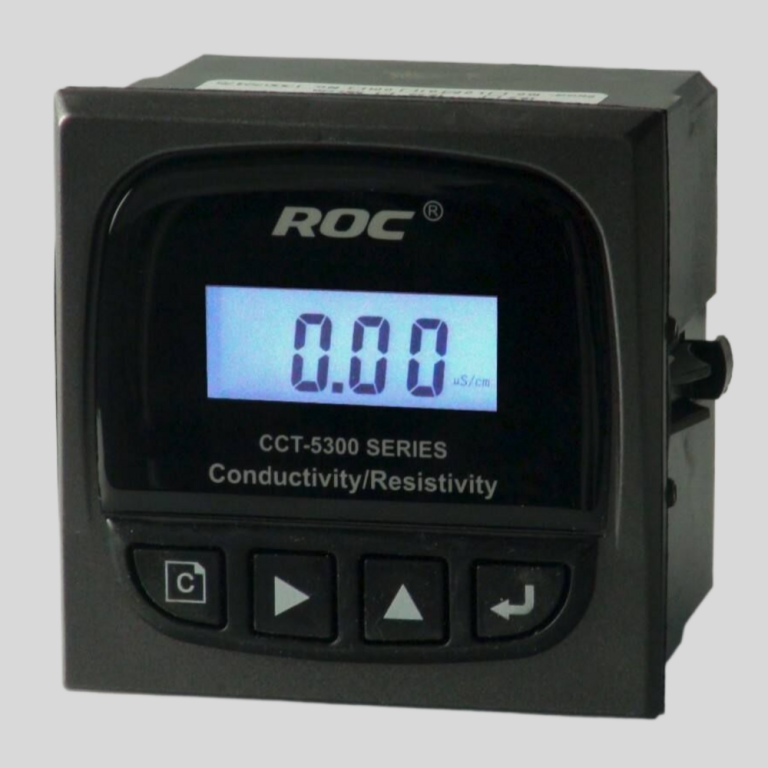
- Conductivity: Indicates total dissolved solids and concentration cycles
- pH: Determines water stability and aggressiveness
- ORP: Reflects oxidation potential and chlorine/biocide effectiveness
- Temperature: Affects both scale formation and corrosion rates
- Dissolved Oxygen: Key driver of cathodic corrosion reactions
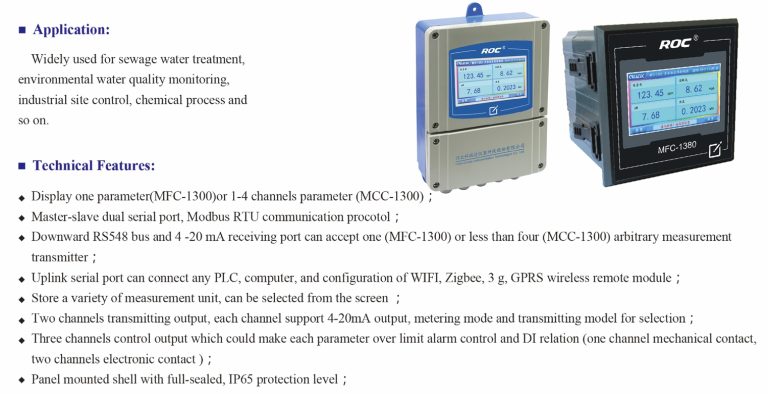
Shanghai ChiMay’s comprehensive sensor portfolio enables integrated monitoring strategies that track both deterioration mechanisms, providing operators with actionable data for treatment optimization.
Predictive Index Calculations
Modern monitoring systems calculate predictive indices automatically:
| Index | Calculation Basis | Critical Threshold |
|---|---|---|
| LSI | pH, Ca²⁺, ALK, TDS, Temp | ±0.5 target range |
| RSI | pH, Ca²⁺, ALK, TDS, Temp | 6.0-7.0 stable |
| PSI | Multiple parameters | > 6.0 scaling risk |
| CCI | Conductivity, chloride | > 100 corrosive |
Control Strategies
Chemical Treatment Programs
Effective treatment addresses both mechanisms:
Corrosion Inhibitors:
– Cathodic: Zinc, polyphosphates (precipitate as protective films)
– Anodic: Molybdate, nitrite, silicate (passivate metal surfaces)
– Mixed: Phosphonates, azoles (dual-action protection)
Scale Inhibitors:
– Threshold agents: Phosphonates, polyacrylates (1-10 ppm dosages)
– Crystal modifiers: Polyphosphates (distort scale crystals)
– Dispersants: copolymers (keep particles suspended)
Physical Treatment Methods
- Softening: Ion exchange removes hardness ions
- Acid dosing: Maintains stable pH, prevents carbonate precipitation
- Deaeration: Removes dissolved oxygen, reduces cathodic driving force
- Filtration: Removes suspended solids and corrosion products
Conclusion
Scaling and corrosion represent interconnected challenges that require integrated monitoring and treatment strategies. Understanding the chemical and electrochemical mechanisms enables chemical plant operators to implement proactive control programs that minimize equipment deterioration, reduce maintenance costs, and maintain production reliability.
Shanghai ChiMay’s water quality monitoring solutions provide the instrumentation foundation for effective scale-corrosion management, with conductivity sensors, multi-parameter analyzers, and control valves designed for demanding chemical process applications.