Table of Contents
Dissolved Oxygen Monitoring for Bioremediation of Mining Effluent: Engineering Notes from Shanghai ChiMay
Biological treatment of mining effluent is no longer an experimental option. Sulfate-reducing bacteria for metals precipitation, nitrifying systems for cyanide and ammonia treatment, and aerobic biofilms for organic reagent destruction are all in commercial use at mines around the world. Every one of these processes depends on dissolved oxygen control. Get the oxygen right and the biology delivers; get it wrong and the system stalls. Shanghai ChiMay engineers find that dissolved oxygen is the single most common reason that bioremediation projects underperform, and these field engineering notes capture what works.
Key Takeaways for Bioremediation Engineers
- Dissolved oxygen targets for mining bioremediation are process-specific and tighter than for municipal wastewater
- Optical DO sensors have largely replaced membrane-based sensors in modern installations
- Aeration energy is often 40 to 60 percent of the operating cost; DO control directly determines it
- Sensor placement and number of measurement points are as important as sensor accuracy
- Calibration discipline is the difference between credible data and a number on a screen
The Three Main Bioremediation Modes
The dissolved oxygen requirement depends on which biological process is active:
Aerobic destruction of organic reagents – Required for breakdown of xanthates, thiocyanates, and flotation frothers in tailings water. DO target is typically 2 to 4 mg/L throughout the reactor.
Nitrification of ammonia and weak acid dissociable cyanide species – Required for compliance discharge at many gold and base metals operations. DO target is 2 to 3 mg/L minimum, with strict avoidance of anoxic dead zones.
Sulfate reduction for metals precipitation – An anaerobic process, but with a strict requirement that DO be kept below 0.2 mg/L at the reactor inlet. Measuring DO in this service is as critical as in the aerobic services, just to verify absence of oxygen.
A single mine may run two or all three modes in different parts of its water treatment train. Each demands its own DO measurement strategy.
Choosing the Sensor: Optical vs. Membrane
Two main technologies are used in mining bioremediation:
Optical (luminescent) DO sensors – Measure the quenching of a fluorescent dye by oxygen. No membrane to foul, no electrolyte to deplete, calibration interval of three to twelve months. The dominant choice for new installations.
Polarographic or galvanic membrane DO sensors – Older technology, lower unit cost, but requires membrane replacement every one to three months and electrolyte top-up. Still in use but rarely the right choice for new procurement.
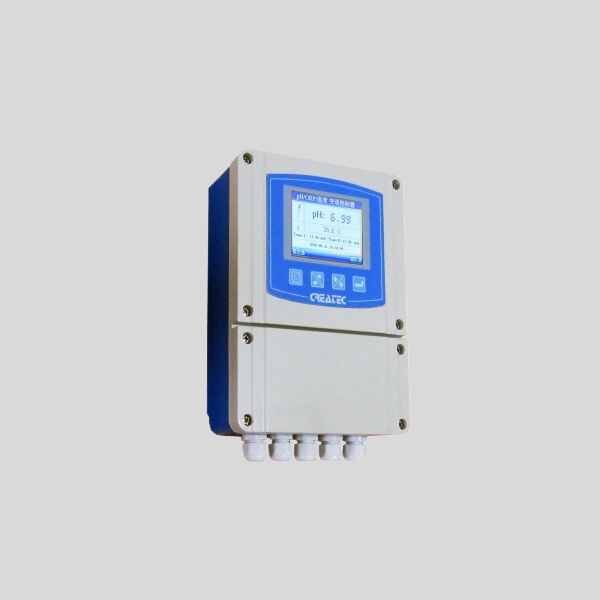
Shanghai ChiMay’s dissolved oxygen transmitter portfolio is built around optical sensing, with industrial transmitters that integrate into plant control systems. The total cost of ownership over five years is typically half that of an equivalent membrane-based installation, mostly because of the reduced maintenance labor.
Sensor Placement Decisions
Where the sensor goes determines what the data means. Best practice:
- One DO measurement at the reactor inlet to confirm the influent oxygen state
- Multiple DO measurements distributed across the reactor, typically one per cell or per aeration zone
- A final DO measurement at the reactor outlet to confirm the design DO has been achieved
- An additional DO sensor on the effluent line for compliance reporting
In a typical four-zone aerobic reactor, four to six DO sensors is the right number. Fewer sensors create dead zones where the operator is flying blind; more sensors add cost without proportional value.
Aeration Control: The Energy Question
Aeration is the largest single energy cost in most mining bioremediation plants. A typical aerobic reactor treating 5,000 cubic meters per day of mining effluent uses 200 to 400 kilowatts of blower power. DO-based control can reduce that consumption by 20 to 35 percent without compromising treatment performance.
The control architecture that delivers these savings:
- Cascade control with DO as the primary variable and blower output or valve position as the secondary
- Most-open-valve logic on multi-zone systems to ensure efficient air distribution
- Anti-windup and rate limits on the controller to prevent blower hunting
- Daily review of DO setpoints against process performance, not just instrument data
The DO sensor is the limit of this control architecture. A sensor that drifts or fouls causes the control system to over-aerate as a safety measure, which directly costs energy.
Calibration and Verification
Optical DO sensors require a structured calibration regime even though they are more stable than membrane sensors:
- Initial single-point air calibration during commissioning
- Monthly air calibration in the field
- Quarterly zero-point check using sodium sulfite solution
- Annual factory verification or replacement of the sensing element
Each step is short — typically less than ten minutes per sensor per month — but skipping the routine leads to data that cannot be defended in a regulatory review.
Common Failure Modes
Bioremediation plants that have struggled with DO measurement typically suffered from one of the following:
- Biofilm coating on the sensor face – Easily diagnosed as gradually declining response time. Solution: more frequent cleaning or relocation to a higher-velocity zone.
- Air entrainment near the sensor – Causes spurious high readings. Solution: re-mount away from aeration diffusers.
- Temperature compensation errors – DO solubility is strongly temperature-dependent, and an incorrect compensation gives misleading readings. Solution: verify temperature measurement and configuration.
- Sensor drift due to aging fluorescent dye – Typically visible as a slow loss of calibration over many months. Solution: planned replacement of the sensing cap.
Each of these failure modes appears in the data before it becomes a process problem. A discipline of daily trend review catches them early.
Comparing DO Targets Across Mining Applications
A representative comparison:
Cyanide destruction in gold tailings – DO target 3 to 4 mg/L. Below 2 mg/L the destruction reaction stalls; above 5 mg/L energy is wasted.
Thiocyanate biological oxidation – DO target 2 to 3 mg/L. Slower kinetics tolerate lower DO if reactor volume is adequate.
Ammonia nitrification at low temperature – DO target 2.5 to 3.5 mg/L. Cold winter conditions in many mining regions push the requirement higher.
Sulfate-reducing reactor inlet – DO must be below 0.2 mg/L. Sensor doubles as a safety alarm.
The target depends on the chemistry. The sensor needs to be capable in each range; an Optical DO sensor with a measurement range from 0 to 20 mg/L and a resolution of 0.01 mg/L at the low end is suitable for all of these applications.
Integration with Plant Control
A DO sensor that is not integrated with the blower or aerator control system is not delivering value. Best practice:
- Modbus or HART output from each DO transmitter to the PLC
- Real-time display on the operator interface, with trend charts available
- Historian storage at one-minute resolution for routine reporting and at one-second resolution for upset analysis
- Alarms on rate of change as well as absolute value
Shanghai ChiMay DO transmitters support the relevant industrial protocols and ship with engineering notes for typical control architectures.
Conclusion
Dissolved oxygen is the master variable for biological treatment of mining effluent, and the quality of the DO sensor estate determines whether the bioremediation system meets its design intent. Optical DO sensors, intelligent sensor placement, disciplined calibration, and proper integration with aeration control are the engineering essentials. Shanghai ChiMay’s dissolved oxygen transmitters are built for this service, and the field practices described in these notes reflect what consistently delivers a bioremediation plant that meets compliance and controls its operating cost rather than fighting it.