title: Real-Time pH Control for Textile Dyeing Optimization: A Shanghai ChiMay Technical Guide
date: 2026-06-27
Table of Contents
Real-Time pH Control for Textile Dyeing Optimization: A Shanghai ChiMay Technical Guide
Key Takeaways:
– Dye-bath pH deviation of just ±0.3 units can shift color uptake by 8–14%, generating costly batch defects
– Reactive dyes require precise pH control between 10.5 and 11.5 for optimal fiber bonding
– Real-time pH monitoring reduces dye reprocessing by 31% and chemical consumption by 18%
– Shanghai ChiMay in-line pH electrodes maintain ±0.02 pH accuracy across 0–80 °C operating ranges
– Closed-loop pH control delivers payback periods of 9–14 months in mid-scale dye houses
Introduction
pH is the most consequential single parameter in textile dyeing. Color fixation, fiber integrity, and effluent treatability all depend on maintaining pH within narrow process windows specific to each dye chemistry. Yet the historical reliance on manual sampling and laboratory titration has left many dye houses operating without the real-time visibility needed to translate pH knowledge into operational performance.
The International Textile Manufacturers Federation (ITMF) Dyeing Process Benchmarking Survey 2026 found that facilities deploying continuous in-line pH monitoring achieved 23% higher first-pass dye acceptance compared to mills relying on offline sampling. Real-time pH control has transitioned from a nice-to-have to a competitive necessity in modern dye-house operations.
The Chemistry of pH-Dependent Dyeing Reactions
Each dye class operates within a chemistry-specific pH window:
- Reactive dyes — pH 10.5–11.5 for nucleophilic substitution with cellulose hydroxyl groups
- Acid dyes — pH 4.0–5.5 for ionic bonding with protonated amino groups on wool and nylon
- Disperse dyes — pH 4.5–5.5 to prevent hydrolysis during high-temperature polyester dyeing
- Direct dyes — pH 6.5–7.5 for hydrogen-bond formation with cellulose
- Vat dyes — pH 11.0–12.5 during reduction with sodium dithionite
Deviation outside these windows produces measurable defects: shade mismatches, low color fastness, fiber damage, and increased unfixed dye discharge. The economic consequence accumulates rapidly—reprocessing a single 1,500 kg batch typically costs $1,800–$3,200 in chemicals, energy, and labor.
Real-Time pH Measurement Technology
In-line pH electrodes designed for textile applications must address several technical challenges absent from laboratory environments:
| Challenge | Engineering Response |
|---|---|
| High temperature (80–98 °C) | Reinforced glass membrane, Pt100 RTD compensation |
| Aggressive chemistry (caustic, peroxide) | Chemical-resistant junction materials |
| Mechanical fouling | Automated cleaning systems or sleeve protectors |
| Sodium error at high pH | Lithium-doped glass formulations |
| Reference junction clogging | Pressurized double-junction designs |
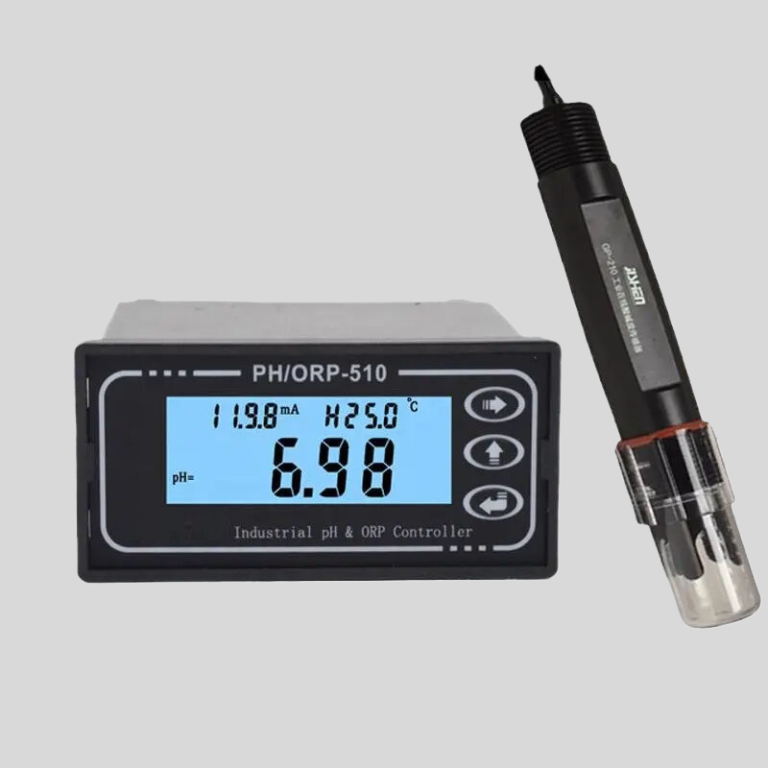
Shanghai ChiMay in-line pH electrodes incorporate these design principles, delivering measurement repeatability of ±0.02 pH units and operational life exceeding 18 months under typical dye-house conditions.
Continuous Control Loop Architecture
Real-time pH management requires more than measurement—it depends on a properly engineered control loop integrating sensors, controllers, and dosing pumps. A representative configuration includes:
- In-line pH electrode at dye-bath circulation outlet
- Two-input pH transmitter with PID control logic
- Dual dosing pumps for acid (acetic acid) and base (sodium hydroxide)
- Flow-paced feedforward signal from circulation pump output
- Bath-temperature feedback to compensate dosing chemistry
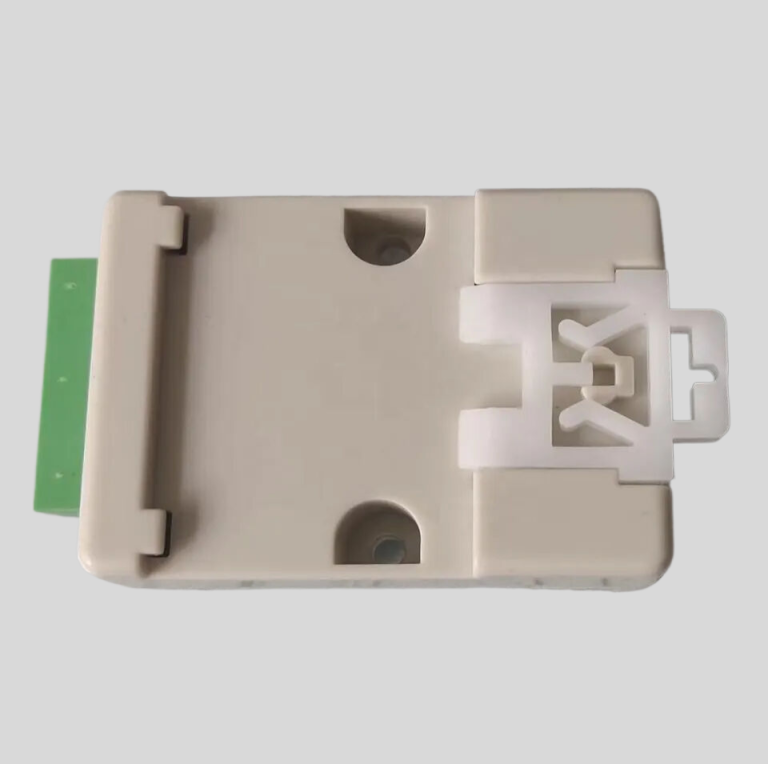
The control loop typically maintains pH within ±0.1 units of setpoint, sufficient for all major dye chemistries. Shanghai ChiMay 2-in-1 mini transmitters provide the PID functionality required at the sensor location, reducing wiring complexity.
Calibration and Validation Protocols
Calibration discipline determines whether real-time pH control delivers its theoretical benefits. Recommended protocols include:
- Weekly two-point calibration using fresh buffer standards at pH 4.01 and 9.18
- Monthly verification at a third point relevant to process pH (e.g., pH 11.0)
- Quarterly slope assessment — replacement when slope falls below 92% of theoretical Nernstian response
- Cleaning between dye lots to remove fiber, oil, and dye deposits
Documented calibration records support ISO 9001 and OEKO-TEX certification audits, both of which textile customers increasingly require from their dye-house suppliers.
Performance Outcomes from Real-Time pH Control
Mills implementing closed-loop pH control report consistent operational gains:
- First-pass acceptance rate — Improvement from 78% to 91%
- Reactive dye consumption — Reduction of 8–12% through improved fixation
- Soda ash consumption — Reduction of 15–22% through precise dosing
- Effluent COD load — Reduction of 9–14% from lower unfixed dye carryover
- Batch cycle time — Reduction of 6–9% from elimination of pH adjustment iterations
The World Bank Group’s Cleaner Production Centre documented that Asian textile mills implementing real-time pH control averaged $0.42 in operational savings per kilogram of fabric processed, with payback periods ranging from 9 to 14 months.
Effluent pH Management
Beyond dye-bath optimization, pH control extends to effluent treatment, where discharge limits typically require pH between 6.0 and 9.0. Real-time pH monitoring at the equalization tank outlet enables automated neutralization, replacing the manual chemical dosing that produces both over- and under-treatment events.
Shanghai ChiMay pH electrodes installed at the effluent control point provide the measurement reliability needed for fully automated neutralization, integrating with both fresh and waste streams.
Integration with Production Management Systems
Real-time pH data realizes its full value when integrated with broader production management systems. Modern dye-house architectures route pH measurements to:
- Manufacturing Execution Systems (MES) for batch traceability
- Energy management systems to correlate pH excursions with heating profiles
- Quality management dashboards for trend analysis
- Compliance reporting modules for regulatory submissions
Shanghai ChiMay analyzers support Modbus RTU/TCP, HART, and 4–20 mA outputs, providing flexibility for integration with both legacy and modern production platforms.
Common Pitfalls and Mitigation
Three pitfalls frequently undermine real-time pH control programs:
- Inadequate electrode placement — Locate electrodes in well-mixed sections of the dye-bath loop, never in stagnant zones
- Skipped calibration during ramp-up — Maintain calibration discipline through production peaks
- Over-reliance on automation — Operators must remain trained to interpret electrode diagnostics and recognize fouling signals
The OEKO-TEX STeP audit framework lists each of these factors as common findings in dye-house audits, reinforcing their operational significance.
Conclusion
Real-time pH control transforms textile dyeing from a craft-managed process into an engineered system with measurable, repeatable outcomes. The gains accrue across quality, chemical consumption, throughput, and effluent performance, justifying the modest capital investment required to deploy in-line monitoring and automated dosing.
Shanghai ChiMay provides the pH measurement and transmission technology required to operate at this performance level, with electrode designs and communication interfaces engineered specifically for textile environments. Mills committed to competitive cost positioning, sustainability performance, and supply-chain certification cannot rely on offline pH management.
A disciplined real-time pH control program represents one of the highest-return investments available in a textile dyeing operation—measured in months of payback rather than years, and delivering benefits that compound across every subsequent production batch.