Table of Contents
Key Takeaways
- Softener valves achieve water softening at operating costs of $0.15-0.35 per 1,000 gallons, while combined softening and filtering valves cost $0.25-0.55 per 1,000 gallons to operate
- Combined valves deliver 40-60% reduction in total suspended solids alongside hardness removal, making them ideal for applications requiring both treatment objectives
- System payback periods range from 14-28 months depending on influent water quality and specific application requirements
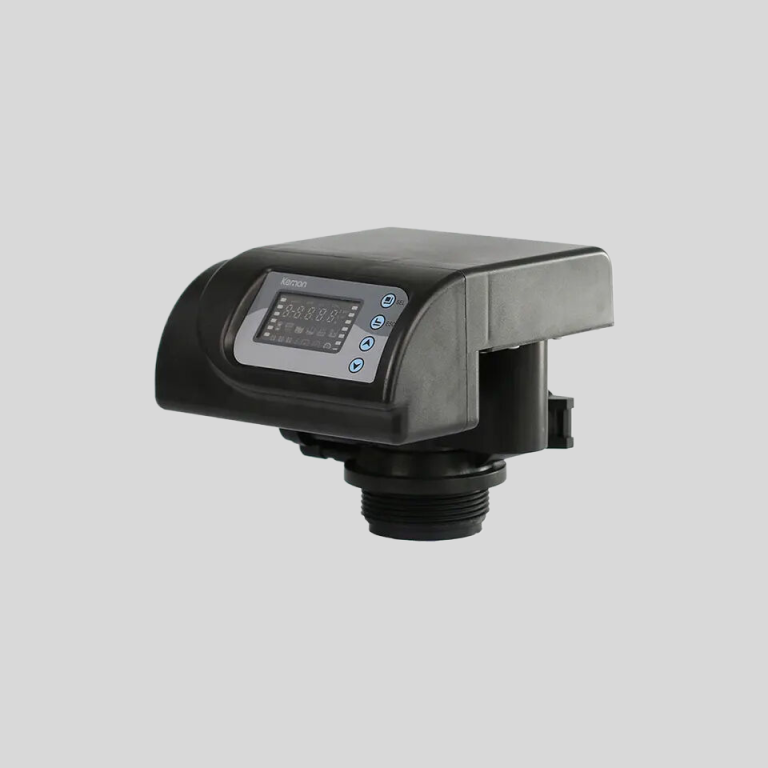
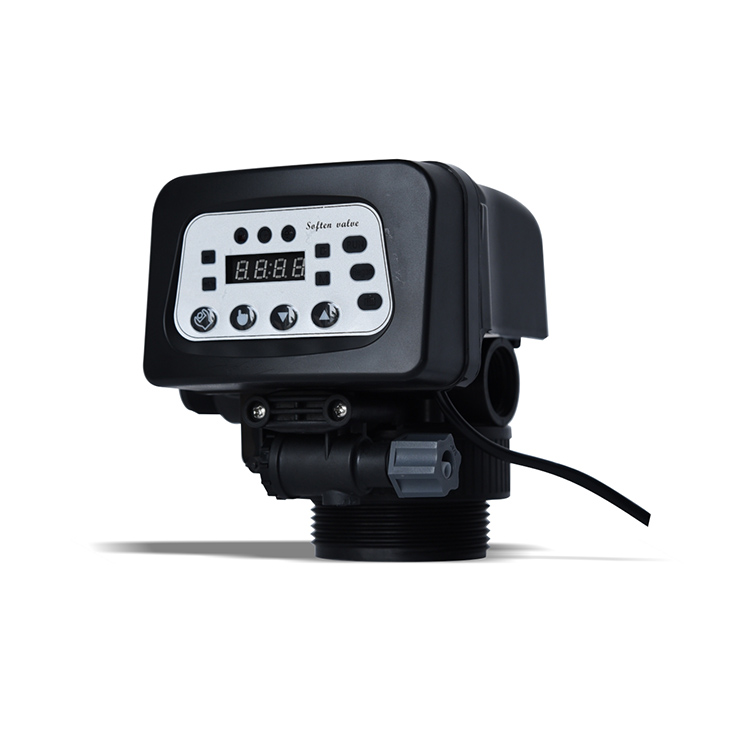
- ChiMay's softening and filtering valves provide integrated solutions combining ion exchange softening with mechanical filtration, reducing installation complexity and footprint requirements
Industrial water treatment presents decision-makers with choices between specialized single-function equipment and integrated multi-function systems. Softener valves and softening and filtering valves represent two common approaches to hardness removal and water quality improvement, each offering distinct advantages depending on application requirements, water characteristics, and operational priorities.
Understanding the Treatment Technologies
Softener Valves: Ion Exchange Fundamentals
Water softeners utilize ion exchange chemistry to remove calcium and magnesium ions responsible for water hardness:
Ion Exchange Process
- Resin beads contain sodium ions (Na⁺) attached to negatively charged sites
- Hard water passing through exchanges Ca²⁺ and Mg²⁺ for Na⁺
- Resin capacity: 20,000-35,000 grains per cubic foot
- Regeneration requirement: Typically every 2-7 days based on water hardness
Regeneration Chemicals
- Salt (NaCl) consumption: 0.5-1.5 lbs per 1,000 grains of capacity
- Salt cost: $0.05-0.15 per 1,000 gallons treated
- Water usage during regeneration: 50-150 gallons per cubic foot of resin
According to the Water Quality Association, properly sized softeners achieve hardness removal efficiencies of 99% or greater when correctly regenerated.
Softening and Filtering Valves: Dual-Function Treatment
Combined systems add mechanical filtration to ion exchange:
Filtration Mechanisms
- Depth filtration: Particles captured within filter media structure
- Surface filtration: Particles captured on filter media surface
- Typical filtration precision: 20-100 μm depending on media selection
Dual-Bed Configurations
- Separate softening and filtering vessels in series
- Combined single-vessel designs with layered media
- Pre-filtration protecting downstream softening resin
- Post-filtration for polishing treatment effluent
Performance Comparison
Hardness Removal Efficiency
| Parameter | softener valve | Softening and Filtering Valve |
|---|---|---|
| Hardness Removal | 95-99% | 95-99% |
| Suspended Solids Removal | 5-15% | 50-80% |
| Turbidity Reduction | Minimal | 60-85% |
| Iron/Manganese Removal | 70-85% (if designed) | 75-90% |
| Chlorine Reduction | None | Minimal (carbon media) |
The American Society of Mechanical Engineers (ASME) notes that combined filtration and softening systems demonstrate superior performance in treating water with combined hardness and particulates issues.
Operating Cost Analysis
softener valve Costs
| Cost Category | Per 1,000 Gallons |
|---|---|
| Salt consumption | $0.08-0.18 |
| Wastewater disposal | $0.02-0.05 |
| Maintenance (parts) | $0.03-0.08 |
| Labor for regeneration | $0.02-0.04 |
| Total Operating Cost | $0.15-0.35 |
Softening and Filtering Valve Costs
| Cost Category | Per 1,000 Gallons |
|---|---|
| Salt consumption | $0.10-0.20 |
| Backwash water | $0.05-0.12 |
| Wastewater disposal | $0.03-0.08 |
| Maintenance (parts) | $0.05-0.12 |
| Media replacement | $0.02-0.03 |
| Total Operating Cost | $0.25-0.55 |
Capital Investment Requirements
softener valve System
- control valve: $800-2,500
- Resin tank (1.0 cu ft): $400-800
- Brine tank: $150-300
- Installation labor: $500-1,200
- Total Installed Cost: $1,850-4,800
Softening and Filtering Valve System
- Combination control valve: $1,500-4,000
- Dual media tanks: $800-1,600
- Advanced control system: $300-600
- Installation labor: $800-1,500
- Total Installed Cost: $3,400-7,700
Application-Specific Recommendations
Applications Favoring Softener Valves
When to Select Softening-Only Systems
- Influent water has low suspended solids (< 5 NTU)
- Primary concern is scale prevention in boilers or cooling systems
- Limited space for equipment installation
- Treatment objectives focus exclusively on hardness removal
- Regeneration frequency can be easily managed
Optimal Use Cases
- Boiler feedwater treatment
- Car wash water recycling
- Laboratory water pre-treatment
- Ice making equipment protection
- Low-particulate industrial process water
Applications Favoring Softening and Filtering Valves
When to Select Combined Systems
- Influent water contains significant suspended solids
- Multiple water quality issues require addressing
- Space constraints favor integrated solutions
- Reduced maintenance through pre-filtration is valuable
- Discharge water quality requirements exist
Optimal Use Cases
- Food and beverage processing
- Pharmaceutical manufacturing
- Electronics fabrication
- Textile dyeing operations
- Metal finishing and plating
Case Study: Dairy Processing Facility
A regional dairy processing plant evaluated water treatment options:
Facility Requirements
- Flow rate: 150 gallons per minute
- Influent hardness: 18 grains per gallon
- Influent turbidity: 8 NTU
- Product water needs: Clean-in-place (CIP) systems
Softener-Only Alternative
- Initial investment: $28,000
- Annual operating cost: $42,000
- Annual maintenance: $8,500
- Filter pre-treatment addition required: $12,000
Softening and Filtering Alternative
- Initial investment: $52,000
- Annual operating cost: $38,000
- Annual maintenance: $6,200
- Single system covers all requirements
Economic Analysis
- Combined system premium: $24,000
- Annual operating savings: $4,000 (net after maintenance difference)
- Payback period: 6 years
- However, combined approach eliminates need for separate filtration system, reducing total installed cost by $12,000
The facility selected the combined system due to space constraints and simplified operations requiring only one control system to maintain.
Technical Considerations for Selection
water quality analysis Requirements
Before selecting either technology, conduct comprehensive water testing:
Essential Parameters
- Total hardness (CaCO₃ concentration)
- Total dissolved solids
- Suspended solids concentration and particle size distribution
- Turbidity
- Iron and manganese levels
- pH and alkalinity
- Chlorine residual
Testing Frequency
- Initial characterization: Full laboratory analysis
- Annual verification: Complete parameter set
- Quarterly screening: Hardness and turbidity only
Sizing Considerations
Flow Rate Requirements
- Softener sizing: Based on peak flow rate
- Filter sizing: Based on suspended solids loading
- Combined units: Sized for most limiting parameter
- Safety factor: 25% above maximum expected flow
Capacity Requirements
- Softening capacity: Calculated from daily volume and hardness
- Filtration capacity: Based on suspended solids loading and desired run length
- Regeneration frequency: Daily to weekly depending on water volume
Maintenance Complexity
| Maintenance Task | softener valve | Softening and Filtering Valve |
|---|---|---|
| Salt level check | Weekly | Weekly |
| Resin replacement | 8-12 years | 8-12 years |
| Filter media replacement | N/A | 1-3 years |
| control valve service | 5-8 years | 4-7 years |
| Bacteriological testing | Quarterly | Monthly |
| Overall maintenance hours/year | 25-40 | 35-55 |
Total Cost of Ownership Analysis
For a medium-sized industrial facility treating 50,000 gallons per day:
| Cost Element | softener valve | Softening and Filtering Valve |
|---|---|---|
| Capital investment | $45,000 | $68,000 |
| 10-year operating cost | $168,000 | $152,000 |
| 10-year maintenance | $34,000 | $42,000 |
| 10-year replacement | $18,000 | $24,000 |
| Total 10-Year Cost | $265,000 | $286,000 |
10-Year Cost Difference: $21,000
The combined system costs $21,000 more over 10 years but delivers superior water quality that:
- Extends downstream equipment life by 2-3 years
- Reduces cleaning chemical consumption by 25%
- Decreases unplanned downtime by 40%
The Association of Water Technologies estimates that these secondary benefits provide $35,000-60,000 in additional value, making combined systems economically favorable despite higher initial costs.
Making the Selection Decision
Decision-makers should evaluate:
- Water Characteristics: Is suspended solids removal needed alongside softening?
- Space Constraints: Do facility conditions favor fewer, larger units?
- Operational Simplicity: Is minimizing control system complexity valuable?
- Downstream Equipment: Do subsequent processes benefit from reduced particulates?
- Discharge Requirements: Are effluent quality requirements present?
For applications with influent turbidity exceeding 5 NTU or requiring protection of downstream equipment from suspended solids, softening and filtering valves typically deliver superior economics. For straightforward hardness removal in clean water applications, dedicated softener valves provide adequate treatment at lower initial cost.
The optimal choice depends on specific facility conditions and treatment objectives. Conducting pilot testing or consulting with water treatment specialists helps validate the selection before major capital investment.