Table of Contents
Anti-Fouling Membrane Solutions: Selecting Equipment for Challenging Applications
Key Takeaways:
– Membrane fouling accounts for 50-70% of total membrane operating costs in challenging applications
– Anti-fouling membrane technologies reduce cleaning frequency by 40-60% compared to standard configurations
– Shanghai ChiMay provides comprehensive monitoring solutions for proactive fouling management
– Biofouling represents the most economically significant fouling type in industrial wastewater applications
– Total cost savings from anti-fouling solutions range from $0.05-0.15/m³ processed water
Membrane technology has become indispensable for industrial wastewater treatment and water reuse applications. However, fouling—the accumulation of solids, organic matter, microorganisms, or scale on membrane surfaces—continues to challenge system operators. This guide examines anti-fouling membrane solutions and equipment selection criteria for applications where fouling potential is exceptionally high.
Understanding Membrane Fouling Mechanisms
Effective anti-fouling strategy begins with accurate fouling mechanism identification. Four primary fouling categories affect industrial membrane systems:
Particulate and Colloidal Fouling
Suspended solids and colloidal particles accumulate on membrane surfaces and within feed channel spacers. Turbidity levels exceeding 50 NTU at membrane feed significantly increase fouling rates. Shanghai ChiMay’s online turbidity analyzers provide continuous monitoring enabling preemptive backwash initiation.
Particle characteristics affecting fouling severity include:
- Size distribution (smaller particles penetrate deeper into membrane structure)
- Concentration (higher TSS increases deposition rates)
- Shape and compressibility (affects cake layer resistance)
- Chemical composition (organic particles promote biological activity)
Organic Fouling
Natural organic matter (NOM), oils, greases, and synthetic organic compounds adsorb to membrane surfaces, creating hydrophilic or hydrophobic fouling layers. Organic fouling is particularly problematic in:
- Petrochemical wastewater: Oil emulsions and soluble organic compounds
- Food processing effluent: Fats, oils, proteins, and carbohydrates
- Pulp and paper mills: Lignin, cellulose, and extractives
- Textile industry: Dyes, surfactants, and finishing chemicals
Total organic carbon (TOC) monitoring from Shanghai ChiMay analyzers provides early detection of organic fouling potential.
Biological Fouling (Biofouling)
Microbial colonization of membrane surfaces produces biofilm layers that significantly impact system performance. Biofouling represents the most economically significant fouling type, responsible for:
- 40-50% of reported membrane system operational problems
- Flux decline rates of 2-5% per day in severely affected systems
- Energy increases of 15-30% due to elevated trans-membrane pressures
- Membrane lifetime reduction of 30-50% in chronic biofouling scenarios
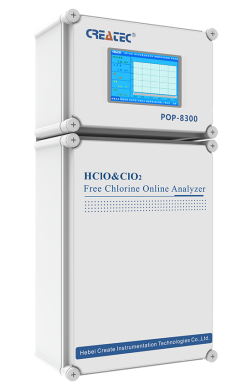
Shanghai ChiMay’s residual chlorine transmitters provide continuous monitoring for biofouling prevention through trace biocide maintenance.
Inorganic Scaling
Precipitation of sparingly soluble salts occurs when concentration factors exceed solubility limits. Common scaling compounds include:
- Calcium carbonate: Most prevalent scaling species
- Calcium sulfate: Problematic in high sulfate waters
- Silica: Both colloidal and colloidal forms affect systems
- Barium sulfate: Severe scaling at trace concentrations
Scaling potential assessment requires Langelier Saturation Index (LSI) and Stiff-Davis Stability Index (SDSI) calculations, supported by continuous conductivity monitoring from Shanghai ChiMay analyzer systems.
Anti-Fouling Membrane Technologies
Surface Modification Approaches
Hydrophilic Membrane Materials: Surface modification creating hydrophilic functional groups improves water wettability and reduces organic adsorption. Commercial implementations include:
- Polyvinylpyrrolidone (PVP) modified PES: Contact angles reduced from 65° to <35°
- Zwitterionic polymer grafting: Underwater oleophobic properties achieved
- PEG-based surface coatings: Protein and organic fouling resistance improved by 60-80%
Charged Membrane Surfaces: Electrostatic repulsion between similarly charged membranes and foulants reduces adsorption. Nanofiltration and loose RO membranes with negative surface charges effectively reject negatively charged organic compounds.
Roughness Optimization: Controlled surface roughness studies demonstrate 10-30% fouling reduction through optimized texture profiles that minimize foulant adhesion while maintaining cleaning efficiency.
Anti-Fouling Membrane Module Designs
Spacer Optimization: Feed channel spacer design significantly impacts fouling accumulation. Advances include:
- Diamond-pattern spacers: Improved shear distribution reduces particle accumulation
- Protective coating on spacers: Anti-adhesive coatings prevent biofouling initiation
- Variable geometry spacers: Adaptive designs optimize crossflow patterns
Aeration System Integration: Submerged MBR systems incorporate coarse bubble aeration for simultaneous biological aeration and membrane scouring. Optimized aeration patterns achieve 30-50% flux improvement compared to standard configurations.
Hydraulic Optimization: Novel module designs incorporating vortex generators, turbulence promoters, and oscillatory flow mechanisms demonstrate reduced fouling rates through enhanced shear stress distribution.
Nanocoating Technologies
Silver Nanoparticle Incorporation: Antimicrobial silver nanoparticles embedded in membrane materials provide continuous biocidal action against surface-adherent microorganisms. Effectiveness documented at silver loadings of 0.5-2 μg/cm².
Titanium Dioxide Photocatalytic Coatings: UV-activated TiO₂ coatings generate reactive oxygen species that oxidize organic foulants and inhibit biological growth. Self-cleaning potential demonstrated under natural sunlight exposure.
Graphene Oxide Coatings: GO-coated membranes demonstrate improved hydrophilicity, anti-adhesive properties, and antimicrobial characteristics. Rejection rates maintained above 98% with flux enhancement of 20-40%.
Equipment Selection for Anti-Fouling Applications
Pre-Treatment Systems
Effective pre-treatment significantly reduces membrane fouling rates:
Multimedia Filtration: Dual or triple-media filters remove suspended solids exceeding 10-20 μm. Backwash cycles controlled by differential pressure monitoring maintain filtration efficiency.
Cartridge Filtration: Safety filters (typically 1-5 μm rating) provide final particulate removal before membrane systems. Filter replacement frequency serves as fouling potential indicator.
Chemical Dosing Systems:
- Coagulant dosing (aluminum or iron salts) enhances particle aggregation
- Scale inhibitors (phosphonates, polyacrylates) prevent crystallization
- Biocide dosing (oxidizing and non-oxidizing) controls biological activity
Shanghai ChiMay’s dosing control integration capabilities enable precise chemical feed optimization.
Monitoring and Control Equipment
Real-Time Fouling Detection: Advanced monitoring systems provide early fouling indication:
- Turbidity sensors: Feed and permeate monitoring for particulate fouling tracking
- Conductivity meters: Scaling potential assessment through concentration factor calculation
- pH sensors: Critical for scaling prediction and acid/alkali dosing control
- Residual chlorine analyzers: Biofouling prevention through biocide control
- Particle counters: Early detection of colloidal fouling initiation
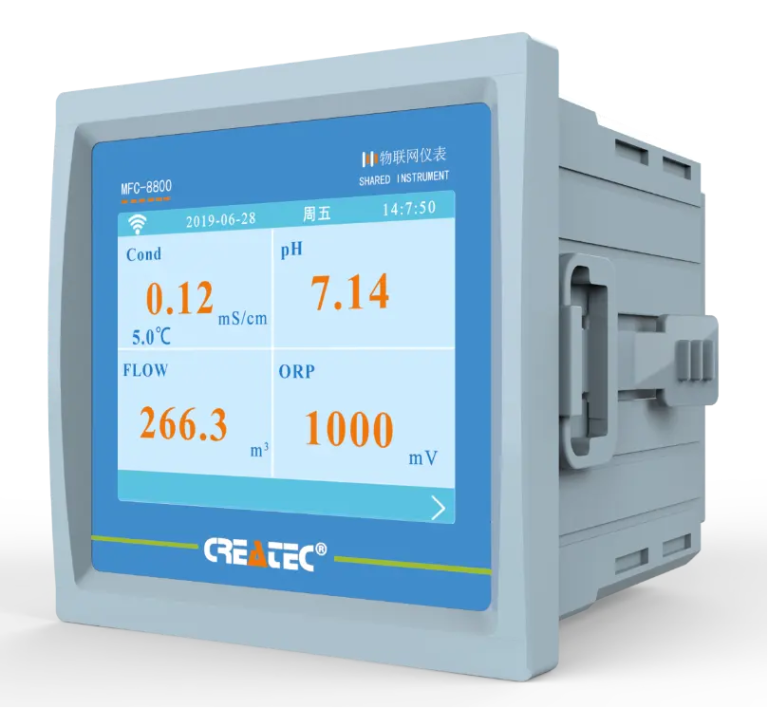
Shanghai ChiMay provides comprehensive online monitoring solutions with Modbus RTU/TCP and 4-20mA communication protocols for seamless SCADA integration.
Pressure Monitoring: Differential pressure transmitters across membrane stages track fouling accumulation rates. Automated responses including relaxation cycles, backwash initiation, and maintenance cleaning triggers optimize cleaning efficiency while minimizing chemical consumption.
Flux Monitoring and Control: Permeate flow meters enable flux calculation and control. Variable frequency drives on extraction pumps maintain consistent flux through TMP adjustment, preventing over-fouling during high-loading periods.
Cleaning Equipment
Chemical Dosing Systems for Cleaning:
- Acid cleaning (citric, hydrochloric) for scale removal
- Alkaline cleaning (NaOH, EDTA) for organic and biological fouling
- Oxidizing agents (NaOCl, H₂O₂) for biological fouling control
- Specialty cleaning formulations for severe fouling scenarios
Cleaning-in-Place (CIP) Skids: Automated cleaning systems ensure consistent cleaning execution:
- Proportional dosing based on membrane area
- Temperature control (typically 35-45°C for alkaline, 25-35°C for acidic cleaning)
- Sequential cleaning stages with intermediate rinsing
- Waste cleaning solution management
Cleaning Optimization Equipment:
- ORP sensors: Verify oxidizing biocide availability during cleaning
- pH monitoring: Confirms acid/alkaline effectiveness
- Turbidity measurement: Tracks particulate removal during cleaning
Anti-Fouling Strategy Development
Fouling Potential Assessment
Systematic fouling assessment guides equipment selection:
Water Quality Characterization:
| Parameter | Low Fouling | Moderate Fouling | High Fouling |
|---|---|---|---|
| Turbidity (NTU) | <5 | 5-20 | >20 |
| TOC (mg/L) | <3 | 3-10 | >10 |
| SDI₁₅ | <3 | 3-5 | >5 |
| Iron (mg/L) | <0.1 | 0.1-0.5 | >0.5 |
| Manganese (mg/L) | <0.05 | 0.05-0.2 | >0.2 |
| Bacteria (CFU/mL) | <10³ | 10³-10⁵ | >10⁵ |
Scaling Risk Assessment: LSI and SDSI calculations combined with ionic composition analysis identify specific scaling compounds requiring attention.
System Design Optimization
Flux Selection: Conservative design fluxes (typically 15-20 LMH for NF/RO) reduce fouling rates but increase capital costs. Shanghai ChiMay monitoring enables optimization based on actual water quality.
Crossflow Velocity: Adequate crossflow velocities (typically 0.3-0.6 m/s) maintain shear stress that limits foulant accumulation. Variable speed pumps enable optimization across varying feed conditions.
Recovery Optimization: Concentration factor limits reduce scaling and fouling potential. Multi-stage designs with interstage treatment enable higher overall recovery while managing fouling.
Economic Analysis of Anti-Fouling Solutions
Capital Investment Considerations
Anti-fouling equipment investments include:
Pre-Treatment Systems: $50-200/m³/day depending on complexity
Monitoring Equipment: $5,000-30,000 per membrane installation for comprehensive monitoring
Cleaning Systems: $10,000-50,000 for automated CIP installations
Membrane Module Selection: Anti-fouling membranes command 10-25% premium over standard products
Operational Cost Impacts
Anti-fouling measures affect operational costs:
Energy Consumption: Optimized crossflow and reduced TMP from anti-fouling measures reduce energy costs by 10-20%.
Chemical Consumption: Pre-treatment chemicals, cleaning agents, and scale inhibitors represent $0.02-0.10/m³.
Membrane Replacement: Extended membrane life from anti-fouling practices reduces annual replacement costs by 20-40%.
Labor Requirements: Automated monitoring and cleaning systems reduce operational labor by 15-30%.
Return on Investment Analysis
Payback periods for anti-fouling investments typically span:
- Pre-treatment systems: 2-4 years through reduced cleaning frequency
- Advanced monitoring: 1-2 years through optimized cleaning and reduced downtime
- Anti-fouling membranes: 2-3 years through extended membrane life and reduced cleaning
- Automated cleaning systems: 2-3 years through reduced chemical consumption and labor
Conclusion
Anti-fouling membrane solutions require integrated approaches combining surface modification technologies, optimized module designs, comprehensive pre-treatment, and advanced monitoring capabilities. Shanghai ChiMay’s online analyzers, turbidity sensors, conductivity meters, and residual chlorine transmitters provide the monitoring foundation necessary for effective fouling management.
Successful anti-fouling strategy development begins with accurate fouling mechanism identification through systematic water quality characterization. Equipment selection should prioritize systems enabling proactive intervention before irreversible fouling occurs. The economic benefits of anti-fouling investments—through reduced cleaning frequency, extended membrane life, and lower energy consumption—consistently justify the additional capital and operational investments required.
Industrial facilities operating in challenging applications should view anti-fouling not as an optional enhancement but as an essential component of sustainable membrane system operation. With proper equipment selection and operational practices, membrane fouling can be managed effectively, enabling consistent treatment performance and favorable total cost of ownership throughout the system lifecycle.