Troubleshooting pH Meter Calibration Issues
Calibrating a pH meter is a crucial step in ensuring accurate and reliable measurements. However, even with proper care and maintenance, calibration problems can still arise. These issues can be frustrating and time-consuming to troubleshoot, but understanding common problems and their solutions can help streamline the process.
One common issue that users encounter when calibrating a pH meter is electrode contamination. Contaminants such as dirt, oils, or chemicals can build up on the electrode surface, affecting its performance and accuracy. To address this problem, it is essential to regularly clean the electrode with a gentle cleaning solution and rinse it thoroughly with deionized water. Additionally, storing the electrode properly in a storage solution when not in use can help prevent contamination.Another common calibration problem is electrode aging. Over time, electrodes can degrade and lose their sensitivity, leading to inaccurate readings. If you suspect that your electrode is aging, it may be time to replace it with a new one. Regularly checking the condition of the electrode and replacing it as needed can help maintain the accuracy of your pH meter.
In some cases, calibration issues may arise due to improper calibration procedures. It is essential to follow the manufacturer’s instructions carefully when calibrating your pH meter. This includes using the correct buffer solutions, allowing the electrode to stabilize in each solution, and ensuring that the readings are stable before proceeding to the next calibration point. Taking the time to calibrate your pH meter correctly can help prevent calibration problems in the future.
Temperature can also impact the accuracy of pH measurements. pH meters are typically calibrated at a specific temperature, usually 25 degrees Celsius. If the temperature of the sample being measured differs significantly from the calibration temperature, it can affect the accuracy of the readings. Some pH meters have automatic temperature compensation features to account for temperature variations, but it is essential to ensure that this feature is functioning correctly.
Calibration problems can also arise if the pH meter is not properly maintained. Regular maintenance, such as cleaning the electrode, replacing the reference electrolyte, and calibrating the meter regularly, can help prevent calibration issues. It is essential to follow the manufacturer’s recommendations for maintenance to ensure the optimal performance of your pH meter.
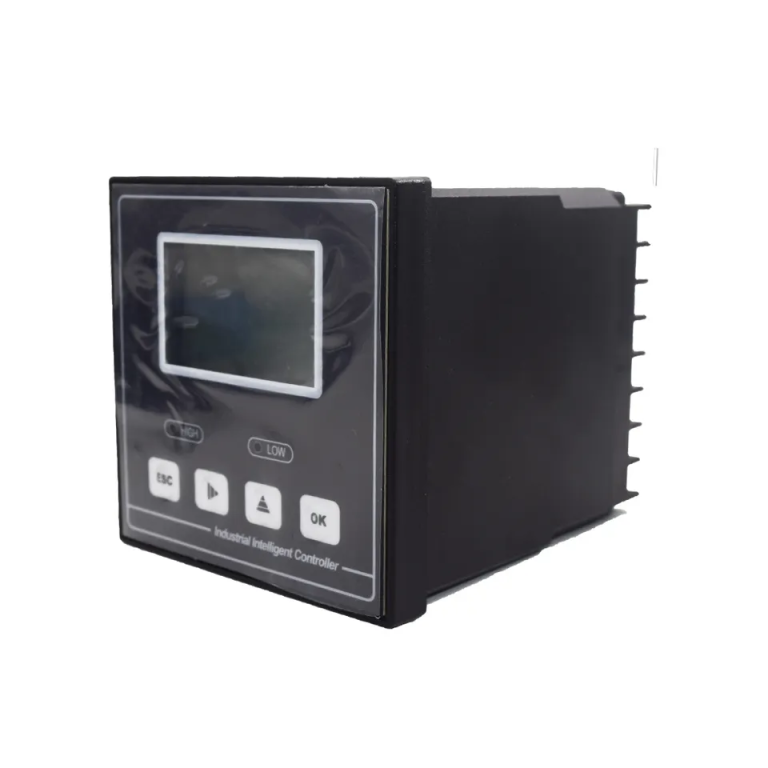
| Model No. | CCT-8301A Conductivity Resistivity Online Controller Spec | |||
| \u3000 | Conductivity | Resistivity | TDS | Temp. |
| Measurement range | 0.1\u03bcS/cm\uff5e40.0mS/cm | 50K\u03a9\u00b7cm\uff5e18.25M\u03a9\u00b7cm | 0.25ppm\uff5e20ppt | (0\uff5e100)\u2103 |
| Resolution | 0.01\u03bcS/cm | 0.01M\u03a9\u00b7cm | 0.01ppm | 0.1\u2103 |
| Accuracy | 1.5level | 2.0level | 1.5level | \u00b10.5\u2103 |
| Temp.Compensation | Pt1000 | |||
| Working Environment | Temp.\u00a0(0\uff5e50)\u2103; \u00a0relative humidity \u226485%RH | |||
| Analog Output | Double channel (4\uff5e20)mA\uff0cInstrument/Transmitter for selection | |||
| Control Output | Triple channels photo-electronic semiconductor relay ,Load capacity: AC/DC 30V\uff0c50mA(max) | |||
| Power Supply | DC 24V\u00b115% | |||
| Consumption | \u22644W | |||
| Protection Level | IP65\uff08with the back cover\uff09 | |||
| Installation | Panel mounted | |||
| Dimension | 96mm\u00d796mm\u00d794mm (H\u00d7W\u00d7D) | |||
| Hole Size | 91mm\u00d791mm(H\u00d7W) | |||
If you have tried troubleshooting common calibration problems and are still experiencing issues, it may be time to contact the manufacturer or a professional technician for assistance. They can help diagnose the problem and provide guidance on how to resolve it effectively.
In conclusion, calibration problems are a common issue that pH meter users may encounter. By understanding common problems such as electrode contamination, aging, improper calibration procedures, temperature variations, and lack of maintenance, users can take proactive steps to prevent and address calibration issues. Regular cleaning, maintenance, and calibration are essential for ensuring the accuracy and reliability of pH measurements. If problems persist, seeking assistance from the manufacturer or a professional technician can help resolve calibration issues effectively.