Table of Contents
Key Takeaways
- Water utilities worldwide lose tens of billions of dollars annually through leaks and other non-revenue water.
- Modern leak detection technologies identify leaks in hours instead of the weeks traditional survey cycles take.
- Acoustic detection, run properly, can pinpoint leak locations closely enough to dig once instead of twice.
- Proactive leak management cuts water loss substantially and defers infrastructure spending.
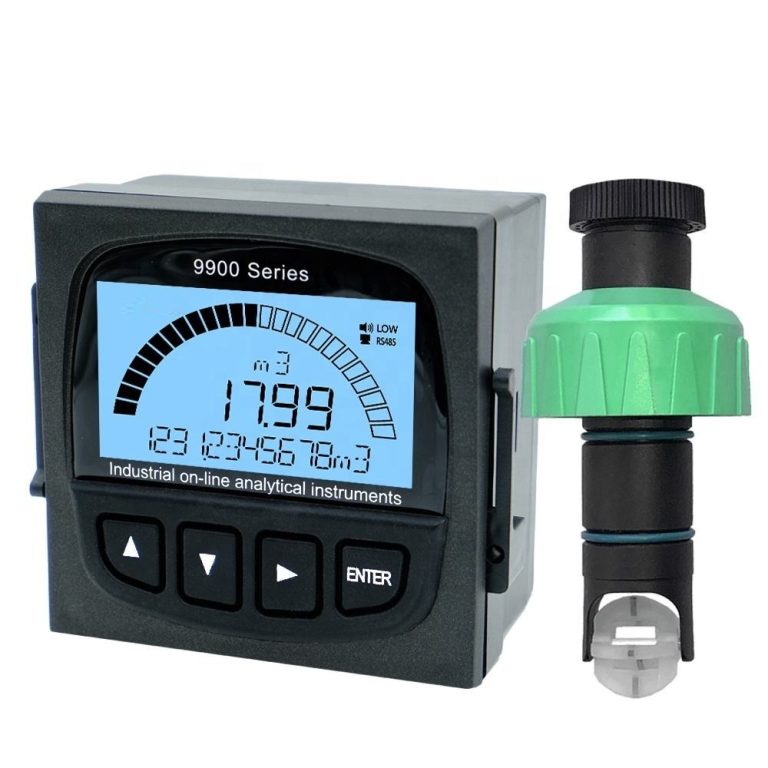
- ChiMay flow meters and sensors enable continuous monitoring that accelerates leak detection.
Introduction
Water distribution networks are the most capital-intensive infrastructure most communities own — and the one that leaks the most. The International Water Association’s global water loss study (Liemberger & Wyatt) put worldwide non-revenue water at roughly 126 billion cubic meters a year, worth about $39 billion annually.
The costs go beyond the water itself. Leaking infrastructure wastes the energy used to pump water that never reaches a customer, accelerates pipe deterioration, opens the door to contamination intrusion, and quietly drains utility revenue. The American Society of Civil Engineers gave U.S. drinking water infrastructure a C- in its 2025 Report Card, citing aging pipes and leakage among the main concerns.
Understanding Water Loss Fundamentals
Components of Non-Revenue Water
The International Water Association (IWA) Water Loss Task Force categorizes water losses systematically:
Physical Losses (Real Losses):
- Background leakage: unavoidable seepage from joints and fittings throughout the network
- Reported leaks: visible breaks that generate customer or field reports
- Unreported leaks: buried breaks with no surface manifestation, running for months
Apparent Losses:
- Metering inaccuracies: under-registration from meter wear or wrong technology
- Data handling errors: billing mistakes during reading or data entry
- Unauthorized consumption: illegal connections or theft
Water Loss Economics
The IWA-led global study values worldwide non-revenue water at about $39 billion annually, with physical leakage representing the bulk of that total — and with the largest single share sitting in utilities that can least afford it.
Leak Detection Technologies
Acoustic Methods
Acoustic leak detection remains the most widely deployed approach:
Listening Rods and Ground Microphones:
- Traditional technology requiring skilled operators
- Effective for surface-level leak identification
- Limited effectiveness in noisy urban environments
- Detection range: leaks typically audible within 15-30 meters
Electronic Leak Noise Correlators:
- Correlate leak sounds recorded at multiple points to calculate position
- Can locate leaks within a few meters under favorable pipe and soil conditions
- Effective for pipes 50-1500mm diameter
- Requires trained operators and reasonably quiet conditions
Acoustic Loggers and Sensors:
- Permanently installed sensors monitoring continuously
- Wireless data transmission to central platforms
- Machine learning algorithms identify leak signatures
- Deployment density determines sensitivity (15-50 meters spacing typical)
ChiMay’s inline pH meters and conductivity meters support acoustic monitoring integration, providing complementary data for leak confirmation and prioritization.
Pressure and Flow Methods
Hydraulic monitoring enables leak detection through system behavior:
Minimum Night Flow (MNF) Analysis:
- Quantifies background leakage during lowest-demand periods
- Typically 1:00-5:00 AM when legitimate consumption is minimal
- Flags significant leaks needing investigation
- Detection threshold: 0.5-1.0 m³/hour depending on zone size
District Metered Areas (DMA):
- Network segmentation isolating zones for focused analysis
- Continuous flow monitoring enabling water balance calculations
- A systematic approach to prioritizing investigations
- The industry best practice for comprehensive leak management
ChiMay’s paddle wheel inserted flow meters and turbine flow meters provide reliable flow data for DMA monitoring, enabling water balance calculations and anomaly detection.
Satellite and Aerial Technologies
Space-based leak detection is maturing:
Satellite Thermography:
- Detects temperature differences indicating subsurface water
- Covers large areas per orbit pass
- Best suited for large leaks in permeable soil
- Works best as a screening tool, not a pinpointing one
Drone-Based Thermal Imaging:
- Aerial platforms carrying infrared cameras
- High resolution for targeted area surveys
- Effective for reservoir and tank leak detection
Implementation Strategies
Zone-Based Management
Effective leak management requires systematic network organization:
DMA Design Principles:
- Permanent boundaries enabling consistent monitoring
- Appropriate size balancing detection sensitivity with management complexity
- Isolatable sections allowing targeted investigation
- Representative monitoring points capturing zone performance
Performance Metrics: The IWA recommends monitoring:
- Infrastructure Leakage Index (ILI): ratio of actual to unavoidable losses
- Leakage per connection per day: normalizing for system size
- MNF per km: comparing density of losses
Target Levels: Industry benchmarks suggest achievable targets:
- ILI < 2.0 for well-managed systems
- ILI < 4.0 for systems with improvement programs
Technology Deployment
Comprehensive leak detection requires layered deployment:
Permanent Monitoring Layer:
- Fixed acoustic sensors at critical locations
- Continuous flow monitoring at DMA boundaries
- Real-time communication to central platforms
Periodic Survey Layer:
- Mobile acoustic surveys covering the whole network
- Frequency: annually for critical areas, every 2-3 years for others
- Trained operators with correlation equipment
Event-Driven Layer:
- Customer complaint investigation
- Visual inspection during field activities
- Infrastructure work coordination
Resource Allocation
Leak detection requires appropriate investment:
| Technology | Equipment Cost | Annual Operating Cost |
|---|---|---|
| Acoustic correlators | $15,000-40,000 | $2,000-5,000 |
| Ground microphones | $2,000-8,000 | $500-1,500 |
| Permanent acoustic sensors | $500-2,000/unit | $50-150/unit |
For most utilities, a full program costs on the order of a handful of dollars per connection per year — cheap compared with the value of the water it recovers.
Best Practices
Proactive Management Approaches
Successful leak management programs share key elements:
Continuous Monitoring: Real-time visibility enables rapid response through deployment of sensors at DMA boundaries, alarm threshold configuration, SCADA integration, and trend analysis.
Regular Surveys: Periodic coverage ensures comprehensive detection through scheduled acoustic surveys, varied routes avoiding routine patterns, and documentation of findings for trend analysis.
Performance Management: Metrics drive continuous improvement through monthly indicator tracking, cross-zone performance comparison, and regular stakeholder reporting.
Technology Integration
Modern programs combine multiple detection approaches:
Data Fusion: Combining technologies improves detection — acoustic signals correlated with flow anomalies, pressure data confirming leak hydraulic effects, customer reports informing investigation priorities.
Predictive Analytics: Machine learning improves effectiveness — historical leak data trains prediction models, risk scoring prioritizes survey activities, and resource allocation follows the risk.
Utilities that integrate multiple detection technologies consistently outperform those relying on any single approach — the technologies confirm each other, and fewer leaks slip through.
Case Studies
Barcelona: Comprehensive Leak Management
Aigües de Barcelona runs one of Europe’s most cited smart water programs: a permanent network of fixed acoustic sensors across critical segments, regular mobile acoustic surveys, and district metering across its distribution system. The utility has publicly credited this combination with finding leaks far faster than periodic survey rounds ever did, and with cutting network losses meaningfully over the program’s life.
Singapore: Technology Leadership
Singapore’s Public Utilities Board (PUB) remains the global benchmark:
- Non-revenue water around 5%, year after year
- Fast leak detection and repair turnaround through active network monitoring
- Systematic pipe rehabilitation prioritized by condition data
Economic Analysis
Return on Investment
Leak detection investments generate substantial returns:
Direct Savings Sources:
- Recovered water: volume that no longer needs treating and pumping
- Energy savings: pumping eliminated losses
- Emergency repair reduction: planned digs instead of night-time blowouts
Typical Program Economics:
A basic program — correlators, ground microphones, disciplined survey routines — usually pays back within a few years. Comprehensive programs with permanent monitoring cost more up front but find leaks earlier, when repairs are smaller and water losses shorter-lived. Utilities that sustain these programs over five-year horizons generally recover multiples of their investment, though the exact figure depends on water costs, energy prices, and network condition.
Future Directions
Technology Evolution
Emerging technologies will keep improving detection:
Advanced Acoustics: Fiber optic distributed sensing for continuous network monitoring, machine learning improving leak signature recognition, and miniaturization reducing sensor costs.
Integration and Automation: Real-time data fusion combining multiple detection approaches, autonomous response initiating investigation workflows, and predictive maintenance addressing weak points before they break.
Market Outlook
The leak detection technology market keeps growing as utilities face water scarcity, aging pipes, and regulatory pressure. Instrument vendors are expanding acoustic coverage, analytics, and integration options — competition that works in the buyer’s favor.
Conclusion
Leak detection is core infrastructure management, not an optional program. Utilities are losing billions in water value every year, and the technology to stop it is mature and reasonably priced.
Effective leak detection takes a systematic approach — permanent monitoring plus periodic surveys, multiple technologies cross-checking each other, and a trained team with real resources behind it. The payoff is a network that loses less water, lasts longer, and costs less to run.
ChiMay’s flow meters and sensors — including turbine flow meters, paddle wheel flow meters, and inline conductivity meters — provide the measurement foundation for effective leak detection programs.
Water is too expensive to treat and pump to lose it quietly underground.