Oil, gas, and petrochemical operators are among the largest buyers of industrial water-testing and monitoring equipment. By most industry counts they sit second only to municipal and drinking-water systems, and ahead of pharmaceuticals, food and beverage, or pulp and paper taken individually. For a decade that spend was filed under compliance. It is now defended in board packs as an operating line item.
Three pressures arrived at roughly the same time. Effluent limits tightened. Produced-water reuse moved from pilot project to standard operating practice in the Permian and several other basins. And ESG disclosure stopped being voluntary in the markets where these operators raise capital. Each of the three is a measurement problem before it is an engineering problem — you cannot demonstrate permit compliance, reuse quality, or water intensity without continuous data.
Table of Contents
Why the Sector’s Water Share Matters
Industry analysts consistently rank oil, gas, and petrochemicals as the second-largest source of industrial water-testing demand, behind municipal and drinking-water systems. The ranking has held for years, even as absolute spend has grown, because hydrocarbon operations touch water at almost every step of production and refining.
For boards and investors, that position is a useful reminder that water measurement is not an ESG side conversation. It is a material and growing line item in the operating budget of every hydrocarbon-processing business.
Why the Sector Is Reinvesting Now
1. Effluent Limits Are Tightening
U.S. NPDES refinery permits keep lowering allowable TSS, COD, and phenolics loads. OSPAR limits dispersed oil in produced-water discharges in the North Sea to a flow-weighted monthly average of 30 mg/L under Recommendation 2001/1, and that figure now shapes operator specifications across the region. China’s GB 31570-2015 for petroleum refining wastewater remains one of the world’s most demanding national standards. At limits this tight, compliance without continuous sensors is not realistic.
2. Produced-Water Reuse Is Scaling
Permian basin forecasts for 2025 put recycled produced water at roughly a quarter to a third of total volumes, with the balance still going to disposal wells. Individual operators run ahead of the basin average: Diamondback has publicly targeted 65% recycled water for completions, and Devon 50%. Reuse is a measurement-intensive business — you cannot pump variable-quality water into a frac blender without knowing what you have.
3. ESG Disclosure Is Becoming Enforceable
IFRS S2 and the EU’s CSRD now require categorised water withdrawal and discharge data from companies in scope, and lenders use CDP water disclosure in credit assessment. The U.S. SEC climate disclosure rule, by contrast, is halted in litigation and is no longer being defended by the Commission, so U.S. operators should not build reporting plans around it. The binding requirements are coming from Europe, from lenders, and from state permitting. In all three cases, manual sampling logs are no longer sufficient audit evidence.
Where the Money Is Going Inside the Refinery
Sensor investment is not spread evenly across the refinery. Budget tracking shows it concentrating in five zones.
| Investment Zone | Typical Sensors Added | Driver |
|---|---|---|
| Sour-water stripper | COD, pH, NH3-N, conductivity | WWTP protection |
| API separator outfall | Oil-in-water, TSS, turbidity | Permit compliance |
| Desalter effluent | Conductivity, pH, oil-in-water | Product quality + reuse |
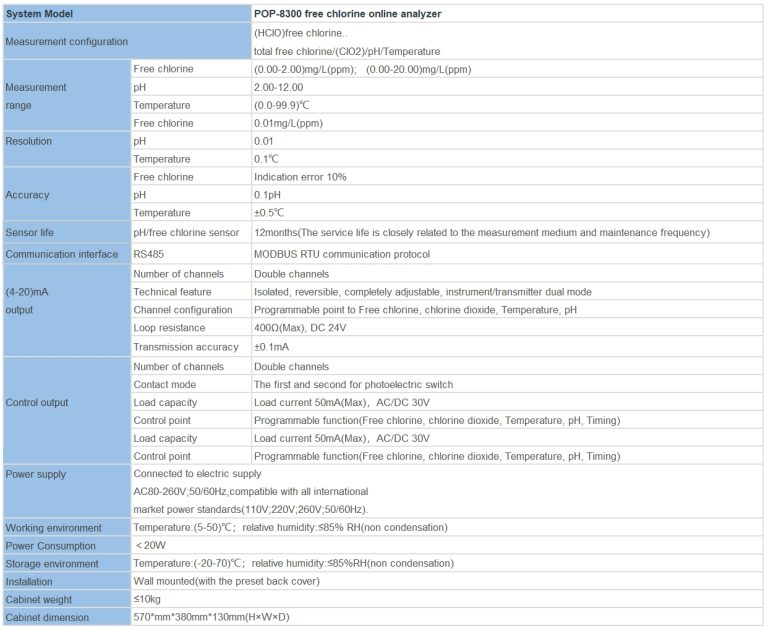
| Cooling-water side stream | Conductivity, chlorine, pH | Reliability KPI |
| Storm-water discharge | Oil-in-water, TSS, flow | Regulatory and ESG |
Most of the new sensor capex in a modern refinery upgrade lands in these five zones.
Comparative View: Traditional Sensor Portfolio vs. Reinvestment Portfolio
| Attribute | Traditional (Pre-2020) | Reinvestment (2024–2028) |
|---|---|---|
| Coverage of key parameters | 3 of 5 | All 5 plus flow |
| Data cadence | Grab samples 1–4x/day | Continuous, 1-second historian |
| Data integration | Local panels, paper logs | DCS + historian + cloud |
| ESG-ready reporting | Manual assembly | Automated, time-stamped |
| Sensor family standardization | Multi-vendor patchwork | Consolidated to 1–2 vendors |
| Total lifecycle cost | Higher (opex heavy) | Lower (capex-front-loaded) |
Shanghai ChiMay’s Position in the Reinvestment Cycle
Shanghai ChiMay’s water quality analyzer and control valve portfolio maps directly onto the five reinvestment zones described above. The relevant instruments include:
- In-line conductivity meters and pH electrodes — desalter, caustic treating, cooling-water side stream
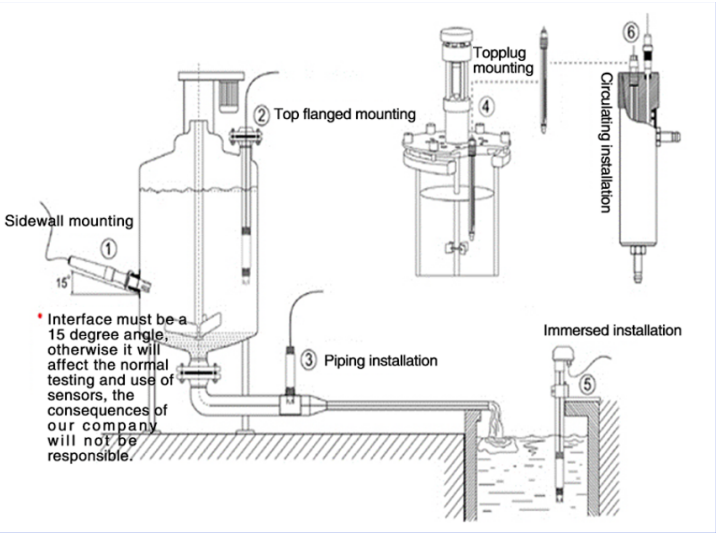
- Oil-in-water sensors — API separator outfall, storm-water lift stations, produced-water reuse skids
- COD sensors and NH3-N sensors — sour-water stripper, WWTP feed
- Turbidity testers and SS sensors — separator effluent and DAF verification
- Salinity sensors and 4-in-1 multi-parameter sensors — produced-water and reuse infrastructure
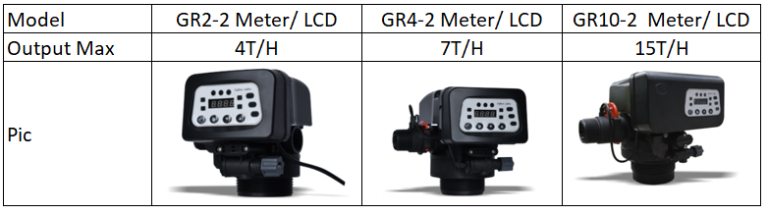
- Softener valves and softening and filtering valves — utility water and reuse polishing
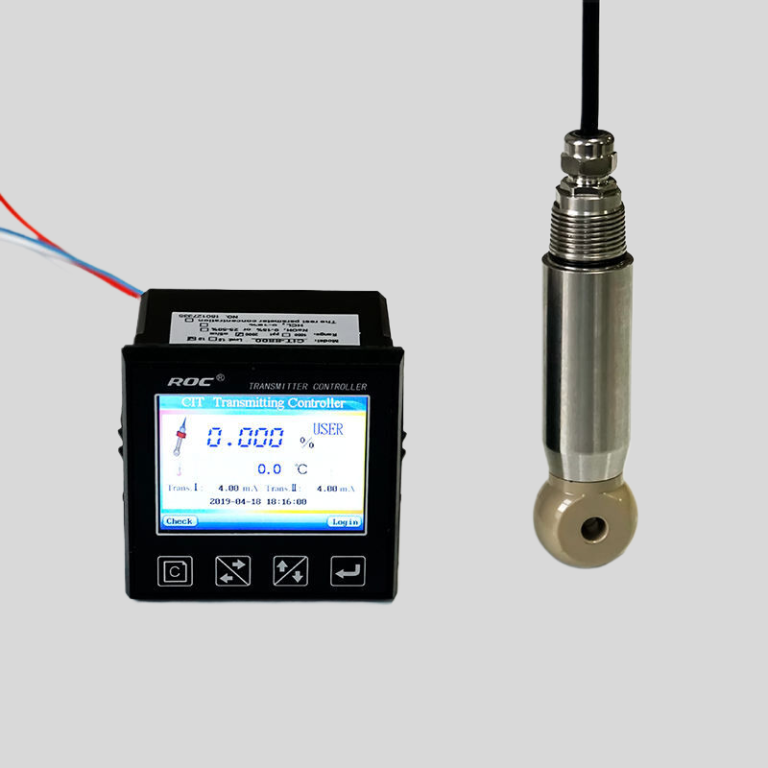
Because the entire portfolio shares one transmitter platform, refineries and produced-water operators can consolidate vendors without giving up measurement breadth. That is what boards asking their technology directors to trim opex are looking for.
The Investor Perspective
Sensor spend is a small line in a refinery capital budget, but it is visible to sustainability-focused investors. Analysts increasingly ask for water reuse ratios, effluent quality trends, and sensor coverage as leading indicators of operational discipline. Operators with credible water instrumentation typically see:
- Lower environmental-liability provisions in their financials
- Better MSCI ESG scores in the “Water Stress” sub-pillar
- Access to sustainability-linked loans at somewhat tighter spreads
The math is straightforward: modest sensor capex reduces both operating risk and financing cost.
Three Board-Level Questions Worth Asking
Executives who want to steer the reinvestment cycle productively should be asking their operations and sustainability teams:
- Which of the five reinvestment zones is currently the weakest in coverage — and what is the cost of a permit exceedance there?
- What percentage of our water quality data is time-stamped, auditable, and ready for regulatory and lender reporting today?
- Are we standardizing on a sensor family that meets both compliance and reuse needs, or are we accumulating vendor complexity that will cost us in the next turnaround?
Clear answers to these three questions usually produce a coherent reinvestment plan.
What to Watch Through 2030
The sector’s share of industrial water testing is not going to shrink. Reuse mandates are spreading beyond the Permian, effluent limits keep tightening in every major jurisdiction, and ESG disclosure has moved from voluntary to enforceable in the markets that price hydrocarbon capital. Operators that keep expanding sensor budgets — and keep the resulting data auditable — will be the ones with the fewest compliance surprises and the cheapest access to capital. Shanghai ChiMay builds its water quality analyzer portfolio for that job: one consistent, auditable, hazardous-area-ready measurement platform across the whole water train.