Cooling water quality has moved out of the facilities engineering silo and onto the executive reliability dashboard, sitting alongside PUE, WUE, and unplanned-outage minutes. The driver is arithmetic: a single scale-driven chiller trip in a high-density AI training campus can cost seven figures in lost customer SLA credits and cleanup within one shift. Once that number is on the table, the CFO’s office takes an interest in cycles of concentration.
The metrics converging across hyperscale and colocation portfolios are conductivity (cycles-of-concentration), pH, free chlorine, and softener/make-up flow — all measured continuously.
Table of Contents
The Shift in One Sentence
For most of the last twenty years, cooling water was managed by the facilities team, reviewed monthly, and reported quarterly. Between 2022 and 2026, three forces broke that model: rack densities crossed 40 kW, AI training workloads made cooling demand highly transient, and hyperscale customers began writing water KPIs directly into their colocation MSAs. Cooling water quality is now something a CFO can be asked about.
Why the C-Suite Cares Now
1. AI Workload Sensitivity
Modern AI clusters draw power in sharp, sustained bursts. A 30 MW training run started at 08:00 is a step-change in heat rejection that a marginally scaled cooling plant will not absorb gracefully. In a plant with scale-fouled tubes, the approach temperature climbs, chiller efficiency drops, and hot spots appear in the whitespace. The customer sees latency; the operator sees SLA exposure.
The chain from water chemistry to customer experience is now short and legible enough that boards understand it.
2. Water Usage Effectiveness (WUE) Reporting
WUE — liters of water consumed per kilowatt-hour delivered — is a public and increasingly regulated metric. Hyperscale operators publish annual WUE figures and are expected to trend them downward. The biggest single lever on WUE is cycles of concentration in the cooling tower, and CoC is controlled through continuous conductivity monitoring. Water quality is now a sustainability metric, not just a maintenance metric.
3. Insurance and Regulatory Exposure
Property insurers now underwrite data-center policies with specific questions about water-management plans, chiller condition, and cooling-tower Legionella controls. A documented water-management program in the ASHRAE 188 mold is a routine checkbox in colocation due diligence, and failing that checkbox during renewal materially affects premium rates. That has pulled the CFO’s office into the water-quality conversation.
4. Capex Efficiency
Data-center capex is dominated by mechanical and electrical infrastructure. Every ton of chiller capacity that has to be added because existing chillers cannot run at full efficiency due to fouling is capex that could have been avoided. Executives increasingly treat cooling-water instrumentation as a capex-avoidance investment rather than an opex line item.
The Emerging KPI Stack
Across leading hyperscale and colocation operators, four water-quality KPIs are converging into standard reliability dashboards:
| KPI | Typical Target | Instrument | Why It Sits in the Dashboard |
|---|---|---|---|
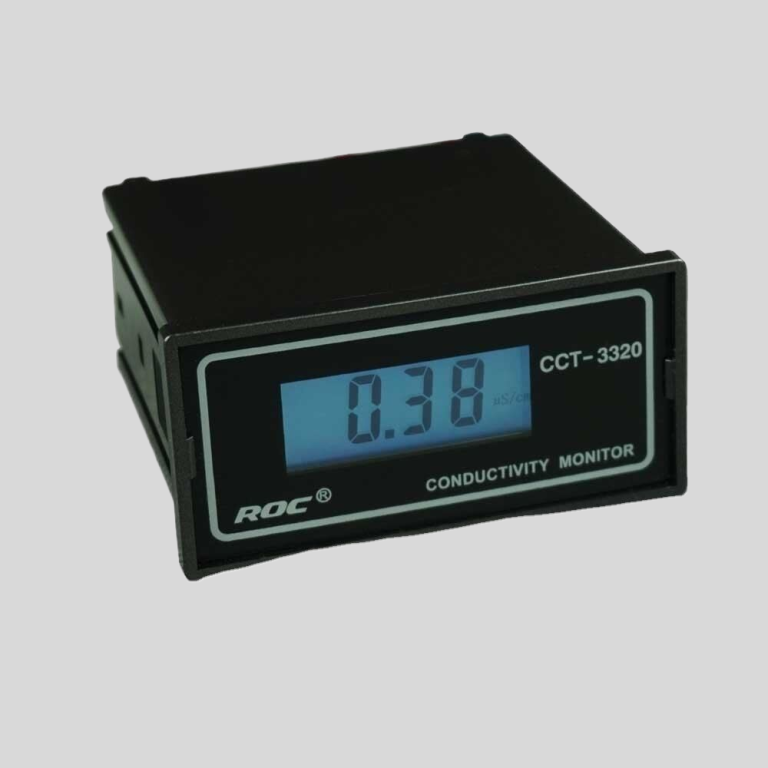
| Recirculation conductivity | Within ±5% of setpoint | In-line Conductivity Meter | Direct proxy for CoC and scale risk |
| Chilled-water pH | 8.5–9.5 | In-line pH Electrode | Copper corrosion protection |
| Free chlorine (cooling tower) | 0.5–2.0 ppm | Residual Chlorine Transmitter | Legionella / biofilm control, per the site water-management plan |
| Make-up flow deviation | < 10% from baseline | Turbine Flow Meter | Detects leaks, drift, and softener anomalies |
These four metrics are increasingly reported alongside PUE and WUE in monthly executive reviews. Some operators go further and include cycles-of-concentration and softener-regeneration-per-day as sub-KPIs.
Comparative Snapshot: Traditional vs. Modern Water KPI Framework
| Attribute | Traditional Model (Pre-2022) | Modern Reliability-KPI Model |
|---|---|---|
| Reporting cadence | Monthly / quarterly | Continuous with alarms |
| Ownership | Facilities engineering | Facilities + Reliability + Sustainability |
| Visibility | Building-level | Portfolio-level dashboard |
| Data granularity | Grab samples | 1-second telemetry |
| Financial framing | OPEX | OPEX + capex avoidance + SLA protection |
| Regulatory framing | Basic compliance | ASHRAE 188 water-management program + WUE public disclosure |
What the Executive Conversation Sounds Like Now
Ten years ago, a CFO asked about cooling water might have said, “That’s a facilities issue.” Today, the same conversation includes questions like:
- “What is the trailing-30-day CoC across the portfolio, and what does another 0.5 CoC translate into for WUE?”
- “How many make-up flow anomalies exceeded the alarm threshold last quarter, and how many of them were traced to root cause?”
- “Which sites are running outside the free chlorine window, and what is our insurance exposure if a Legionella positive is reported?”
Those are answerable questions only if the underlying instrumentation is continuous and the data is logged into the same reliability dashboard as PUE and WUE. Continuous sensor coverage is the foundation of the conversation, not an optional upgrade.
Portfolio-Scale Payback
Colocation operators that have run portfolio-wide comparisons between sites with continuous water-quality monitoring and sites without report the same pattern: unmonitored sites see several times the unplanned chiller trips, they run materially lower cycles of concentration because nobody trusts the chemistry, and they draw more make-up water per MW of IT load. The avoided SLA credit exposure across a large portfolio runs into millions of dollars a year — which is what turned water quality into a reliability KPI rather than a facilities chore.
The financial case for treating water quality as a reliability KPI is no longer speculative.
Where Shanghai ChiMay Fits
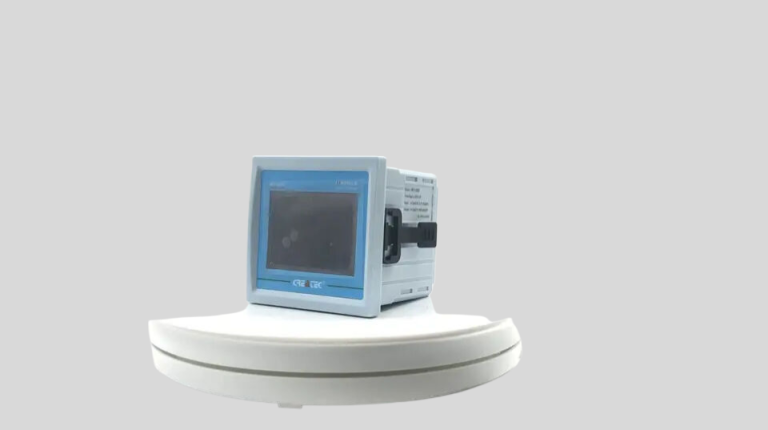
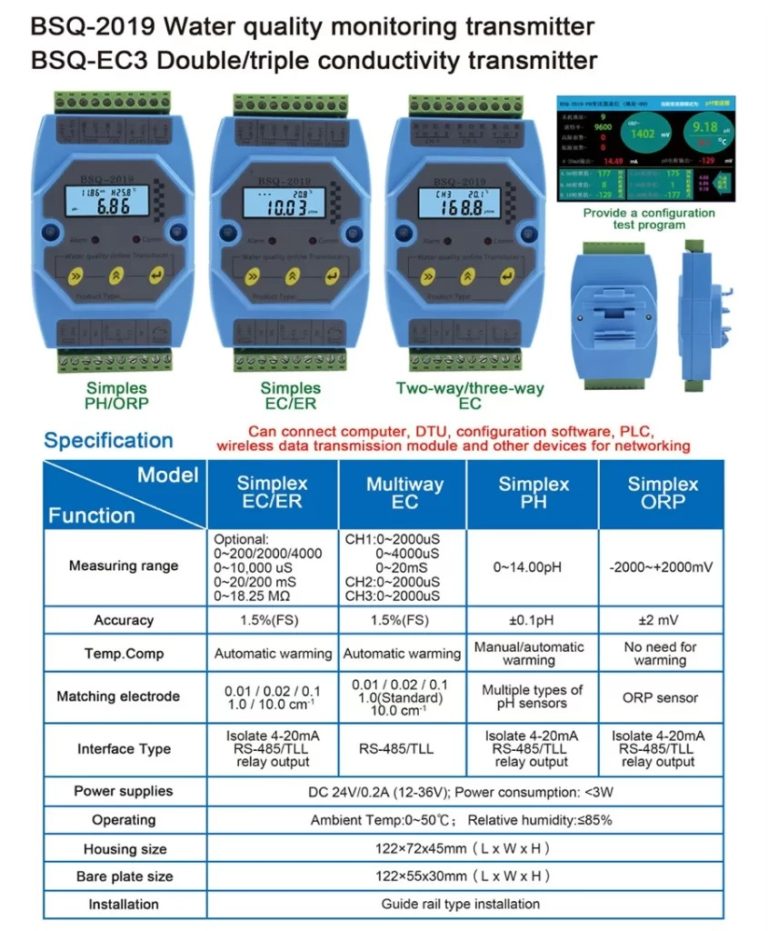
Shanghai ChiMay designs its water quality analyzer family — in-line conductivity/pH meters and electrodes, DO transmitters, residual chlorine transmitters, turbidity testers, 4-in-1 multi-parameter sensors, paddle wheel and turbine flow meters — around a shared controller and communications architecture. For a data-center portfolio, that translates directly into:
- A consistent KPI stack across all campuses regardless of build era.
- Fewer vendors to manage, fewer spare-parts pools to fund.
- Modbus RTU and HART integration that fits standard BMS and DCIM platforms without custom middleware.
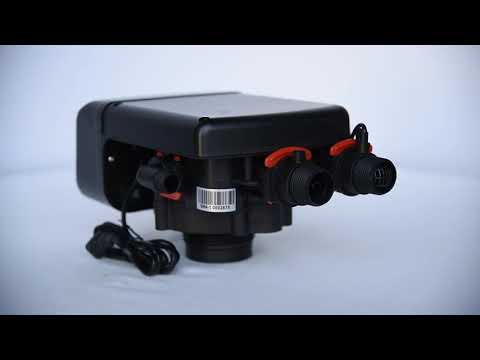
- Control valve pairing — softener valve and softening and filtering valve — that closes the loop on make-up water chemistry instead of treating it as a separate procurement track.
A Decision Framework for Executives
- Are cooling-water KPIs on the same dashboard as PUE and WUE? If not, they should be.
- Are conductivity, pH, free chlorine, and make-up flow measured continuously at every campus?
- Is the sensor family standardized, or does each site run a different vendor stack?
- Is water-quality data available at the portfolio level for benchmarking?
- Are SLA and insurance exposures modeled against water-quality excursions, not just power and cooling capacity?
If any of those answers is “no,” the operator is running with a blind spot that the current AI-driven load profile no longer forgives.
Where This Lands
Cooling water quality has arrived at the executive level in data-center operations, and it is not going back. The forces pulling it there — AI load transients, WUE reporting, insurance underwriting, and capex efficiency — are structural rather than cyclical. The operators moving fastest are standardizing on continuous, integrated water-quality instrumentation as a portfolio-scale reliability investment. Shanghai ChiMay’s water quality analyzer and control valve portfolio is engineered to be exactly that: a matched, BMS-ready foundation for the KPI stack that data-center reliability now demands.