For most of industrial history, a waste-water stream was an overhead line item: tanker hauling, permit fees, an effluent treatment contract, and a reserve for the day a regulator or a downstream neighbour forced attention. That framing is losing ground at sites where water is scarce, discharge rules are tightening year on year, and the salts left in the brine have a buyer. The change is not marketing language. It is arithmetic — and it holds up in a bankability model only when the numbers behind it are traceable to plant data.
Table of Contents
Why the cost-line assumption stopped working
Three shifts did most of the work.
- Freshwater now carries a price in project models, not just in the utility bill. In stressed basins, industrial tariffs, abstraction limits and permit conditions give reused water a defensible value that did not exist in most 2015-vintage models.
- Salt and mineral recovery has moved from laboratory work to plant scale. Crystalliser control has improved enough that a saleable salt grade is a routine design target rather than an experiment.
- Instrumentation and control have cut the operating cost of concentration and crystallisation, which is what decides whether ZLD competes with legacy discharge in high-water-stress basins.
The three revenue streams
Recovered water. A well-run ZLD train recovers the large majority of its feed as distillate — the exact fraction depends on feed chemistry, pretreatment and the number of concentration stages, but designs above 90% recovery are routine in heavy industry. That distillate is good enough for cooling, boiler make-up or process water, and with a polishing step for higher-purity duties. What it is worth is a local question: freshwater tariff, reliability of supply, and the cost of the next permit renewal.
Recovered minerals. Crystallisation produces sodium chloride, sodium sulfate and, depending on feed composition, calcium chloride, potassium salts and specialty by-products. Saleable grade depends on crystalliser control, and it is worth being honest with the finance team about scale: the mineral stream is usually a partial offset to operating cost rather than a profit centre. Where the feed is unusually rich — lithium brine, some mining and textile streams — the offset is larger; in commodity brine work it is smaller.
Avoided compliance capital. A ZLD plant retires future compliance exposure: new permit conditions, plume liability, tank replacement and downstream remediation. This line is site-specific. It belongs in the model as a deferred or eliminated outflow supported by the site’s own compliance history and the published permit trajectory of its basin — not as an industry average borrowed from a consultant’s slide.
Where the business case falls down
Projects that miss their plan tend to share four attributes, and none of them is a process-design problem:
- Under-instrumented crystallisers, producing off-spec batches that cannot be sold at the nominated grade.
- Under-instrumented recovery loops, producing water-quality drift that pushes reuse consumers back onto freshwater.
- Weak data lineage behind sustainability disclosures, which costs access to concessional finance.
- Regulatory anchoring that was never validated, leaving the project exposed to a permit change mid-life.
All four are data problems. They are solved with measurement and record-keeping, not with a different flowsheet.
Why the sensor layer carries the business case
Instrumentation is a small share of ZLD capital cost — low single digits as a percentage — and it is the only capital item that underwrites the other numbers. Every revenue line above is defensible only if there is a measurement trace behind it:
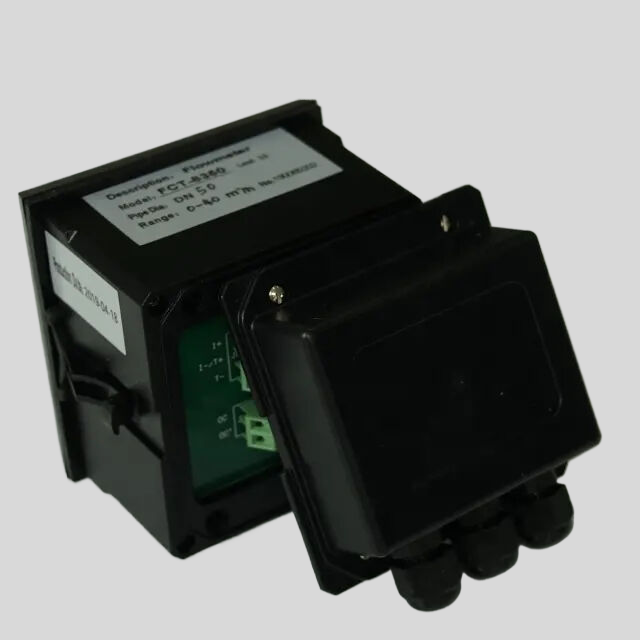
- A reuse ratio is credible when metered inflows, metered reuse and a closed mass balance are historised for a long enough baseline (90 days at 1-minute resolution is a common lender threshold, and more is better).
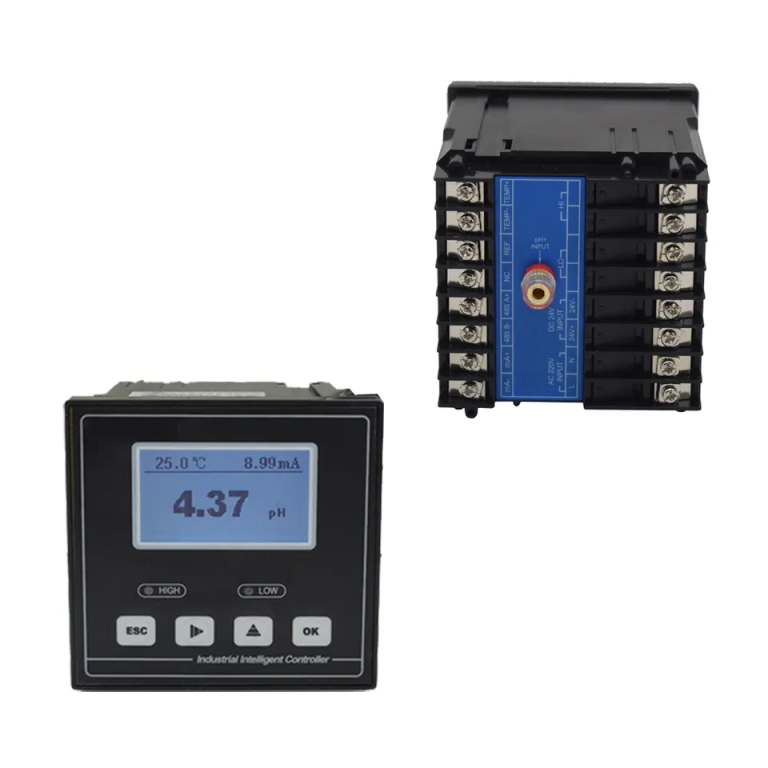
- Mineral yield is credible when crystalliser feed pH, conductivity and ORP are historised and cross-checked against product batch analysis.
- Avoided compliance capital is credible when effluent parameters — COD, ammonia, oil-in-water, suspended solids, pH — are historised across the design life of the plant.
Shanghai ChiMay’s transmitters expose each of these values into the plant historian without proprietary gateways, so the finance team works from the same numbers the operators see on shift. That is what makes the revenue narrative survive due diligence.
What the money side now asks for
Financing conversations for ZLD projects have changed in three practical ways.
- Green loans and sustainability-linked instruments with water KPIs exist across most industrial markets, and pricing step-downs are tied to verified reuse ratios. The KPI has to come out of plant data on a defined calculation, not out of an annual estimate.
- Blended finance from development banks is available for ZLD in stressed basins, but it requires an audited baseline and an improvement path.
- Insurance capital now prices both regulatory risk and reuse water quality, and underwriters ask how instrumentation coverage is documented.
The instrumentation layer is a financing consideration, not just a plant-engineering one.
Aligning operations and finance
Operating and finance teams historically reported different numbers for the same plant. That gap costs projects capital. A single-source ZLD data model, drawn from the plant historian and tied to auditable sensor traces, gives the finance team what the plant manager sees on shift. Getting there is mostly unglamorous work: standardised tag structure, a written calibration cadence, and a reporting envelope agreed in advance, so the reuse ratio in the sustainability report is the reuse ratio in the shift log.
Governance signals investors watch
- A named officer accountable for water strategy at board level.
- Site-level KPI publication: freshwater intensity, reuse ratio, discharge quality index.
- Instrumentation coverage above 90% on process-critical streams.
- Historian retention above 90 days at 1-minute resolution.
- An annual third-party review of sensor calibration and drift trending.
Plants that can report against all five are financing their ZLD work on better terms than plants that cannot.
Industrial ZLD is a genuine circular-economy asset when the sensor layer is treated as capital rather than as commodity procurement. Waste streams become revenue lines when the physics of the plant meets the discipline of the data. Shanghai ChiMay’s instrumentation platforms are engineered around that translation, so the business case the lender reads and the business case the operator executes are the same case.