Landfill owners modelling PFAS exposure for 2027 should stop trying to reduce it to a single number. The federal picture is less settled than most board packs suggest: EPA’s proposed rule to list nine PFAS as RCRA hazardous constituents was withdrawn on 8 May 2026, while the drinking water limits for PFOA and PFOS remain in force. What has not gone away is private litigation and the re-pricing of environmental insurance. This note sets out a three-stack model — direct compliance, civil litigation, insurance restructuring — and argues that the quality of the operator’s own monitoring record is the one variable the operator still controls.
Table of Contents
The 2027 landscape
Three things are actually moving, and they are moving at different speeds.
- Drinking water limits. EPA’s PFAS National Primary Drinking Water Regulation, finalized in April 2024, set MCLs of 4 ppt for PFOA and PFOS, 10 ppt each for PFHxS, PFNA and HFPO-DA (GenX), and a hazard-index approach for mixtures containing PFBS. On 18 May 2026 EPA proposed rescinding the regulatory determinations, MCLs and monitoring requirements for those four compounds on Safe Drinking Water Act procedural grounds, and separately proposed extending the compliance deadline from 2029 to 2031 for qualifying systems. The 4 ppt limits for PFOA and PFOS are unchanged. For a landfill sitting upgradient of a drinking water intake, those two limits are the ones that decide the argument.
- RCRA hazardous constituent listing. EPA proposed listing nine PFAS as RCRA hazardous constituents in 2024, which would have pushed PFAS into the hazardous waste chain-of-custody regime. The agency withdrew that proposal on 8 May 2026. No federal PFAS hazardous-waste listing is in force today, so the compliance burden currently lands through state programmes, which differ sharply from state to state.
- Enforcement and private claims. State attorneys general continue to pursue PFAS manufacturers and, in some cases, the disposal chain. New Jersey’s package of PFAS settlements with chemical manufacturers, worth roughly USD 2.5 billion and given final court approval in August 2026, reset expectations for what a state can recover. Landfill operators sit downstream of that money rather than outside it.
We have deliberately left out the sector-wide cost forecasts that circulate in industry decks. Their assumptions are usually unpublished and the published ranges differ by roughly an order of magnitude. A board can model its own site; it cannot underwrite a headline number.
Cost stack 1: direct regulatory compliance
The first stack covers capital for leachate treatment upgrades, instrumentation and PFAS-focused sampling, expansion of the downgradient monitoring well network, and the record-keeping systems that any state programme will audit.
Two things are worth saying about the relative size of these lines. Treatment capital dominates the stack by a wide margin — an instrumentation package is a small single-digit percentage of a treatment upgrade budget. On the operating side the ratio flips: analysers, consumables, calibration standards and sampling labour are a much larger share of the annual line than their capital cost suggests. Operators who budget the capital and forget the calibration load are the ones who end up with a year of unusable data.
Direct compliance is nevertheless the smallest of the three stacks. Boards that model only this one systematically underestimate total exposure.
Cost stack 2: private civil litigation
Litigation is now the dominant liability driver. The claim types are familiar:
- Class actions from downgradient property owners.
- Tort claims from individuals alleging PFAS-linked health effects.
- Contribution actions from utilities that had to install PFAS treatment because of an upstream source.
- Coverage litigation against historical carriers.
Per-site exposure varies enormously with hydrogeology, downgradient land use, waste composition and the age of the fill. What the public record does show is scale: state-level settlements with manufacturers have run into the billions of dollars, and individual landfill or industrial site settlements in the tens of millions are no longer unusual. Firms that publish their reserve assumptions generally cite two drivers — whether continuous water quality data exists, and whether the operator can show a documented response to early warning signals.
Sensor data matters here in a way that is easy to underestimate. A landfill that can produce a decade of continuous conductivity, ammonia, COD and turbidity data from every leachate stream is in a different negotiating position from one that relies on periodic grab samples taken by a consultant who has since retired.
Cost stack 3: insurance premium restructuring
The third stack is environmental insurance, and it has changed faster than most operators expected. Carriers writing pollution legal liability have been excluding PFAS from standard forms, requiring PFAS-specific riders at multiples of the historical rate, imposing per-event coverage caps, and asking underwriting questions about sensor data quality that did not appear on the form five years ago.
For a mid-size landfill operator this shows up as a step change in annual environmental premium that does not revert, plus a materially thinner tail. Two U.S. carriers have told us directly that a documented, continuous monitoring record is a mitigation factor in their PFAS pricing. That is not the same as saying a sensor package pays for itself in premium reduction, and we would be sceptical of anyone who claims a specific percentage.
Modelling total liability
The three stacks scale differently with site size, and that is the point of keeping them separate.
| Component | Small municipal site | Mid-size regional site | Large regional site |
|---|---|---|---|
| Capital compliance | Smallest stack | Material | Largest capital line |
| Annual operating cost | Dominated by sampling labour | Instrumentation-heavy | Instrumentation-heavy |
| Litigation exposure | Low but not zero | Dominant | Dominant |
| Insurance premium change | Modest delta | Large delta | Largest absolute delta |
These are relative weights, not currency. A board that replaces them with dollar figures is inventing precision it does not have. What the model should do is show which stack dominates at each site, and what evidence sits behind each line.
The data quality factor
Across the settlements and enforcement actions we have reviewed, one variable keeps correlating with a favourable outcome: continuous, time-stamped water quality data. Operators who can produce:
- Continuous conductivity, pH, COD and ammonia records for every leachate collection point.
- Time-stamped monitoring well data at defensible sampling frequencies.
- Audit trails showing prompt response to early warning signals.
- Sensor calibration records traceable to national standards.
…tend to resolve matters on better terms — in some published cases, substantially better — than operators who can only produce quarterly grab samples. The size of that gap is not something we can put a credible percentage on. That it is large is not in dispute.
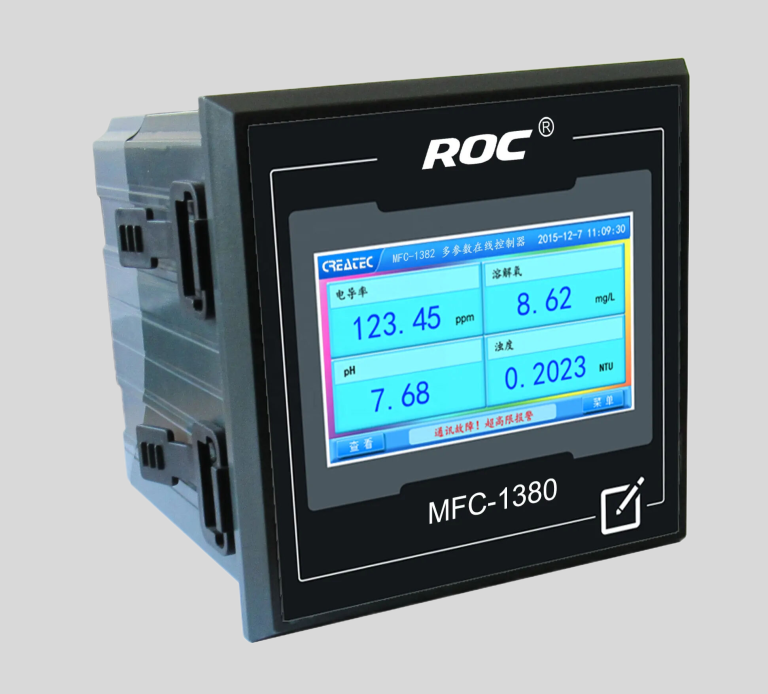
Shanghai ChiMay’s inline analyser line is built around that requirement: time-stamped, digitally signed data streams, continuous local storage and multi-year cloud retention. In risk-register terms it converts part of PFAS exposure from an unbounded contingent risk into a cost you can budget for.
Board actions for 2026–2027
- Put PFAS liability on the board agenda as a standing item, updated quarterly.
- Ask operations to document current sensor coverage and the gaps, with a target of continuous monitoring at every leachate collection and reinjection point.
- Talk to insurance brokers before renewal, not after, and find out what data evidence the carriers actually want.
- Fund continuous monitoring before the next round of treatment retrofits. Monitoring is cheaper, and it is what makes the retrofit justifiable later.
- Keep legal counsel in the sensor procurement discussion. The data you generate will be discoverable.
- Follow the disclosure practice of listed waste operators on PFAS reserves rather than inventing an internal approach.
How to take this to the board
Operators who invested in continuous monitoring in 2024 and 2025 are in a better position in 2026 than those who deferred, and the difference is not only in the liability numbers. It is in the ability to answer a regulator’s or a plaintiff’s request with a full data record. That is negotiating leverage a data-poor operator simply does not have.
2027 is the year PFAS liability stops being a compliance line item and becomes an enterprise-value question. The boards that get it right will have built the model across all three stacks and treated data quality as the leading indicator — not delegated the whole thing to the treatment vendor.